
Introduction to Indian Political Thought| PSIR Optional for UPSC
Introduction to Indian Political Thought | PSIR Optional for UPSC

Questions Asked
- Explain the sources of ancient Indian political thought. (20/15)
Introduction to Indian Political Thought
- Indian political thought encompasses a range of philosophies, ideologies, and concepts that have influenced political thinking in the Indian subcontinent.
- With a history spanning thousands of years, it has been shaped by religious, philosophical, and cultural traditions.
Ancient Indian Political Thought
- Vedas and Upanishads: These early scriptures contain philosophical ideas concerning governance, justice, and ethics. For example, the concept of "Rita" in the Vedas emphasizes cosmic order and moral righteousness.
- Arthashastra: Authored by Kautilya (Chanakya), this treatise delves into statecraft, governance, and political principles. It provides guidance on administration, diplomacy, and even espionage.
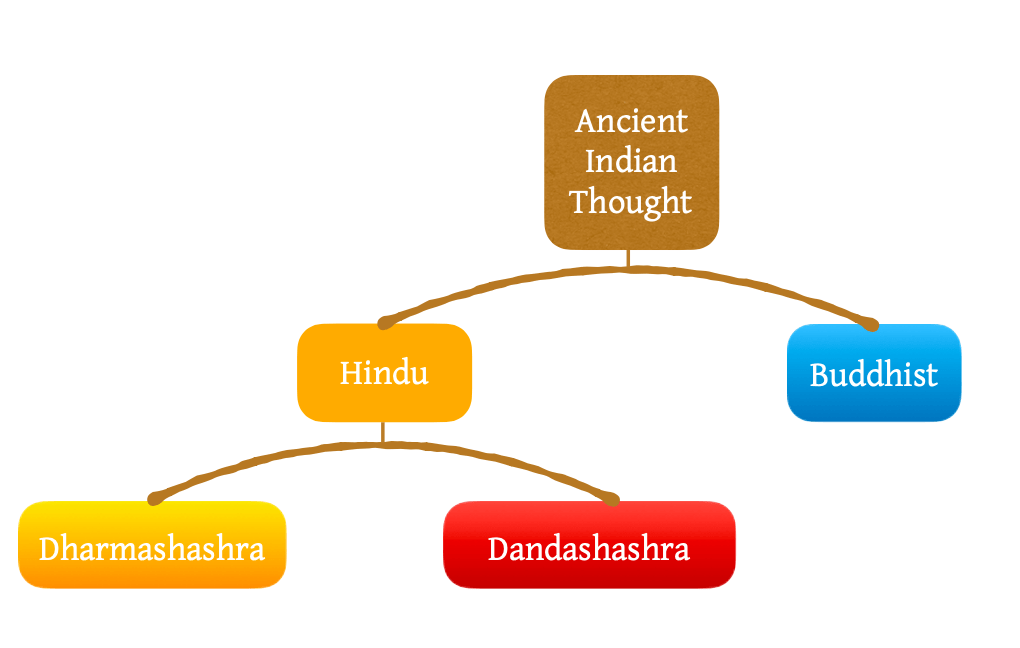
- Dharmashastra: These texts explore the concept of dharma (moral duty), social order, and the role of the king. The Manusmriti, for instance, outlines the hierarchical nature of society.
Major traditions in ancient Indian thought
- According to Professor Bhikhu Parekh, ancient Indian tradition can be categorized into two broad streams: Hindu tradition and Buddhist tradition.
- As per Parekh, Indian tradition reflects continuity rather than change. Hence Hindu tradition and Buddhist tradition does not differ in any qualitative sense of the term. We can call Buddhism as ‘rebel child of Hinduism’.
- Hence there are lot of similarities between the two traditions.
- Buddhism also believes in the concept of Karma and rebirth like Hinduism.
- Both Hinduism and Buddhism promote similar ethical systems.
- Both religions also share many deities (though their nature is understood differently).
- The basic difference between Buddhism and Hinduism is that Hinduism represents the hegemony of Brahmins and Kshatriyas.
- Buddhism represents the hegemony/alliance of Kshatriyas and Vaishyas.
Sources of Ancient Indian Political Thought
- It is very difficult to obtain a particular book or a piece of literature that describes the various sources of the ancient Indian political thought, which are scattered all over India.
- However, some dedicated scholars have made efforts to gather all the scattered information and arrange them in a comprehensive manner for better understanding of the subject.
The Vedas

- The Vedas are regarded as the authentic works of Gods at the time of the creation of the world and so are considered the original source of information.
- Though Vedas do not describe the political system that existed, information can be drawn from the concepts like King, Kingship, Saints or Rishis, etc., and their duties towards the subjects.
- Institutions like sabha and samithi that are prevalent even in the modern days have their roots in the Vedic period.
Ramayana and Mahabharata

- The epics of Ramayana and Mahabharata contain rich narratives that offer insights into ancient Indian political thought.
- The Ramayana portrays the ideal king, Rama, who upholds dharma, protects his subjects, and maintains just governance.
- The Mahabharata explores complex political dilemmas, governance challenges, and the concept of righteous rule, as seen in the dialogue between Krishna and Arjuna in the Bhagavad Gita.
- Certain episodes like Shanti Parva provide outstanding information related to political philosophy and administrative system and the political system of the time.
- The entire art of statecraft, diplomacy, war ethics and strategies, state relations and the like can be very well understood by making a reference to the Mahabharata.
Jataka Tales and Buddhist Texts
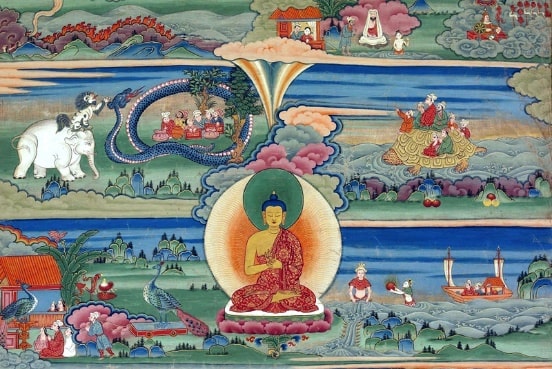
- Jataka tales, part of Buddhist literature, present stories of previous lives of the Buddha. These tales often touch upon themes of leadership, governance, and moral decision-making.
- Buddhist texts, such as the Dhammapada and Vinaya Pitaka, provide guidance on ethical governance, emphasizing compassion, non-violence, and the welfare of all beings.
The Arthashastra
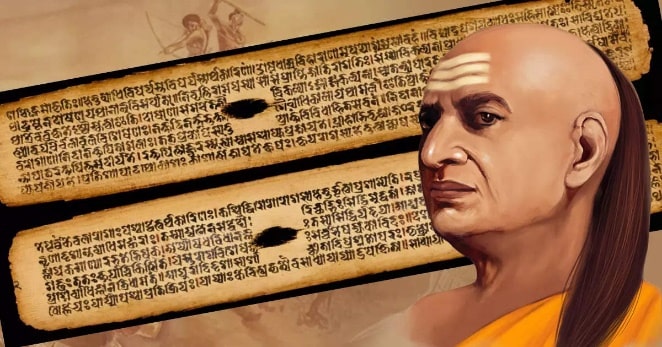
- This work authored by Kautilya is again a masterpiece on polity.
- According to Prof Altekar, it is mainly concerned with the practical problems of governance and describes its machinery and functions both in times of war and peace.
- This work of Kautilya also highlights issues like taxation, diplomacy, war strategies and revolution.
- It is also a handbook of economics as well as administration for the kings.
Works of Thinkers
- Some of the great works that act as major sources of the political thought of ancient India are the Smrithis, Kamandakeya Neethisaara, Sukraneetisara and the like.
- Smrithis advocated that a king was the servant of the subjects and that it was not wrong to kill a tyrant.
- A king was expected to be virtuous, gracious and helpful.
- Similarly, Kamandakeya Neethisaara was also a source of ancient Indian political thought. It was, in fact, a summary of Kautilya’s Arthashastra.
- The work highlights the king and his family and the monarchical form of government.
- Sukraneetisara was supposed to have been written sometime between 1200 and 1600 BC.
- Though that is not available now, the work enlightens about the position held by high officials of the state and their functions, administrative system, monarchy and the political life of the people at large.
Inscriptions
- Stone and copper inscriptions throw light on the contemporary political life of the people and the administrative system of those days.
Accounts of Foreign Travellers

- The writings of foreign travellers to India like Megesthanes, Fahien, Huang Tsang and others provide great information about the ancient Indian society, administration, trade and industry and the like.
Other Sources
Apart from the above sources on the ancient Indian political thought, the following books give an extensive knowledge:
- Brihapati Sutra
- Neeti Vakya Niritha of Somadeva
- Rajaneethi Ratnakara
- Veeramrityodaya
- Rajaneethi Mayukha
- Puranas
- Coins and seals found in the excavations
- The Jain and Buddhist literature
Medieval Indian Political Thought
- Islamic Political Thought: Scholars such as Al-Farabi, Ibn Sina, and Ibn Khaldun influenced Muslim rulers in India. Their ideas on governance and administration contributed to the formation of political systems.
- Bhakti and Sufi Movements: These movements emphasized equality, love, and spiritualism. Their influence led to social and political reforms, challenging traditional hierarchies.
- Vijayanagara Empire: The empire adopted a decentralized form of governance and supported Hindu political and cultural ideas. This promoted regional autonomy and cultural diversity.
Modern Indian Political Thought
- Raja Ram Mohan Roy: Regarded as the father of the modern Indian Renaissance, Roy advocated for social and political reforms, including the abolition of sati (widow burning). He believed in the importance of rationality and human rights.
- Swami Vivekananda: Vivekananda emphasized the idea of a spiritually awakened nation and the significance of individual freedom. His teachings inspired the concept of "Man Making" as a political goal.
- Mahatma Gandhi: Gandhi's philosophy of non-violence (Satyagraha) and self-rule (Swaraj) played a central role in India's freedom struggle. His emphasis on ethical and inclusive politics continues to inspire social movements globally.
- Jawaharlal Nehru: As India's first Prime Minister, Nehru promoted secularism, socialism, and non-alignment in foreign policy. His vision for modern India included industrialization, scientific temperament, and democratic institutions.
Post-Independence Political Thought
- Dalit Political Thought: Thinkers like B.R. Ambedkar highlighted the issues of caste-based discrimination and advocated for social justice and equality. Ambedkar played a crucial role in drafting the Indian Constitution, which guarantees equality and safeguards the rights of marginalized communities.
- Regionalism: The diverse linguistic and cultural identities in India have led to the rise of regional political parties and movements. This highlights the significance of local aspirations and the need to accommodate regional interests within the framework of a federal democracy.
- Feminist Political Thought: Scholars like Kamla Bhasin and Flavia Agnes have contributed to feminist discourse and advocated for gender equality in politics. Their work has influenced policy-making, legal reforms, and women's empowerment initiatives.
Contemporary Indian Political Thought
- Right to Information (RTI) Movement: This movement aimed to increase transparency and accountability in governance. The RTI Act, enacted in 2005, empowers citizens to access information held by public authorities, promoting a culture of transparency.
- Environmental Political Thought: With growing concerns about climate change and sustainable development, environmental thinkers have emerged. They advocate for ecological conservation, sustainable practices, and the integration of environmental considerations in policymaking.
- Identity Politics: The politics of caste, religion, and regional identities continue to shape Indian democracy. Various social and political movements advocate for the rights and recognition of diverse identity groups, influencing electoral dynamics and policy formulation.
Current Challenges and Debates
- Communalism and Religious Intolerance: India grapples with communal tensions and the need for religious harmony. Debates center on the accommodation of diverse religious identities and the prevention of religiously motivated violence.
- Democracy and Development: Balancing the goals of economic growth with social justice and inclusive development remains a challenge. Scholars and policymakers engage in discussions regarding the equitable distribution of resources and the eradication of poverty and inequality.
- Secularism and Pluralism: The concept of secularism and the accommodation of diverse identities continue to be subjects of ongoing debate. Questions arise regarding the boundaries of secularism, the role of religion in public life, and the protection of minority rights.