
Feeding mechanisms of Mollusca. (IFS 2020/8 Marks)
Feeding mechanisms of Mollusca. (IFS 2020/8 Marks)

Introduction:
Mollusca is a diverse phylum of invertebrates that includes animals such as snails, clams, and octopuses. These animals have a variety of feeding mechanisms that allow them to obtain food in different ways.
Feeding Mechanisms of Mollusca
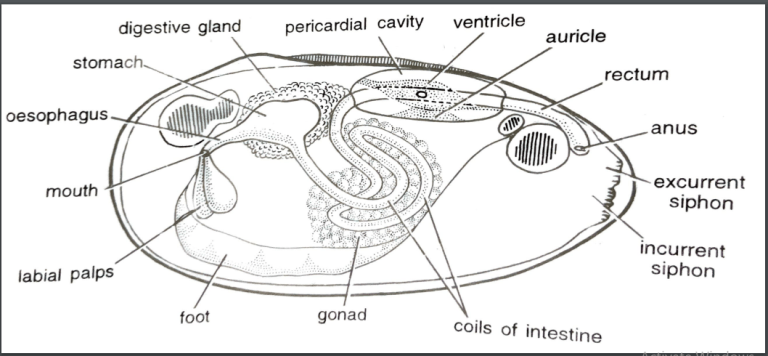
1. Radula Feeding (Scraping)
- The radula is a specialized feeding organ, resembling a rasp or tongue covered in tiny, backward-facing teeth.
- Mechanism: Mollusks like snails and chitons use the radula to scrape algae or plant material from surfaces, enabling them to consume nutrients.
- Examples: Found mainly in gastropods (snails and slugs) and polyplacophorans (chitons).
2. Filter Feeding
- A process where mollusks filter small food particles from the surrounding water.
- Mechanism: Bivalves like clams and oysters use cilia on their gills to draw in water, trapping plankton and other particles which are then transported to the mouth.
- Adaptation: Bivalves’ gills are modified for efficient filter feeding, allowing them to thrive in aquatic environments with abundant plankton.
3. Suspension Feeding
- Similar to filter feeding but involves trapping suspended organic particles.
- Mechanism: Sessile mollusks like mussels use gill cilia to capture particles floating in the water, suitable for stationary organisms.
- Ecological Role: Helps in nutrient recycling by capturing organic debris.
4. Deposit Feeding
- A feeding method where mollusks ingest organic matter settled on the substrate.
- Mechanism: Some gastropods and bivalves consume detritus, or organic particles, from the seafloor or mud, processing nutrients from decomposing material.
- Example: Common deep-sea and soft-substrate environments where organic matter accumulates.
5. Predatory Feeding
- Carnivorous feeding behavior where mollusks actively hunt or capture other organisms.
- Mechanism: Predatory gastropods, like cone snails and some cephalopods, use toxins or specialized appendages (e.g., beaks, tentacles) to immobilize prey.
- Examples: Octopuses and squids use a beak-like structure to tear food, while cone snails have harpoon-like radulas with venom for hunting fish.
6. Grazing
- Feeding on vegetation, typically algae, found on rocks or other substrates.
- Mechanism: Mollusks, such as limpets, use their radula to graze on biofilm and algae growing on hard surfaces, playing a role in regulating algae growth.
- Example: Limpets and certain types of snails are known for this feeding style in intertidal zones.
Conclusion:
Mollusks have a variety of feeding mechanisms that allow them to obtain food in different ways. These mechanisms have evolved to suit the diverse habitats and lifestyles of these fascinating animals.