
Draw a well-labelled diagram of adrenal gland and discuss the functions of its hormones. (IAS 2023/20 Marks)
Draw a well-labelled diagram of adrenal gland and discuss the functions of its hormones. (IAS 2023/20 Marks)

Introduction:
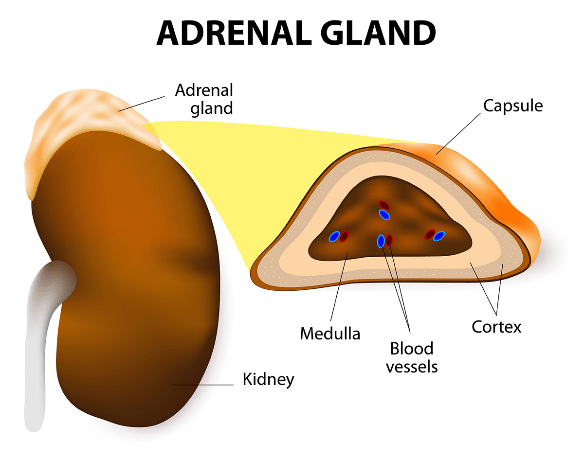
The adrenal gland is a small, triangular-shaped gland located on top of each kidney. It is divided into two main parts: the adrenal cortex and the adrenal medulla.
Well-Labelled Diagram of Adrenal Gland
The adrenal gland is a paired endocrine organ located above the kidneys. It has two main regions:
- Cortex (outer region): Produces steroid hormones.
- Medulla (inner region): Produces catecholamines (adrenaline and noradrenaline).
Below is a textual description of the key labels for your diagram:
- Adrenal Cortex: Subdivided into:
- Zona Glomerulosa: Produces mineralocorticoids.
- Zona Fasciculata: Produces glucocorticoids.
- Zona Reticularis: Produces androgens.
- Adrenal Medulla: Contains chromaffin cells producing adrenaline and noradrenaline.
- Capsule: Protective outer layer.
Functions of Hormones Secreted by Adrenal Gland
1. Hormones of Adrenal Cortex
- Mineralocorticoids (e.g., Aldosterone):
- Regulates sodium and potassium balance.
- Maintains blood pressure by controlling water reabsorption in kidneys.
- Glucocorticoids (e.g., Cortisol):
- Influences metabolism of carbohydrates, proteins, and fats.
- Helps manage stress by increasing blood glucose levels.
- Possesses anti-inflammatory and immunosuppressive properties.
- Androgens (e.g., Dehydroepiandrosterone - DHEA):
- Contribute to secondary sexual characteristics, especially in females.
- Minor role compared to gonadal hormones.
2. Hormones of Adrenal Medulla
- Adrenaline (Epinephrine):
- Increases heart rate and blood flow to muscles.
- Dilates airways and prepares the body for "fight or flight."
- Noradrenaline (Norepinephrine):
- Constricts blood vessels, raising blood pressure.
- Works synergistically with adrenaline during stress responses.
Conclusion:
The adrenal gland is an important endocrine gland that produces hormones essential for maintaining homeostasis and responding to stress. The hormones produced by the adrenal gland have diverse functions in the body, including regulating metabolism, blood pressure, and the body's response to stress.