
Describe the Integumentary derivatives in Mammals along with labelled diagrams. (IAS 2018/20 Marks)
Describe the Integumentary derivatives in Mammals along with labelled diagrams. (IAS 2018/20 Marks)

Introduction:
The integumentary system in mammals consists of various structures known as integumentary derivatives. These structures serve different functions and play a crucial role in protecting the body and regulating body temperature.
Integumentary Derivatives in Mammals
1. Hair
- Structure: Composed of keratinized epidermal cells.
- Types: Guard hairs, underfur, vibrissae (whiskers).
- Functions:
- Insulation to maintain body temperature.
- Protection against external elements.
- Sensory input through tactile hairs (e.g., vibrissae).
2. Glands
a) Sebaceous Glands
- Location: Associated with hair follicles.
- Function: Secrete sebum to lubricate skin and hair.
b) Sweat Glands
- Types:
- Eccrine glands: Regulate body temperature through sweat.
- Apocrine glands: Found in specific regions (e.g., axilla), involved in pheromone secretion.
c) Mammary Glands
- Structure: Modified sweat glands.
- Function: Produce milk for nurturing offspring.
d) Scent Glands
- Purpose: Used in communication, marking territory, and defense.
3. Nails, Claws, and Hooves
- Structure: Composed of keratin.
- Functions:
- Nails: Protect fingertips and enhance grip.
- Claws: Aid in climbing, digging, and defense.
- Hooves: Specialized for locomotion in ungulates.
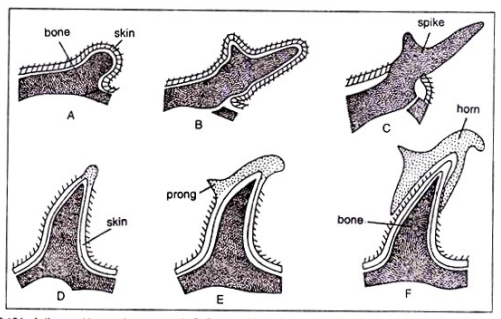
4. Horns and Antlers
a) True Horns (e.g., Cattle)
- Composition: Keratin covering with a bony core.
- Permanent: Do not shed.
b) Antlers (e.g., Deer)
- Structure: Made of bone, shed annually.
- Function: Used in mating displays and combat.
5. Scales
- Location: Found in certain mammals like pangolins.
- Structure: Overlapping keratinized plates.
- Function: Protection against predators and abrasion.
6. Dermal Armor
- Example: Armadillos.
- Structure: Plates of dermal bone covered by keratinized skin.
- Function: Defensive adaptation.
7. Melanophores
- Structure: Specialized pigment cells in the skin.
- Function: Provide coloration and protect against UV radiation.
Diagram: Integumentary Derivatives in Mammals:
Conclusion:
Integumentary derivatives in mammals are specialized structures that serve various functions such as protection, insulation, regulation of body temperature, and communication. These structures have evolved to help mammals survive and thrive in diverse environments.