
Daily Current Affairs UPSC 24 July 2024
Welcome to our daily current affairs blog post for UPSC aspirants! In today's edition, we will be discussing the most significant events and news updates that took place on 24th July 2024. Staying updated with current affairs is crucial for UPSC preparation, as it not only helps you stay informed but also enhances your understanding of various subjects. So, let's dive into the important happenings of the day and explore their potential impact on the upcoming UPSC examinations.

Electric Mobility Promotion Scheme
- The Electric Mobility Promotion Scheme (EMPS) was launched in March 2024 and will end on July 31, 2024.
- The scheme was initiated by the Union Ministry of Heavy Industries to promote the adoption of electric vehicles (EVs) in India.
- EMPS is a fund-limited scheme with a total budget of Rs. 500 crore for a 4-month period.
- Eligible categories for incentives under EMPS include two-wheelers (private, corporate, and commercial vehicles) and three-wheelers (including E-Rickshaws and Carts).
- EVs must be manufactured and registered within the validity period of the EMPS-2024 certificate to be eligible for incentivization.
Digital Postal Index Number (DIGIPIN)
- The Department of Posts has released a beta version of DIGIPIN (Digital Postal Index Number) for public feedback and expert input.
- DIGIPIN is an initiative to create a geo-coded addressing system in India, with the goal of establishing a National Addressing Grid and providing simplified addressing solutions for the delivery of public and private services.
- The Department collaborated with IIT Hyderabad to develop DIGIPIN.
- The significance of DIGIPIN lies in its ability to help locate addresses logically, with directional properties incorporated into the system.
- DIGIPIN will serve as a key component of Geospatial Governance and act as a foundational layer for other ecosystems.
Pradhan Mantri Janjatiya Unnat Gram Abhiyan
- The Finance Minister announced the launch of the Pradhan Mantri Janjatiya Unnat Gram Abhiyan during the Union Budget presentation.
- The aim of the scheme is to improve the socio-economic condition of tribal communities.
- The scheme will focus on providing saturation coverage for tribal families in tribal-majority villages and aspirational districts.
- The saturation approach will involve targeted interventions in education, health, and skill development to empower and enhance the capabilities of tribal people.
- The scheme plans to cover 63,000 villages and benefit 5 crore tribal people across the country.
Equalisation Levy
- The government is considering removing the 2% equalisation levy that impacts non-resident e-commerce companies.
- The equalisation levy was first introduced in India in 2016 for online advertisements and digital ad space, initially set at a 6% rate for non-residents without a permanent establishment in India.
- In 2020, the scope of the levy was expanded to include e-commerce supplies or services to Indian residents by non-resident e-commerce operators, with a 2% rate for those with a permanent establishment in India.
- The purpose of the equalisation levy is to ensure fair competition, reasonableness, and allow governments to tax businesses effectively.
National Mission on Cultural Mapping (NMCM)
- The Ministry of Culture has started the National Mission on Cultural Mapping (NMCM) to raise awareness about the importance of cultural heritage in development and identity.
- The NMCM aims to map 6.5 lakh villages, including their demographics and creative assets.
- National Registers of Artists and Art practices will be created as part of the mission.
- A web portal and mobile app will be developed to serve as a National Cultural Work Place (NCWP) for cultural activities.
Kalarippayattu
- The Indian Kalarippayattu Federation has been recognized by the Union Ministry of Youth Affairs and Sports as the Regional Sports Federation to promote Kalarippayattu in India.
- Kalarippayattu is an ancient martial art developed in Kerala known for its acrobatics, graceful movements, and use of weapons.
- There are two main styles of Kalarippayattu: Vadakkan (Northern style) practiced in the Malabar region and Thekken (Southern style) practiced in the Travancore region.
Air Breathing Propulsion Technology
- ISRO conducted a successful second experimental flight to demonstrate Air Breathing Propulsion Technology.
- Air Breathing Propulsion Technology uses atmospheric oxygen for combustion, eliminating the need for an oxidizer.
- This technology is important for low-cost space transportation and improves payload fraction.
- There are three main types of Air Breathing Propulsion Technology: Ramjet, Scramjet, and Dual mode Ramjet (DMRJ).
- Ramjets work best at supersonic speeds around Mach 3.
- Scramjets are efficient at hypersonic speeds.
- Dual mode Ramjets can operate in both subsonic and supersonic combustion modes.
Shield-tailed Snake
- A new species of Shield-tailed snake, Uropeltis Caudomaculata, was discovered in the Western Ghats’ Meghamalai-Munnar landscape.
- Shieldtail snakes are part of the Uropeltidae family and are native to peninsular India and Sri Lanka.
- There are more than 62 species of Shield-tailed snakes, with 44 of them found in India.
- These snakes typically inhabit hilly forests and live in tunnels in leaves, humus, rocks, and logs.
- Shieldtail snakes spend most of their lives underground but come to the surface at night and are active during rainy periods.
Macrolones
- Researchers have studied how macrolones, a type of synthetic drugs, disrupt bacterial cell function to combat infectious diseases.
- Macrolones can work in two ways: by interfering with protein production or corrupting DNA structure.
- The dual mechanism of action of macrolones makes it challenging for bacteria to develop resistance as they would need to defend against both attacks simultaneously.
- Macrolones are synthetic antibiotics that combine the structures of two commonly used antibiotics, macrolides, and fluoroquinolones, which have different mechanisms of action.
- Macrolides like erythromycin inhibit the ribosome, which is responsible for protein synthesis in the cell.
- Fluoroquinolones like ciprofloxacin target a specific bacterial enzyme called DNA gyrase.
Olympic Order
- Abhinav Bindra, India's first individual Olympic gold medallist, has received the Olympic Order for his exceptional contributions to the Olympic movement.
- He won the gold medal in the men's 10-meter air rifle event at the 2008 Beijing Olympics.
- The Olympic Order Award was established in 1975 and is given to individuals who have provided outstanding service to the Olympic Movement.
- It is the highest award presented by the International Olympic Committee (IOC).
- The IOC is a non-profit organization with a mission to 'Build a Better World through Sport'.
"Union Budget 2024-25: Twelve New Industrial Parks Planned"
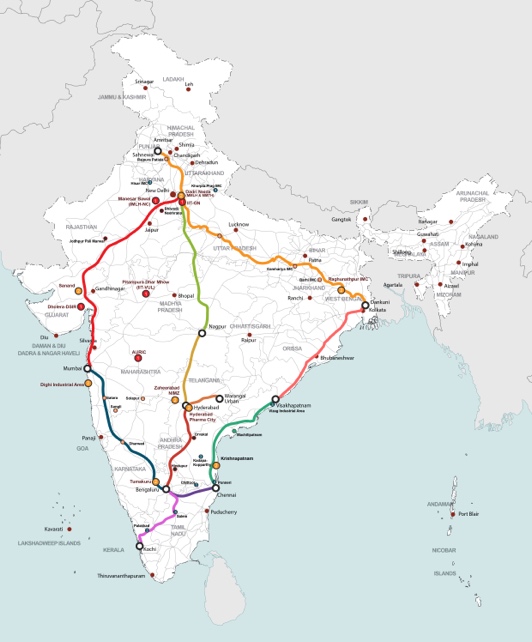
- Industrial Parks under National Industrial Corridor Development Programme
- The government will approve twelve industrial parks under this programme to promote industrial development.
- Investment-ready plug and play industrial parks will be developed in or near 100 cities to attract investment and enhance infrastructure.
About Industrial Parks
- Industrial parks are designated areas specifically designed to house a concentration of industrial activities, such as the Sri City Special Economic Zone in Andhra Pradesh.
Significance of Industrial Parks
- Industrial parks are designated areas for industrial activities to promote economic growth.
- They create job opportunities, encourage collaboration, and attract foreign investment.
National Industrial Corridor Development Programme (NICDP)
- The aim of NICDP is to develop industrial corridor projects to compete with global manufacturing hubs.
- There are 11 industrial corridors with 32 projects planned in 4 phases.
- The Delhi Mumbai Industrial Corridor was the first project approved in 2007.
- Implementation is overseen by NICDIT and NICDC, with the Finance Minister as the chairperson of the monitoring authority.
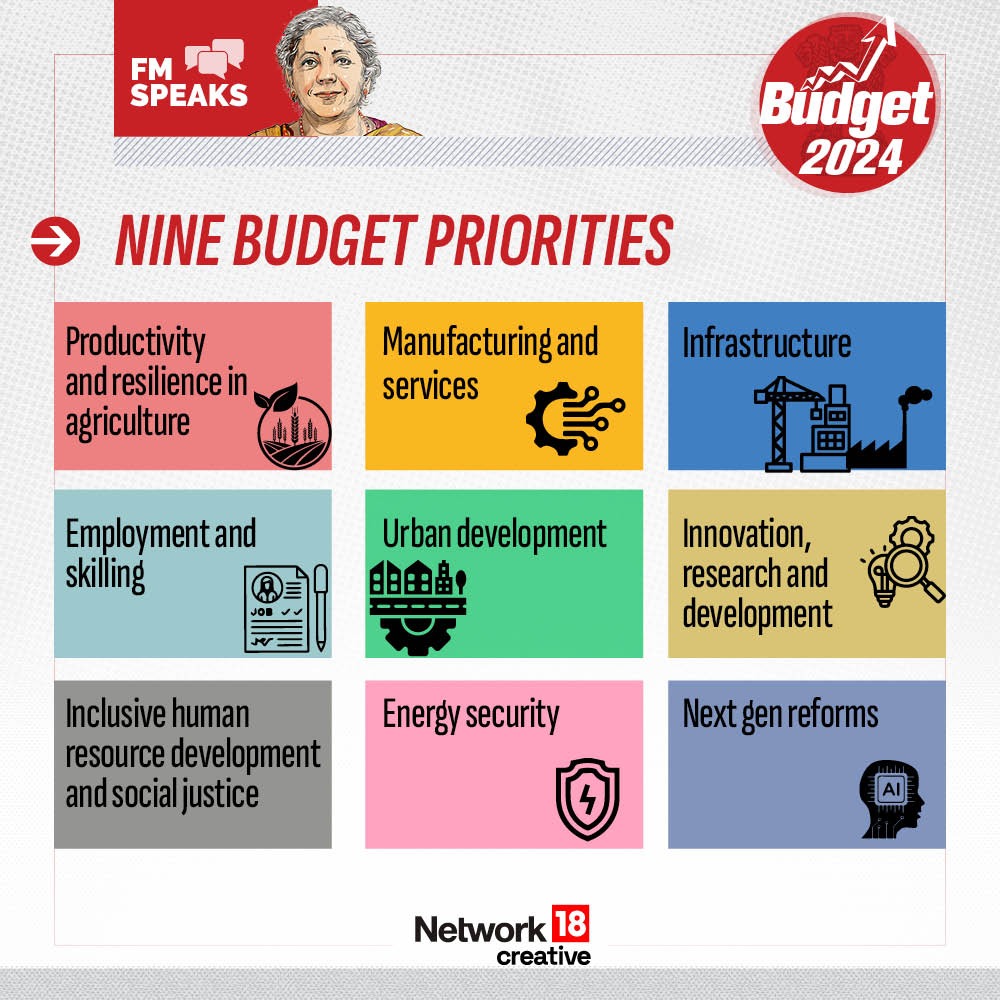
"5 New Schemes in Union Budget 2024-25"
- The package is designed to help 4.1 crore young people find employment, gain new skills, and secure internships over the course of five years.
| Parameter | Scheme | Key Features |
|---|---|---|
| Employment Linked Incentive Schemes | Scheme A: First Timers |
|
| Scheme B: Job Creation in Manufacturing |
|
|
| Scheme C: Support to Employers |
|
|
| Skilling Programme | 4th Scheme |
|
| Internship Opportunities | 5th Scheme |
|
"Highlights of Union Budget 2024-25"
- Emphasis on Employment, Skilling, MSMEs, and the Middle Class.
- Presented as per Article 112 of the Constitution.
Key Highlights
- Prime Minister’s Package of 5 Schemes for youth employment and skilling.
- Rationalization of Custom Duties to support domestic manufacturing.
- Revision of tax rate structure under new tax regime.
- Reduction of TDS rate on some payments and e-commerce operators.
- Different tax rates for short term and long term gains on financial assets.
- Increase in exemption limit of capital gains on certain financial assets.
- Proposal of Vivad Se Vishwas Scheme for income tax dispute resolution.
- Reduction of corporate tax rate for foreign companies.
- Increase in Securities Transaction Tax on futures and options of securities
- Withdrawal of Equalization levy of 2%.
- Immunity from penalty and prosecution for benamidar with full disclosure to improve conviction under the Benami Transactions (Prohibition) Act, 1988.
"Supreme Court Divided on GM Mustard Approval"
- A 2-judge bench of the Supreme Court issued a split verdict on PILs challenging the approval for environmental release of GM Mustard.
- The approval for GM Mustard was granted by GEAC and the Union Ministry of Environment, Forest, and Climate Change in October 2022, but was later put on hold by the Supreme Court in November 2022.
Key Highlights of the Supreme Court Judgment
- Judicial review of GEAC decisions is allowed.
- The Union government must create a national policy on GM crops in consultation with stakeholders.
- Enforcement of FSSAI Act provisions is necessary for importing GM food.
About GM Crops
- GM Crops have modified genetic materials for benefits like increased yields and resistance to pesticides, but also raise concerns like allergic reactions and immune-suppression.
- Bt cotton is the only approved GM crop for cultivation in India since 2002.
Approval Process for GM Crops in India
- Rules under the Environment (Protection) Act, 1986 govern the approval process for GM crops.
- GEAC, under the Union Ministry of Environment, Forest, and Climate Change, is responsible for appraising proposals related to GM organisms and products.
"Revitalizing Cities: Union Budget 2024-25 Urban Transformation"
- Improving urban development has been a major focus of the budget, with initiatives aimed at enhancing housing, rental options, city planning, water supply, sanitation, and assistance for street vendors.
Need for Urban Transformation Strategy
- Approximately 35% of India's population currently resides in urban areas, a number that is projected to increase to 53% by 2047.
- Urban centers currently contribute around 66% to the national GDP, with expectations for this number to reach 80% by 2050.
- Some of the main challenges faced by India's urban centers include infrastructure deficits, worsening environmental conditions such as air pollution, and issues related to planning and governance.
Key Strategies Announced in the Budget
Housing Strategy:
- Expansion of PM Awas Yojana for construction of 3 crore additional houses.
- Interest subsidies to facilitate loans at affordable rates.
- Facilitation of rental housing for industrial workers through PPP mode.
Cities as Growth Hub:
- Creative brownfield redevelopment of existing cities.
- Enabling policies, market-based mechanisms, and regulation.
- Implementation of Transit Oriented Development plans for 14 large cities with populations above 30 Lakhs.
Street Vendors Support:
- New scheme to support development of 100 weekly 'haats' or street food hubs each year for the next 5 years in select cities.
"UNDP's Signals Spotlight 2024 Report Released"
- The report identifies emerging trends in development and offers smart ideas for addressing long-term global challenges.
- Spotlight 2024 focuses on intergenerational equity and discusses three key areas for progress.
Key areas under Report
Hope for an Equitable Future
- The rights of nature are being recognized in constitutions, laws, and corporate boards in countries like Ecuador, Brazil, and Bolivia.
- There is a growing recognition of the need for alternative economic models, such as circular or regenerative economies and post-capitalism.
- The concept of nature as an asset class is gaining traction as a way to promote sustainability.
- Young people are using digital networks and AI to express themselves and lay the foundation for a creative democracy.
Hope for Responsible Technological Progress
- AI has the potential to narrow development gaps in various sectors like agriculture, healthcare, and education, as well as enhance democracy.
- The Open Source AI movement has the potential to democratize access to AI technology.
- Multilateral cooperation in space, with ethical considerations, could lead to improvements in quality of life on Earth.
- Satellites have the potential to connect the 2.5 billion people who are still offline, bridging the digital divide.
Hope for Resilient and Connected Communities
- Communities face challenges such as trauma from conflict and disasters, digital disinformation, and loneliness exacerbated by the Covid-19 pandemic.
- Communities and start-ups are investing in social and intergenerational connections to build resilience and foster a sense of community.