
Daily Current Affairs UPSC 11 July 2024
Welcome to our daily current affairs blog post for UPSC aspirants! In today's edition, we will be discussing the most significant events and news updates that took place on 11th July 2024. Staying updated with current affairs is crucial for UPSC preparation, as it not only helps you stay informed but also enhances your understanding of various subjects. So, let's dive into the important happenings of the day and explore their potential impact on the upcoming UPSC examinations.

Section 125
- The Supreme Court has upheld the right of divorced Muslim women to maintenance under Section 125 of the Code of Criminal Procedure (CrPC), 1973, from their former husbands.
- The court has affirmed that the availability of a remedy under secular law cannot be denied by personal laws.
- Currently, maintenance claims for divorced Muslim women are governed by the Muslim Women (Protection of Rights on Divorce) Act, 1986.
- Section 125 of the CrPC is the law that deals with maintenance for destitute wives, children, and parents.
- According to this law, a magistrate can order a person to pay a monthly allowance for the maintenance of his wife in case of divorce.
- It is important to note that the CrPC has been replaced by the Bharatiya Nagarik Suraksha Sanhita (BNSS).
Mutual Recognition Agreement(MRA) with Taiwan
- A recent Mutual Recognition Agreement (MRA) for organic products has been put into effect between India and Taiwan.
- This agreement is the first of its kind between the two countries and is considered a significant achievement.
- The implementation agencies in India responsible for this agreement are the Agricultural and Processed Food Products Export Development Authority (APEDA).
- The MRA allows for the sale of products that are produced and handled organically in accordance with the National Programme for Organic Production (NPOP) in Taiwan.
- The NPOP provides a framework for the accreditation of certification bodies and the certification of organic products.
- This agreement is important as it promotes the export of major Indian organic products like rice, processed food, and green/black products to Taiwan.
FishMIP initiative
- Bangladesh has been officially added as the fifth member of the CSC, a regional security grouping focused on maritime security, marine pollution response, and maritime search & rescue in the Indian Ocean Region (IOR).
- The CSC was originally formed in 2011 as a trilateral maritime security group consisting of India, Sri Lanka, and the Maldives, and later joined by Mauritius. It was re-branded as the CSC in 2020.
- Seychelles is currently an observer member of the CSC.
FishMIP initiative
- The FishMIP initiative, which stands for Fisheries and Marine Ecosystem Model Intercomparison Project, was started in 2013 with the goal of comparing and improving marine ecosystem models.
- The initiative has a global network of over 100 marine ecosystem modellers and researchers who work together to understand the impacts of climate change on marine ecosystems and fisheries.
- FishMIP is collaborating with the Food and Agriculture Organization (FAO) to use state-of-the-art numerical models to study the long-term effects of climate change on marine ecosystems.
- In 2024, FishMIP established FishMIP2.0 to enhance the reliability of modelling projections for global exploitable fish biomass, which have shown a decline of more than 10%.
MeDevIS (Medical Devices Information System
- The MeDevIS platform was recently launched by the World Health Organization (WHO) as the first global open access clearing house for information on medical devices.
- MeDevIS aims to replace paper-based literature searches across multiple publications with non-standard device names, which can add complexity.
- The platform also aims to simplify the naming of medical devices.
- MeDevIS references two international naming systems for medical devices: the European Medical Device Nomenclature (EMDN) mostly used in European countries, and the Global Medical Device Nomenclature (GMDN) used in Australia, Canada, USA, and other member countries.
Umlingla Pass
- NewSpace Research and Technologies successfully tested a 100-kg UAV at Unming La pass.
- Unming La Pass is located at 19,024 ft. in Eastern Ladakh along the Ladakh Range.
- It is known as the highest motorable road in the world, constructed by BRO under Project Himank.
- The road at Unming La pass improves connectivity to the Line of Actual Control (LAC) and local connectivity in Chisumle-Demchok sector to Leh.
- It also boosts tourism in Ladakh.
- Other important passes in Ladakh include Khardung La, Chang La, Tanglang La, etc.
Hydrogen Line (21 cm line)
- The recent news highlighted the hydrogen line, also known as the 21 cm line, which is emitted by atomic hydrogen when an electron moves from a higher energy level to a lower one.
- This emission releases light with a specific wavelength of approximately 21 centimeters.
- In radio astrophysics, the hydrogen line is used to study the composition and evolution of the solar system and the universe, map hydrogen in the Milky Way galaxy, and demonstrate the presence of dark matter.
Salvinia molesta
- A beetle called Cyrtobagus salvinia from Brazil has effectively eliminated the invasive weed Salvinia molesta from Sarani reservoir in Betul district, Madhya Pradesh.
- The Sarani reservoir is situated on the Tawa River, a tributary of the Narmada River.
- Salvinia molesta is a free-floating aquatic fern native to Brazil, also known as "Water Fern" or "Chinese Jhalaar."
- The ecology of Kerala, Odisha, Uttarakhand, and Maharashtra has also been negatively impacted by Salvinia molesta.
Places in News
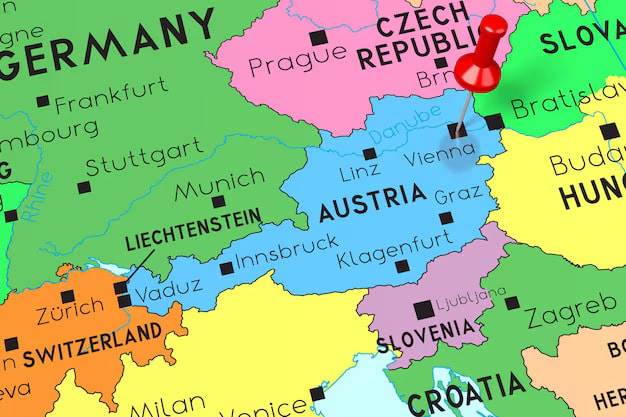
Austria (Capital: Vienna)
Visit of Indian Prime Minister to Austria
- Political features
- Location: Austria is a mountainous landlocked country in south-central Europe.
- Bordering countries: Austria shares borders with Germany, the Czech Republic, Slovakia, Hungary, Slovenia, Italy, Switzerland, and Liechtenstein.
- Geographical features
- Mountain range: The Alps
- Largest lakes: Lake Constance and Neusiedler Lake
- Major river: The Danube
"Supreme Court backs West Bengal in CBI lawsuit"
- The State accused the Union of constitutional overreach and violation of federalism by unilaterally employing the CBI without prior consent.
- The suit was filed under Article 131 of the Indian Constitution, which deals with the Supreme Court's original jurisdiction in disputes between the Centre and one or more states.
- CBI needs to obtain consent from state governments before investigating a crime in a particular state, as per the DSPE Act of 1946.
- Consent can be general or case-specific, with West Bengal and other states withdrawing their general consent.
- Exceptions to general consent include cases where the Supreme Court or High Courts order CBI investigations or when someone is caught red-handed taking a bribe.
- In case-specific consent, CBI must apply to the state government for permission in each case.

"India's Aid to Papua New Guinea"
- India's commitment to the Forum for India–Pacific Islands Cooperation (FIPIC) partnership is demonstrated through providing Humanitarian Assistance and Disaster Relief (HADR) to Papua New Guinea.
About Forum for India–Pacific Islands Cooperation (FIPIC)
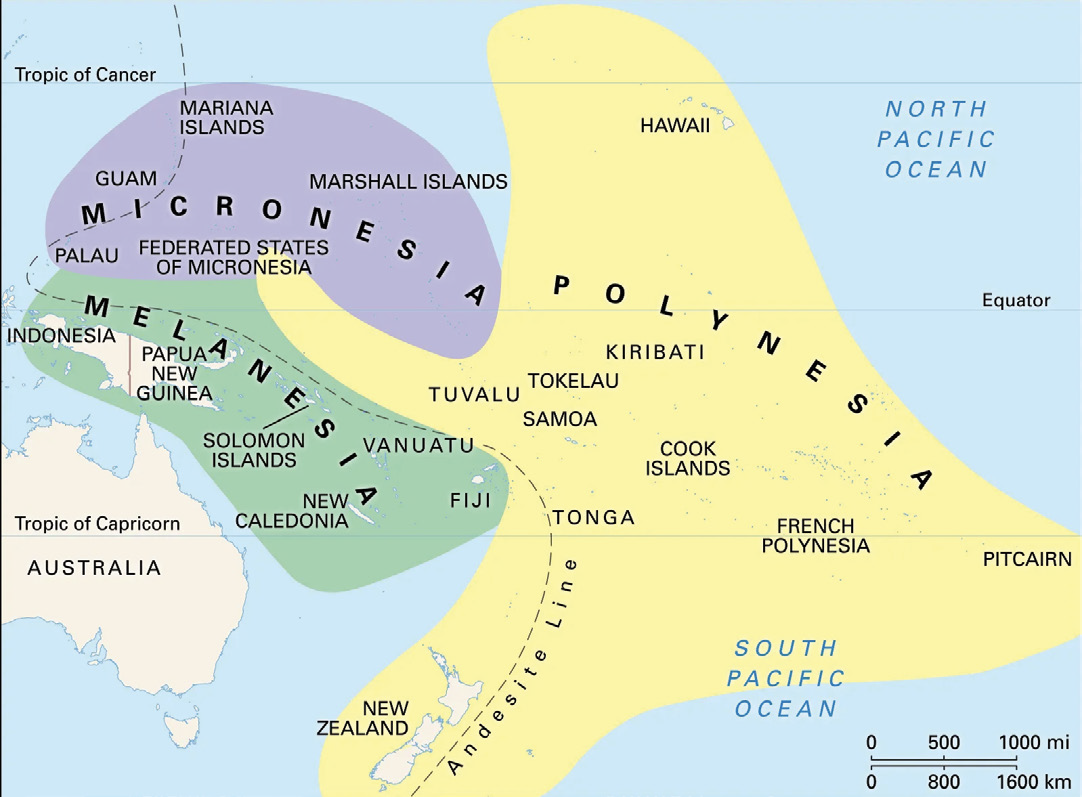
- In 2014, a multinational grouping was established to promote cooperation between India and 14 Pacific Islands nations.
- The 14 Pacific Islands nations involved in this grouping are part of three major island groups: Melanesia, Micronesia, and Polynesia.
- The main objectives of this grouping include facilitating trade and investment through business exchanges.
- The formation of this grouping, known as FIPIC, aligns with India's Act East Policy, Indo-Pacific policy, and South-South Cooperation.
- The presence of a significant Indian Diaspora in Fiji and Papua New Guinea is a driving force behind the establishment of FIPIC.
Significance of FIPIC for India
- Economic Interests: The Islands have large Exclusive Economic Zones (EEZs) with natural and mineral resources like natural gas.
- Geostrategic Interests: India aims to expand its influence in the Indo-Pacific region to counter China's influence and promote a free, open, and inclusive Indo-Pacific.
- India's Naval Capabilities: With increasing naval capabilities, India is looking beyond the east of Malacca and sees the Islands as a significant part of its broader maritime strategy.
"Latest Red List Updates from IUCN"
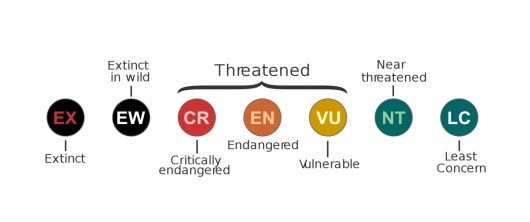
- The IUCN Red List categorizes species at risk of extinction into nine categories.
- The list now includes approximately 163,000 species, with around 45,000 threatened with extinction.
- Biodiversity is facing increasing pressures from poaching, climate change, and invasive species.
Key Updates
- The status of the La Gomera giant lizard (Gallotia bravoana) has improved from Critically Endangered to Endangered.
- This species is found in the Canary Islands.
Species with declined status
| Species | Updated Status | Location & other specification | Threat |
|---|---|---|---|
| Copiapoa cacti | 82% of species are in danger of becoming extinct | Cacti that are used for decoration and are native to the Atacama coastal desert in Chile | Illegal trading and oceanic fog are obstacles to the reproduction of the species |
| Gran Canaria giant lizard | Previously considered to be of little concern, this species is now at a high risk of extinction. | Reptile species that can only be found in the Canary Islands, which belong to Spain | The species is vulnerable to the invasive California kingsnake |
| Gran Canaria skink | Previously considered to be of little concern, this species is now at a high risk of extinction. | ||
| Ibiza wall lizard | Endangered (formerly Near Threatened) | Islands of Ibiza and Formentera, both part of Spain | The invasive horseshoe whip snake poses a threat to the species |
| Bornean Elephant | Endangered | The smallest elephant species with a wider face, found in Borneo and Sumatra Islands | Human activities are also a concern for the species |
"UN Releases 2024 Digital Economy Report"
- The report emphasizes the importance of implementing sustainable strategies throughout the life cycle of digitalization to ensure an environmentally sustainable and inclusive digital future.
- It highlights the significant increase in internet users from 1 billion in 2005 to 5.4 billion in 2023.
Environmental Impact of Digitalization
- GHG Emissions: The ICT sector is estimated to have contributed 1.5-3.2% of global GHG emissions in 2020.
- E-Waste Surge: The rise in online shoppers has led to a 30% increase in digital-related waste from 2010 to 2022, reaching 10.5 million tonnes globally.
- Water Footprints: Data centers have significant electricity and water needs, with global data centers alone consuming 460 terawatt hours in 2022.
- Critical Minerals Supply: The demand for minerals like graphite, lithium, and cobalt for digitalization could increase by 500% by 2050, leading to potential environmental impacts.
Key Recommendations for Sustainability
- Circular Economy Models: Adopting circular economy models to reduce waste and promote recycling.
- Strengthen Regulations: Enforce tougher environmental standards to mitigate the environmental impact of digitalization.
- Invest in Renewable Energy: Support the research and development of energy-efficient technologies and incentivize the use of renewable energy.
- Promote Sustainable Business Models: Encourage new sustainable business models, such as electronic products as a service.
About UN Trade and Development
- Genesis: Established as a permanent intergovernmental body by the United Nations General Assembly in 1964.
- Objective: To assist developing countries, particularly the least developed and transitioning economies, in effectively integrating into the global economy.
- Members: 195 nations, including India.
- Flagship Reports: Publishes reports like the Trade and Development Report and World Investment Report.
- HQ: Located in Geneva, Switzerland.
"Devastating Assam Floods Impact 2 Million+"
- The recent flooding in Assam has brought attention to the region's susceptibility to floods in North East India.
Reasons for flood vulnerability of North East India
- River instability: The Brahmaputra and the Barak rivers are braided and unstable due to high sediment charges, steep slopes, and transverse gradients.
- Geology: The area is part of a seismic zone, leading to periodic severe earthquakes that contribute to river instability.
- Hydrometeorology: Cyclonic storms from the Bay of Bengal affect the drainage area of the Brahmaputra and Barak rivers, especially towards the end of the monsoon season.
- Climate change: While overall rainfall is decreasing in North East India, some areas are experiencing increased rainfall intensity, leading to flooding.
- Drainage congestion: Heavy rainfall and high flow levels prevent rainwater from draining quickly into the riverbed, causing flooding.
- Anthropogenic factors: Construction, encroachment of river bodies, and embankments obstruct natural flows, contributing to drainage congestion.
Recommendations for enhancing flood resilience of North East India
- Increase river water-holding capacity through dredging.
- Implement flood zoning based on flood frequencies.
- Install modern weather stations in upstream catchment areas of dams.
- Strengthen flood protection structures, many of which are outdated.
- Promote afforestation and rejuvenation of wetlands to help mitigate flooding.
"Telecom Equipment Production Hits ₹50,000 Crore Milestone"
- The telecom sector's success is primarily attributed to the Production Linked Incentive (PLI) Scheme for Telecom and Networking Products.
About the PLI Scheme
- Nodal Ministry: Ministry of Communications
- Type: Central Sector Scheme
- Objectives: Enhancing domestic manufacturing capabilities and making India a global hub for telecom equipment production.
- Eligibility: Global companies; Domestic companies or MSMEs fulfilling specified Global Manufacturing Revenue criteria.
- Benefits: Financial incentives to manufacturers based on their incremental sales from base year for products manufactured in India.
Financial Incentive Details
- Base Year: FY 2019-20.
- Rate of incentive: 4-7% for MSMEs and 4-6 % for others.
- Additional 1% incentive under Design-led PLI for products that are both designed and manufactured in India.
- Products eligible for financial incentive: Core Transmission Equipment; 4G/5G, Next Generation Radio Access Network (RAN) and Wireless Equipment; Switches, Routers, etc.
- Tenure: For making investments: April 2021 up to FY 2024-2025, For availing financial Incentives: FY 2021-22 to FY 2025-26
- Project Management Agency: Small Industries Development Bank of India (SIDBI)
Background of PLI Scheme
- Centre announced PLI schemes in 2021 to enhance India's Manufacturing capabilities and Exports.
- PLI schemes cover 14 sectors including Mobile Manufacturing and Specified Electronic Components; Automobiles and Auto Components; Pharmaceuticals Drugs; Specialty Steel, etc.
- Schemes have been notified by the concerned Ministries/Departments.