
Daily Current Affairs UPSC 06 August 2024
Welcome to our daily current affairs blog post for UPSC aspirants! In today's edition, we will be discussing the most significant events and news updates that took place on 6th August 2024. Staying updated with current affairs is crucial for UPSC preparation, as it not only helps you stay informed but also enhances your understanding of various subjects. So, let's dive into the important happenings of the day and explore their potential impact on the upcoming UPSC examinations.

Methanotrophs
- Agharkar Research Institute has identified India's first indigenous methanotrophs called Methylocucumis oryzae.
- The nickname "methane eating cucumbers" has been given to this new genus.
- Methanotrophs are bacteria that consume methane and increase their biomass.
- They are typically found in wetlands, rice fields, ponds, and other water bodies.
- These bacteria can help filter methane in anaerobic environments and oxidize atmospheric methane in the presence of oxygen.
- Methanotrophs act as natural agents for mitigating methane.
- Their significance lies in their potential to combat global warming by reducing methane levels in soil and the atmosphere.
Zinc Air Batteries
- CSIR has created a durable Zinc air battery for energy solutions in remote sub-zero conditions.
- Zinc Air Batteries are a type of metal-air battery with a zinc negative electrode and an air positive electrode.
- The Zinc air Battery developed by CSIR combines an efficient durable cathode catalyst and an anti-freezing electrolyte.
- It uses a CoFe/Fe3C alloy/carbide hybrid structure to enhance durability and efficacy in both liquid and solid-state zinc-air batteries.
- The benefits of this battery include portability, flexibility, lightweight design, and the ability to be used in extreme cold conditions.
Astra Mark 1 missiles
- The Air Force has approved the production of 200 Astra Mark 1 missiles.
- Astra Missiles are a type of Beyond Visual Range Air-to-Air Missile system designed for fighter aircraft.
- The ASTRA Mk-I Weapon System is being integrated with SU-30 Mk-I aircraft in the Indian Air Force.
- The missile has a range of 80 to 110 km and is designed to engage and destroy highly maneuvering supersonic aircraft.
- The Astra missile is developed by the Defence Research and Development Organisation and manufactured by Bharat Dynamics Limited.
Mudra Loans
- The Finance Minister reported that the NPA associated with Mudra loans has decreased from 4.77% in 2020-21 to 3.4% in 2023-24.
- Mudra loans are provided by various financial institutions to non-corporate, non-farm small/micro enterprises.
- These loans are given under the Pradhan Mantri MUDRA Yojana (PMMY) introduced in 2015 to bring small entrepreneurs into the formal financial system.
- Mudra loans are classified into three categories: Shishu, Kishor, and Tarun.
- In Budget 2024, the limit of MUDRA loans has been raised from Rs 10 lakh to Rs 20 lakh for those who have successfully repaid loans taken under the Tarun category.
Front Running
- SEBI has issued regulations for mutual funds to prevent fraudulent activities like front running.
- Front running involves using confidential information to trade securities before a large order is placed.
- This practice is prohibited in India as it can harm market integrity and disadvantage other investors.
Demand for Grants
- Lok Sabha recently approved the Demands for Grants from the Union Budget 2024-25.
- Demands for Grants are the estimates of expenditure from the Consolidated Fund presented to Lok Sabha.
- Demands for Grants are submitted in accordance with Article 113 of the Constitution.
- Article 113 (iii) specifies that no demand for a grant can be made without the recommendation of the President.
- Once approved, Demands for Grants become part of the Appropriation Bill
- The Appropriation Bill allows the government to withdraw funds from the Consolidated Fund of India to cover its expenses and liabilities.
PARIVESH Portal
- The PARIVESH portal, developed by the Ministry of Environment, Forest and Climate Change through NIC, has surpassed 50,000 clearances.
- PARIVESH stands for Pro Active and Responsive Facilitation by Interactive and Virtuous Environmental Single-window Hub.
- The portal serves as a single window for Environment, Forest, Wildlife, and Coastal Regulation Zone (CRZ) clearances and monitors their compliance nationwide.
World Craft City (WCC)
- Srinagar has been recognized as a World Craft City by the World Crafts Council, providing opportunities for craftsmen to improve their skills and heritage.
- Srinagar is one of four World Craft Cities in India, along with Jaipur, Mamallapuram, and Mysore, and one of 60 globally.
- The World Crafts Council was launched in 2014 to establish a network of craft cities worldwide, promoting the principles of the creative economy.
- The recognition of Srinagar as a World Craft City acknowledges the important role of local authorities, craftspeople, and communities in cultural, economic, and social development on a global scale.
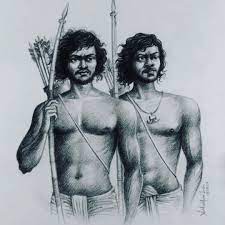
Siddhu Murmu
- Remembering Sidhu Murmu and Kanhu Murmu on their death anniversary.
- Contribution of Sidhu Murmu
- Santhal Revolt (1855-56) led by Sidhu and Kanhu along with Chand and Bairab.
- Aimed to get rid of oppressive 'Dikus' (Outsiders).
- Santhal Parganas Tenancy Act (1876) passed after the revolt
- Santhal Revolt (1855-56) led by Sidhu and Kanhu along with Chand and Bairab.
- Achievement of Sidhu Murmu
- Hul Diwas celebrated in Jharkhand to remember their sacrifice.
- Values represented by Sidhu Murmu
- Courage, Bravery, Heroism, etc.
"India's Geothermal Power Potential: 10,600 MW"
- Information provided by Minister of New & Renewable Energy in Lok Sabha.
- Geothermal Energy is a renewable heat energy source found in the earth's crust. It can be used for heating, cooling, or electricity generation. This energy is created from radioactive decay and heat loss from the earth's formation.
Advantages of Geothermal Energy
- Geothermal Energy is a clean and cost-effective renewable energy source.
- It can operate year-round at high capacity factors.
Disadvantages/issues of Geothermal Energy
- Possible land subsidence and high transportation costs due to remote plant locations.
- Potential release of toxic chemicals like mercury, arsenic, boron, and antimony.
- Other issues include higher capital costs and challenges in techno-economic viability due to remote locations.
Steps Taken in India
- The Renewable Energy Research & Technology Development Programme (RE-RTD) supports research organizations and industry with financial assistance.
- The Renewable Energy Technology Action Platform is part of the US-India Strategic Clean Energy Partnership.
- The Mission on Advanced and High-Impact Research (MAHIR) focuses on advanced research in renewable energy technologies.

Enhancing Risk Reduction with Technology
Advancements in Geospatial Technology in Disaster Management and Risk Reduction (DMRR).
Use of Technologies in DMRR
- Disaster prediction and early warning systems: Utilizing remote sensing, ML, GIS, or drones for data collection and processing.
- AI in disaster modeling: Deep learning techniques like Google Disaster Alerts for accurate predictions.
- Event simulation: Augmented Reality (AR) and Virtual Reality (VR) for training and preparation, such as Mobile Learning Hub Philippines.
- Disaster detection: Leveraging social media for information and communication during disasters, like earthquake detection through X Search.
- Search and rescue: Identifying critical needs through satellite imagery and drones for aid delivery.
- Emergency communication: AI-powered chatbots like WHO's Covid-19 chatbots for managing public communication during disasters.
Challenges in use of Technology
- Digital Divide, Biased AI, High implementation costs, Security breaches.
Steps taken
- Forecasting of Natural Disasters by ISRO: Implementing Flood Early Warning System in Assam.
- INSAT-3D satellite: Aiding search and rescue operations.
- GEMINI device: Developed by INCOIS for disaster warnings to fishermen in the ocean.
- SATARK web-based Platform: By Odisha State Disaster Mitigation Authority.
- Connecting Business initiative (CBi): Joint initiative of UNDP and OCHA for humanitarian coordination.
"Bangladesh PM Steps Down After 15 Years"
- The Prime Minister resigned following sustained student protests against the quota system, which were met with violent suppression.
- The protests also saw some anti-India sentiments due to India's support for the government and limited engagement with the opposition.
- The resignation of the Prime Minister has created a political vacuum and uncertainty in Bangladesh.
Impact of PM resignation on India-Bangladesh Relations:
- Economic repercussions: Instability may affect infrastructure projects and delay Free Trade Agreement.
- Border Management and illegal Migration: Geostrategic border concerns with North East India and potential increase in illegal migration.
- Regional Security Concerns: Disruption to regional security and counterterrorism efforts.
- Neighbourhood Relations: Adds concerns to India's neighborhood and bilateral relations.
- China Factor: Opposition in Bangladesh is pro-Pakistan and pro-China.
Significance of India-Bangladesh relations:
- Important trade partners: Bilateral trade at USD 14.01 billion.
- Security and Border Management: Collaboration on tackling illicit activities.
- Enhanced Connectivity: Cross-border rail link inauguration.
- Regional Co-operation: Engagement at multilateral platforms like SAARC, BIMSTEC, BBIN.
"Five Years Without Articles 370 and 35(A)"
- In 2019, the President of India issued an order applying the provisions of the Indian Constitution to Jammu and Kashmir.
- Article 370 required the state government's approval for all laws except for defence, foreign affairs, finance, and communications.
- Article 35A allowed the J&K Assembly to define permanent residents and grant them special rights and privileges.
- The Supreme Court supported the government's decision to revoke Article 370.
Impact of Abrogation of Article 370 in Jammu and Kashmir
Reduction in Terrorism and Violence
- Net Estimated infiltration reduced from 143 (2018) to 14 (2022).
- Terrorist Initiated incidents declined from 228 (2018) to 125 (2022).
- Security personnel killings declined from 91 (2018) to 32 (2022).
Ending exclusive property rights
- Abrogation enabled Centre to notify new land laws for J&K.
Local Government Empowerment
- Constitutional status to local government through application of 73rd and 74th Amendments of Constitution to J&K.
- Record voter turnouts at Block Development Council (98.3%), in first election after abrogation.
No separate symbols/laws
- J&K no longer has its own flag, constitution, and its own penal code (called the Ranbir Penal Code).
"Proposed Oilfields Bill 2024 in Rajya Sabha"
- Proposed Amendments to the Oilfields (Regulation and Development) Act, 1948
- Historical Background of Regulation of Oilfields, Mines, and Minerals
Key Features of the Bill:
- Expanding the definition of mineral oils to include various hydrocarbons.
- Introduction of the concept of "petroleum lease" for various purposes related to mineral oils.
- Separation of petroleum operations from mining operations.
- Focus on efficient dispute resolution and decriminalization of Act provisions.
Significance of the Amendment:
- Ensuring energy access, security, and affordability.
- Decreasing import dependence by boosting domestic oil and gas production.
- Attracting investment for capital and technology infusion in the sector.
- Promoting energy transition towards cleaner fuels.
- Establishing a strong enforcement mechanism for compliance assurance.
"Union Agriculture Minister Allocates Rs 18,000 Cr for Horticulture Clusters"
These groups of farms will be established within the next five years in order to increase agricultural revenue.
About Horticulture Clusters (HC)
- Horticulture Cluster (HC) defined as regional concentration of targeted horticulture crops.
- Benefits of HC include reducing harvest losses, facilitating innovative technologies, and connecting stakeholders in global value chains.
- HC offers specialization in production, post-harvest management, marketing, and exports.
Status of Horticulture in India
- Horticulture contributes 33% to agriculture Gross Value Added (GVA).
- India ranks 2nd in fruits and vegetable production globally after China.
- Production in India in 2022-23 is 355.48 Million Tonnes.
- India's share in global market is only 1%.
Challenges Faced in Horticulture Sector
- Challenges include lack of high-quality seedlings and rootstock, persistent pests, climate change impact on crop productivity, and financial viability.
Government Initiatives to Support Horticulture Sector
- Mission for Integrated Development of Horticulture (MIDH) for holistic growth.
- Coordinated programme on Horticulture Assessment and Management using geoinformatics (CHAMAN) for scientific estimation of area and production.
- Capital Investment Subsidy Scheme for construction/expansion/modernization of Cold Storages/Storages of Horticulture Products.