
Daily Current Affairs UPSC 05 July 2024
Welcome to our daily current affairs blog post for UPSC aspirants! In today's edition, we will be discussing the most significant events and news updates that took place on 5th July 2024. Staying updated with current affairs is crucial for UPSC preparation, as it not only helps you stay informed but also enhances your understanding of various subjects. So, let's dive into the important happenings of the day and explore their potential impact on the upcoming UPSC examinations.

Securities Appellate Tribunal (SAT)
- The Chief Justice of India is recommending the establishment of more Securities Appellate Tribunals (SAT) due to the rapid growth in the market and increased volume of financial transactions.
- SAT is a statutory body established under the SEBI Act, 1992 with only one bench located in Mumbai.
- The Nodal Ministry for SAT is the Ministry of Finance and it has jurisdiction over the whole of India.
- The composition of SAT includes a Presiding Officer, Judicial Member, and Technical Member with a tenure of five years and eligibility for reappointment for a maximum of five years (up to the age of seventy years).
- SAT's functions include hearing and disposing of appeals against orders passed by SEBI or an adjudicating officer under the SEBI Act, Insurance Regulatory Development Authority of India, and Pension Fund Regulatory and Development Authority.
3D Hologram Technology
- Japan has introduced new yen banknotes with 3D hologram technology to combat counterfeiting.
- Holograms are difficult to replicate due to their intricate patterns and properties, making it challenging for counterfeiters.
- Trained individuals can easily recognize holograms, allowing for quick identification of genuine products.
- Hologram technology involves a photographic pattern that creates a three-dimensional image when illuminated by coherent light.
- Holograms display different images and colors depending on the viewing angle.
- The formation of holographs is based on principles of interference and diffraction.
- Hologram technology has various applications such as medical imaging, weather forecasting, and security holograms on credit cards.
Australia-India Strategic Research Fund (AISRF)
- The Union Minister of State for Science and Technology revealed the outcomes of the 15th round of the Australia-India Strategic Research Fund (AISRF).
- AISRF was established in 2006 as a collaborative platform between India and Australia for scientific research, with joint management and funding.
- The objectives of AISRF are to support research collaboration in advanced Science and Technology (S&T) between Australia and India, strengthen strategic alliances, foster innovation, and provide access to the global S&T system.
- AISRF is currently funding projects in various fields such as artificial intelligence and machine learning, biotechnology, urban mining, and electronic waste recycling.
Exchange Traded Fund (ETF)
- SEBI has changed rules to permit equity-oriented ETFs and Index Funds to increase their investments in the listed securities of their sponsors' group companies.
- ETFs are securities that follow an index, commodity, bonds, or a group of assets like an Index Fund.
- An Index Fund tracks the performance of an underlying index, such as the Nifty or the Sensex.
- ETFs trade like common stocks on a stock exchange, with their trading value determined by the net asset value of the underlying stocks they represent.
Stablecoins
- The recent instability in the Stablecoin market, exemplified by the collapse of TerraUSD, has sparked worries about the dependability and consistency of these digital assets.
- Stablecoins are a form of cryptocurrency that is tied to the value of another asset, like a fiat currency or a commodity like gold, in order to keep their price stable.
- They offer a solution to the extreme price fluctuations seen in mainstream cryptocurrencies, which could make them more practical for everyday transactions.
Technology Development Fund (TDF)
- The Ministry of Defence allocated over Rs 300 crore through its Technology Development Fund (TDF) to boost cutting-edge technology capabilities and promote self-reliance in defense.
- The TDF is a flagship program of the MoD managed by DRDO as part of the 'Make in India' initiative.
- The objectives of the TDF include providing financial support to Indian industries, MSMEs, startups, academic and scientific institutions for the development of defense and dual-use technologies.
- The focus of the TDF is on research, design, and development of niche technologies.
- The initial corpus of the TDF was Rs 100 crore, and the MoD approved an increase in funding under the TDF scheme from Rs 10 crore to Rs 50 crore per project.
Global INDIAai Summit 2024
- The Global INDIAai Summit 2024, hosted by India, recently ended.
- India focused on making AI accessible to everyone and promoting democratization of AI.
- A new partnership on AI was announced by OECD and GPAI.
- GPAI members agreed on the future vision of GPAI, acknowledging the New Delhi 2023 GPAI Ministerial Declaration.
Stryker Combat Vehicles
- India will be conducting trials for US-made Stryker Infantry Combat Vehicles in Ladakh and deserts.
- The Stryker Combat Vehicles are a family of eight-wheel-drive armored ICVs.
- General Dynamics Land Systems Division in the United States is responsible for building the Stryker vehicles.
- The Stryker vehicles are equipped with a cannon and a mobile gun, and have a V-hull design for protection.
- India and the US are exploring the possibility of joint production of the latest generation of Stryker vehicles as part of their defense-industrial cooperation roadmap.
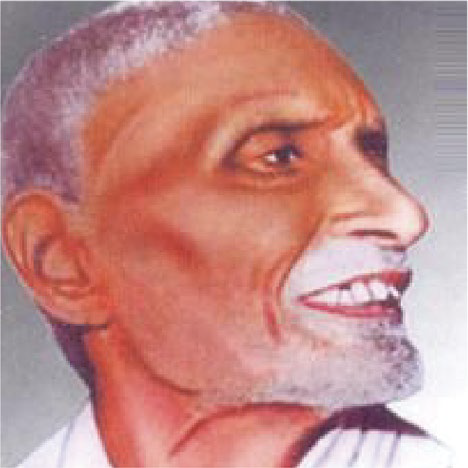
Pingali Venkayya (1876 - 1963)
- Pingali Venkayya, a prominent freedom fighter, was honored on the anniversary of his death on July 4th.
About Pingali Venkayya
- Born in Krishna district of Andhra Pradesh.
- Believer in Gandhian principles and a strong nationalist.
Key Contributions of Pingali Venkayya
- Served as a soldier in the British Army in South Africa during the Anglo Boer war.
- Designed the Indian National Flag on request of Mahatma Gandhi.
- Participated in various movements including Swadeshi Andolan under Gandhi's leadership.
- Celebrated "TirangaUtsav" in 2022 on his 146th birthday.
- Authored 'Bharatha Deshaniki Oka Jatiya Patakam' in 1916.
Values embodied by Pingali Venkayya
- Courage
- Nationalism
- Patriotism
- Dedication
"New Guidelines for Testing Facility Funding"
- Ministry of New & Renewable Energy (MNRE) has released guidelines for a scheme aimed at funding testing facilities, infrastructure, and institutional support for the development of standards and regulatory framework under NGHM.
- The objective of the scheme is to ensure the safe and secure operation of equipment and instruments used in the Green Hydrogen (GH2) value chain.
Key highlights of the scheme
- It include bridging the gap in existing testing infrastructures, establishing new facilities, and upgrading existing ones to achieve self-sufficiency in testing and certification of GH2.
- The timeline for setting up new testing and certification facilities is 18 months from the date of sanction by MNRE, while the timeline for upgrading existing facilities is 12 months.
- MNRE has the authority to retract sanction, cancel, or short-close projects in consultation with the Steering Committee if executing agencies or projects face delays or fail to comply with the scheme's objectives.
- Access to testing facilities, whether set up or upgraded, is open to all potential users and shall not be a captive unit of any specific organization or group.
- The implementing agency for the scheme is the National Institute of Solar Energy under MNRE, with a budgetary outlay of Rs. 200 Crores until 2025-26.
- The funding pattern by MNRE is up to 100% for government entities and up to 70% for non-government entities.
National Green Hydrogen Mission (NGHM)
- NGHM was launched in 2023 and will continue until 2029-30 with the goal of achieving a GH2 production capacity of 5 MMT by 2030.
- The mission aims to make India a leading producer and supplier of GH2, reducing dependence on fossil fuel imports by over Rs. 1 lakh crore by 2030.
- GH2 is produced using electrolysis of water with electricity generated by renewable energy sources.
"24th SCO Summit in Astana, Kazakhstan"
Key Outcomes of the SCO Summit:
- Belarus becomes the 10th member to join the SCO.
- Adoption of various declarations and strategies including the Astana Declaration, Cooperation Program to Counter Terrorism, Separatism, and Extremism, Anti-Drug Strategy, and SCO Development Strategy.
- Emphasis on SCO's role in global peace and shaping a new democratic and economic order.
- Approval of Economic Development Strategy's Action Plan and energy cooperation strategies.
- Endorsement of the Initiative 'On World Unity for a Just Peace, Harmony and Development'.
Importance of SCO for India:
- Resources: Assistance in pursuing the Connect Central Asia policy and access to mineral resources.
- Counter-terrorism: Access to key information and intelligence through SCO's Regional Anti-Terrorist Structure.
- Energy Security: Access to natural gas and oil reserves in the region, potential facilitation of the TAPI pipeline.
Challenges for India in the SCO:
- Perception of SCO as an anti-west forum in Western nations.
- Conflicts among member nations, such as India-Pakistan.
- Limited engagement with observer states, dialogue partners, and other regional and international organizations.
Shanghai Cooperation Organisation (SCO):
- Founded in Shanghai in 2001 by Kazakhstan, China, Kyrgyz Republic, Russia, Tajikistan, and Uzbekistan.
- Current members include India, Iran, Kazakhstan, China, Kyrgyzstan, Pakistan, Russia, Tajikistan, Uzbekistan, and Belarus.
- Afghanistan and Mongolia have observer status.
- Official languages are Russian and Chinese.
- Goals include strengthening mutual trust, friendship, and cooperation among member states in various spheres.
"ISRO's Global Planetary Defense Initiative"
- During an international workshop on Asteroid Day 2024, the ISRO Chairperson mentioned that ISRO plans to investigate asteroid Apophis when it comes within 32,000 km of Earth in 2029 in order to enhance planetary defense strategies.
Asteroid Apophis:
- Discovered in 2004, Apophis is a near-Earth object (NEO) and was initially considered a hazardous asteroid.
- Recent radar observations have determined that Apophis poses no risk of impacting Earth for at least a century.
Planetary Defense:
- Refers to strategies to protect Earth from potential impacts by NEOs like asteroids and comets.
- Involves detection, tracking, impact assessment, and deflection methods.
- NEOs could pose a threat to billions of lives through tsunamis, earthquakes, and fires if they intersect with Earth's orbit.
Global Planetary Defense Efforts:
- NASA's Double Asteroid Redirection Test (DART) demonstrated asteroid deflection by impacting the moonlet Dimorphos.
- OSIRIS-REx mission successfully gathered a sample from asteroid Bennu and is now studying Apophis as OSIRIS-APEX.
- International Asteroid Warning Network and NEO Coordination Centre by European Space Agency aid in detecting and tracking NEOs.
"Proposed National Policy for FPOs by Ministry of Agriculture"
Key Highlights of National Policy on FPOs
Aim: To consolidate existing FPOs and establish 50,000 FPOs benefiting 2.50 crore farmers.
Guiding Principles:
- Assessment of all schemes to promote FPOs, including the 2021 Central sector scheme 'Formation and promotion of 10,000 FPOs'.
- End-to-end Value Chain approach to boost farmers' income from production to marketing.
- Emulating AMUL model with a 3-tier structure emphasizing collective business goals, capacity building, and professional management.
FPO eligibility:
- Minimum 300 members in most areas, 100 in North East/hilly/UTs.
- Must be registered as a legal entity under Companies Act 2013 or Cooperative Society laws.
- Must register with FPO Registry Portal maintained by the Central Government.
Central Nodal Department (CND): Department of Agriculture and Farmers' Welfare (DA&FW).
Role of CND:
- Allocate funds for FPO development through central government scheme convergence.
- Make institutional loans available to FPOs at lower interest rates.
- Central Nodal Agency: Small Farmers’ Agribusiness Consortium, New Delhi (under DA&FW).
About FPOs
- FPOs are created to help groups of farmers work together to increase efficiency and profitability in agriculture and related industries.
- There are currently 5000 FPOs registered on the Open Network for Digital Commerce portal, allowing them to sell their products online.
- The main goal of FPOs is to improve income for producers and help farmers and agricultural communities increase productivity by using resources more effectively and sustainably.
"Energy Crop Planting to Combat Biodiversity Loss"
- Study titled ‘Balancing bioenergy expansion and restoration: Global shifts in biodiversity intactness’ highlights the importance of prioritizing degraded or abandoned agricultural land for energy crops.
- This approach offers greater benefits in terms of biodiversity conservation and restoration.
- By focusing on degraded land, the impact on natural vegetation and biodiversity can be minimized.
About Bioenergy Crops
- Bioenergy crops refer to plants specifically grown for the purpose of producing biomass that can be converted into energy.
- They include energy grasses, oilseeds, and lignocellulosic crops.
- Bioenergy crops are classified into three development stages: First Generation, Second Generation, and Third Generation.
- Challenges in bioenergy crop production include land use conflicts, food security concerns, and the cost of transporting biomass from plantations to production sites.
Key Findings of the Study
- The study used biodiversity data to calculate the Biodiversity Intactness Index (BII) in different land-use areas.
- The BII compares the average abundance of native terrestrial species in a region with their abundances before human impacts.
- Planting energy crops in areas with high natural vegetation and high BII could significantly reduce biodiversity intactness.
India’s Initiatives for Bio-Energy
- India has implemented the National Bioenergy Programme, led by the Union Ministry of New and Renewable Energy.
- The programme comprises three sub-schemes: Waste to Energy Programme, Biomass Programme, and Biogas Programme.
- These initiatives aim to promote the production of bioenergy from various sources, including urban, industrial, and agricultural wastes, biomass, and biogas.
"New Producer Price Index Model in the Works"
- DPIIT is finalizing a model to launch a PPI in India to replace the WPI in line with international standards.
- A Working Group led by B.N Goldar was set up to suggest the methodology and framework for introducing PPI in India.
About PPI
- PPI measures the average change in the price a producer receives for goods/services sold domestically or for exports.
- Two types of PPI: Output PPI and Input PPI.
Need to Replace WPI
- WPI has biases due to double/multiple counting of the same product.
- WPI does not include exports, imports, or the service sector (55% of GDP).
Key Recommendations of the Working Group
- Develop an experimental PPI with the Base Year 2011-12 and include export and import prices in the basket.
- The experimental series may have separate indices with and without services.
- Switch to PPI from WPI after the PPI series stabilizes.
Wholesale Price Index (WPI)
- WPI measures changes in prices of goods sold in bulk by wholesale businesses.
- Published by the Office of Economic Adviser, Ministry of Commerce and Industry.
- Base Year: 2011-12.