
Daily Current Affairs UPSC 18 July 2024
Welcome to our daily current affairs blog post for UPSC aspirants! In today's edition, we will be discussing the most significant events and news updates that took place on 18th July 2024. Staying updated with current affairs is crucial for UPSC preparation, as it not only helps you stay informed but also enhances your understanding of various subjects. So, let's dive into the important happenings of the day and explore their potential impact on the upcoming UPSC examinations.

The Seine River
- Paris mayor took a swim in the Seine to demonstrate its cleanliness before the 2024 Olympics.
- The Seine is the second-longest river in France, flowing through Paris before emptying into the English Channel.
- The river originates near Dijon and has major tributaries such as the Marne, Aube, and Yonne.
- The Seine has been important for transportation, commerce, and culture in France for centuries.
- The Banks of the Seine in Paris is a UNESCO World Heritage Site due to its iconic monuments like Saint-Chapelle, Notre Dame Cathedral, and the Eiffel Tower.
Lunar Cave
- Researchers have discovered an underground cave on the moon that can be accessed from the surface, specifically in the Sea of Tranquillity.
- Lunar caves are thought to be formed through volcanic processes and are connected to the pits on the moon's surface.
- The discovery of the cave provides new information on the evolution of the moon and lunar volcanism.
- These caves could potentially serve as shelter for future astronauts, protecting them from radiation, micrometeorites, and extreme temperatures.
Last Universal Common Ancestor (LUCA)
LUCA Formation Timeline
- Scientists propose that LUCA could have emerged only 300 million years after Earth's formation.
LUCA Origin
- Researchers believe that all three branches of life (bacteria, archaea, and eukarya) evolved from a single microbe known as LUCA.
- There is no fossil evidence to confirm the existence of LUCA.
Characteristics of LUCA
- Anaerobic: Thrived in an oxygen-free environment.
- Thermophile: Preferred high temperatures.
- Metabolism: Relied on hydrogen, carbon dioxide, and nitrogen to produce compounds like ammonia.
Jerdon's Courser
- Jerdon's Courser has not been seen in over ten years.
- Nocturnal bird found only in the Eastern Ghats.
- Endemic to Andhra Pradesh, specifically in the Sri Lankamalleswara Wildlife Sanctuary.
- Protected under IDWH scheme and Wildlife (Protection) Act.
- Classified as Critically Endangered by IUCN.
Saturn
- Cassini's radar observations provided new information about the seas of liquid hydrocarbons on Titan.
- The Cassini mission was a collaboration between NASA, the European Space Agency, and the Italian Space Agency.
- Saturn is the sixth planet from the Sun and the second largest in the solar system.
- Saturn's rings are composed of ice and rock.
- Saturn has a short day, lasting only 10.7 hours.
- Saturn has 146 moons in its orbit, including Dione, Enceladus, Epimetheus, and Titan.
Chandipura virus
- Recently, there has been an outbreak of Chandipura virus in Gujarat, India.
- Chandipura virus, also known as Chandipura vesiculovirus (CHPV), is an RNA virus belonging to the Rhabdoviridae family, which also includes the rabies virus.
- The virus was first identified in 1965 in Chandipura, a village in Maharashtra, India.
- Chandipura virus primarily affects children aged 9 months to 14 years and has been associated with outbreaks of acute encephalitis in India.
- The virus is transmitted through the sting of a vector-infected sandfly and is more commonly seen in rural areas.
- Symptoms of Chandipura virus infection include fever, vomiting, loose motion, and headache.
Brown Dwarf
- JWST was used to study the weather on brown dwarf stars.
- JWST is a large infrared telescope created through collaboration between NASA, European Space Agency, and Canadian Space Agency.
- Brown dwarfs are objects that fall in size between giant planets like Jupiter and small stars.
- Brown dwarfs do not have enough mass to sustain nuclear fusion like regular stars, leading to them being called "Failed Stars".
Operation Nanhe Farishtey
- Over the past 7 years, the Railway Protection Force has saved 84,119 children through 'Operation Nanhe Farishtey'.
- 'Operation Nanhe Farishtey' is a special initiative aimed at rescuing vulnerable children in different Indian Railway Zones.
- The mission focuses on providing care and protection to children who are in need of assistance and support.
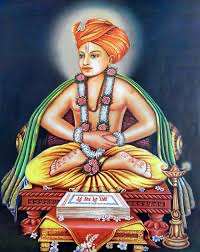
Sant Dnyaneshwar
- The annual pilgrimage of Sant Dnyaneshwar Maharaj concluded on the auspicious day of Ashadhi Ekadashi.
- Followers of the warkari sect, who focus on the worship of Lord Vitthal, begin the procession (known as wari) from Dehu and Alandi and end in Pandharpur on Ashadi Ekadashi.
About Sant Dnyaneshwar
- Sant Dnyaneshwar was born in Alandi, Maharashtra in the 13th century.
- He was a Marathi saint, poet, philosopher, and is highly revered in the Bhakti movement, especially in Maharashtra.
Contribution
- Sant Dnyaneshwar authored Dnyaneshwari, a commentary on the Bhagavad Gita, and Amrutanubhav in Marathi.
- He composed numerous devotional poems known as abhangas.
Values
- Sant Dnyaneshwar emphasized values such as equality, humanity, compassion, and other virtues in his teachings and writings.
ADB Supports Rooftop Solar Systems in India
- ADB will provide funds for the Multi-tranche Financing Facility (MFF) Solar Rooftop Investment Programme.
- Funds will come from the Clean Technology Fund and Ordinary capital resources.
- Loans will be available through the State Bank of India and NABARD.
Current Status of Rooftop Solar Power in India
- India has 11.08 GW of rooftop solar installed capacity, with only 2.7 GW in the residential sector.
- Gujarat has the highest capacity at 2.8 GW, followed by Maharashtra at 1.7 GW.
- There is potential to deploy 637 GW on rooftops across India.
Significance of Rooftop Solar Schemes
- Reduces technical and operational burden by generating electricity close to consumption points.
- Helps achieve the target of meeting 50% of energy requirements from renewable sources by 2030.
- Improves energy security as India is expected to have significant energy demand growth.
Rooftop-related schemes in India
- PM Surya Ghar Muft Bijlee Yojana aims to provide free electricity to one crore households with rooftop solar units.
- Pradhan Mantri Suryodaya Yojana targets installing rooftop solar on one crore houses for low and middle-income individuals.
- Grid Connected Rooftop Solar Programme aims for a cumulative installed capacity of 40,000 MW from Grid Connected Rooftop Solar projects.
"UNESCO's GEM Report 2024: Education and Climate Change"
- UNESCO requires monitoring and reporting on SDG 4 and other Sustainable Development Goals as per the 'Education 2030 Incheon Declaration and Framework for Action'.
Key FIndings
- Schools have been closed in 75% of extreme weather events over the past 20 years, affecting at least 5 million people.
- In India, rainfall shocks in early life negatively impact vocabulary and skills at different ages.
- Education's Role in Combating Climate Change
- The importance of education in addressing climate change is not adequately recognized in international agendas.
- Only 2 out of 72 transnational climate initiatives address SDG 4.
Impact of Climate Change on Education
- Direct effects include destruction of education infrastructure and injuries to students, parents, and staff.
- Indirect effects include displacement, impacts on livelihoods and health, especially for marginalized populations and lower-income countries.
- Exposure to heat can significantly reduce educational outcomes for children.
Key Recommendations
- Integrate climate change education into the curriculum with proper training for educators.
- Prioritize climate-resilient education infrastructure.
- Recognize education's role in developing solutions to climate change challenges.
- Include education investment in climate finance programs.
- Collaborate with non-education stakeholders to include education in climate plans and financing.
"Breakthrough White Paper on Glacial Geoengineering"
- Glacial Geoengineering involves intentionally altering the climate system near a glacier in order to decrease the rate of ice melt and mitigate sea level rise.
Proposed Glacial Geoengineering Strategies
- Ocean-heat transport interventions: This strategy involves setting sediment berms or fibrous curtains along the seabed in front of ice shelves to block the flow of warm circumpolar deep water.
- Basal-hydrology interventions: This strategy aims to slow the flow of streams that carry meltwater off the ice sheets. It can be achieved by drilling holes through glacier beds to create drainage channels, diverting meltwater streams and slowing ice sheet loss.
About Geoengineering
- Geoengineering is the intentional manipulation of Earth's climate systems to counteract human-caused global warming.
- Solar Geoengineering / Solar Radiation Management (SRM) aims to reduce global average temperature by limiting the sun's radiation onto the Earth's surface through strategies like Aerosol Injection and Marine Cloud Brightening.
- Carbon Geoengineering / Carbon Dioxide Removal (CDR) aims to reduce CO2 concentration in the atmosphere through strategies like Carbon Capture and Storage and Ocean Alkalinity Enhancement.
Significance of Geoengineering
- Geoengineering can complement decarbonization efforts and help mitigate the impacts of global warming.
- It can help halt the melting of glaciers and restrict sea level rise, as well as prevent climate change-induced extreme disasters and protect livelihoods.
Concerns associated with Geoengineering
- There are concerns about the high financial costs of geoengineering with potentially limited effectiveness.
- Geoengineering may cause major disturbances to ecosystems and could lead to a termination shock, which is a rapid rise in global temperatures after a pause in technology implementation.
- It may also result in potential extreme events, acid rain, and altered precipitation patterns.
"Central Government Eases Limits on Critical Minerals"
- The Central Government has raised the area limit for 24 critical minerals listed in part-D of the First Schedule to the Mines and Minerals (Development and Regulation) Act, 1957.
- The area limit for Prospecting License has been increased to 100 sq.km, while the area limit for Mining Lease has been increased to 50 sq.km.
Critical Minerals
- Critical Minerals are essential for economic development and national security, and their availability is crucial to prevent supply chain vulnerability and disruption.
- The Central Government has the authority to auction mining leases and composite licenses for critical minerals like Cobalt, Vanadium, Beryllium, and Tungsten.
- Auctions for critical minerals have been conducted in various states including Bihar, Chhattisgarh, Gujarat, Jharkhand, Odisha, Tamil Nadu, Uttar Pradesh, and Jammu & Kashmir.
Significance of Critical Minerals
- Critical Minerals play a vital role in reducing carbon emissions through renewable energy technologies and electric mobility.
- They are essential for national security as they are used in critical defense equipment like submarines, missiles, aircraft, and smart bombs.
- Critical Minerals also contribute to industrial advancement through their applications in magnets, catalysts, and metal alloys.
Challenges to India
- India faces challenges due to China's dominance in the global supply chain, concentration of critical minerals in specific regions, import dependency, and lack of exploration and extraction.
India’s Initiatives
- India has taken initiatives such as establishing the National Institute or "Centre of Excellence on Critical Minerals" (CECM) to update the list of critical minerals regularly.
- Khanij Bidesh India Ltd. (KABIL) has been formed as a joint venture company to ensure a consistent supply of critical minerals.
- India has also joined the Mineral Security Partnership (MSP) to strengthen supply chains and has engaged in multilateral/bilateral partnerships like the agreement with Argentina for exploration and mining of lithium blocks.
2023 WUENIC National Immunization Coverage Estimates Released
Key Findings
Global:
- In 2023, childhood immunization coverage globally stalled, resulting in 2.7 million children being either unvaccinated or under-vaccinated.
- More than 50% of unvaccinated children are living in 31 conflict-affected countries.
India:
- In India, 1.6 million children missed crucial DPT and measles vaccinations in 2023.
- Despite cervical cancer being the second-highest cancer in women in India, the country lacks HPV vaccination in national programs.
- India accounted for 2 million zero-dose children, who lack access to routine immunization services.
Immunization in India
- The Universal Immunization Programme (UIP) has been operational in India since 1985.
- Mission Indradhanush 2014 was launched to vaccinate all unvaccinated and partially vaccinated children and pregnant women under UIP.
- Intensified Mission Indradhanush (IMI) 5.0 in 2023 is a catch-up vaccination campaign for children up to 5 years of age and pregnant women who were left out.
Challenges Faced in Immunization Efforts
- Limited resources, including trained manpower and poor infrastructure for vaccine storage, pose challenges.
- Lack of responsibility in actively following up with individuals for vaccination and limited accountability are issues.
- Lack of centralized record systems and pressure to achieve vaccination targets also contribute to challenges in immunization efforts.
"President vetoes Punjab Assembly bill"
- The Punjab Universities Laws (Amendment) Bill, 2023 has been sent to the President for approval by the Punjab Governor.
- The bill suggests that the chief minister should take over the role of chancellor for state universities instead of the governor.
- This change would give the chief minister more authority and control over the state universities.
Reservation of State Bills for President's Approval
- The Constitution allows the Governor to reserve a bill passed by the state legislature for the President's consideration.
- The President can either give assent or refuse assent to the reserved bill, and the Governor has no role in this decision.
- If the President directs the Governor to return the bill to the state legislature for reconsideration, the legislature must do so within 6 months.
- The President is not obligated to give assent to the reconsidered bill.
Other powers of Governor on State Bills
- After a bill is approved by the state Legislative Assembly, it is sent to the Governor for further action.
- The Governor has four options when presented with a bill: granting assent, withholding assent, returning the bill for reconsideration, or reserving the bill for the President's consideration.
- Granting assent means the bill becomes a law.
- Withholding assent effectively rejects the bill.
- If the Governor returns the bill for reconsideration and the Legislative Assembly passes it again, with or without amendments, the Governor must give his assent.
- The Governor can also reserve the bill for the President's consideration.
Supreme Court Rulings on Governor's Legislative Powers
- In the State of Punjab Case (2023), the Governor cannot veto a bill by simply withholding assent and must return the bill to the assembly.
- In the Shamsher Singh case (1974), the Governor must act according to the advice of the Council of Ministers when withholding assent or returning a bill to the State Legislature.