
Daily Current Affairs UPSC 07 & 08 April 2024
Daily Current Affairs UPSC 07 & 08 April 2024
Eco-Sensitive Zone (Esz)
Chital (Spotted Deer)
Polar Vortex
Pradhan Mantri Fasal Bima Yojana (Pmfby)
Per- And Polyfluoroalkyl Substances (Pfas)
Damodar River
Changpa
Sittwe Port, Myanmar
Ecuador (Capital: Quito)
Gulf Cooperation Council (Gcc) Launched Its ‘Vision For Regional Security’.
Scientists Discover The Reason Behind The Cleanest Air In The Southern Ocean Region
98% Of Urban Women Involved In Household Financial Decisions: Report By Amfi-Crisil
Land Portions From 10 Cantonment Boards To Be Merged With Concerned State Local Bodies
Microsoft Released A Report About The Use Of Artificial Intelligence (Ai) To Disrupt Elections
Right Against Adverse Effects Of Climate Change Part Of Right To Life And Equality: Supreme Court (Sc)

Eco-Sensitive Zone (ESZ)
ESZ are important and fragile areas around protected areas.
About ESZ:
- Notified by central government under the Environment (Protection) Act, 1986.
- Guidelines classify activities into prohibited, regulated, and permitted categories.
- Prohibited activities include commercial mining and setting up industries causing pollution.
- Regulated activities include felling of trees and establishment of hotels and resorts.
- Permitted activities include ongoing agriculture and horticulture practices by local communities and dairy farming.
Chital (Spotted Deer)
Netaji Subhash Chandra Bose Island is facing an invasion of chital deer.
About Chital:
- Chital are native to the Indian subcontinent and found in Bangladesh, India, Nepal, Pakistan, and Sri Lanka.
- They inhabit riverine forests during the hot dry season and Sal forests during the monsoon season.
- Features include a gestation period of around 231-235 days, feeding on grasses, forbs, leaves, flowers, and fruits, and males having antlers.
- Status: Least Concern according to IUCN.
- Threats include illegal hunting, habitat loss and degradation due to human encroachment, and spread of invasive alien plant species.
Polar Vortex
- Scientists found a sudden reversal in the direction of the Arctic Polar Vortex spin.
- Sudden Stratospheric Warming events may have caused more ozone from lower latitudes to move around the Arctic, leading to the change in direction.
About Polar Vortex:
- The Polar Vortex refers to the low pressure and cold air surrounding the Earth's poles.
- It is held by strong wind currents that flow anti-clockwise around the polar region.
- The Polar Vortex is weaker in the summer and stronger during the winter.
Pradhan Mantri Fasal Bima Yojana (PMFBY)
Enrollment under PMFBY in FY 2023-24 increased by 27% compared to the previous fiscal year.
About PMFBY
- Launched in 2016 as a Central Sector Scheme.
- Conceptualized and administered by the Central Government, implemented by State/ UT Governments.
- Objective: Provide insurance coverage and financial support to farmers in case of crop failure due to natural calamities, pests, or diseases.
Features of PMFBY:
- Covers all stages of the crop production cycle.
- Uniform premium rates: 2% for Kharif crops, 1.5% for Rabi crops, and 5% for Horticultural crops.
Per- and polyfluoroalkyl substances (PFAS)
IIT Madras study finds PFAS in Buckingham Canal, Adyar River, and Chembarambakkam Lake.
About PFAS:
- PFAS are synthetic chemicals found in everyday products.
- PFAS do not easily degrade in the environment.
- Health concerns associated with PFAS exposure include liver damage, low infant birth weights, hormonal imbalance, fertility issues, immune system effects, and cancer.
Damodar River
Restoration and Conservation Efforts for Damodar River in Jharkhand.
Damodar River:
- Origin: The Damodar River originates from Khamarpat Hill on Chotanagpur Plateau in Palamau district of Jharkhand.
- Sub-basin: It is a sub-basin and part of the Ganges River System.
- Tributaries: The river is fed by tributaries like Barakar, Konar, Bokaro, Haharo, Jamnia, Ghari, etc.
- Historical Name: Damodar River was previously known as the "River of Sorrows".
- Pollution Concerns: The river faces severe pollution issues due to industrial activities in the mineral-rich areas it flows through.
Changpa
The events of climate change have disrupted the normal life of the Changpa tribe.
About Changpa Tribe:
- Semi-nomadic Tibetan origin tribe in eastern Ladakh.
- Majority are pastoralists who rear Changra goats for Pashmina and yaks.
- Profess Tibetan Buddhism and live in yak-skin tents called reboo.
Sittwe Port, Myanmar
India secures right to operate Sittwe Port after MEA approval.
About Sittwe Port:
- Deep water port at Kaladan River estuary in Rakhine State.
- Part of Kaladan Multi-Modal Transit Transport Project funded by GoI.
- Significance: Opens trade opportunities for India's Northeast, enhances India-Myanmar trade relations.
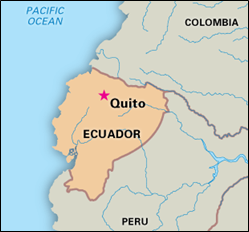
Ecuador (Capital: Quito)
Mexico suspends diplomatic ties with Ecuador after police raid in Mexican embassy in Quito.
Ecuador's Political Features:
- Located in North-western South America.
- Neighboring countries: Colombia (North) and Peru (East and South).
- Situated on the Equator.
- Galápagos Islands are part of Ecuador.
- Bounded to the West by the Pacific Ocean.
Ecuador's Geographical Features:
- Equator passes through Ecuador.
- Andes mountain range crosses through Ecuador.
- Major Rivers: Amazon, Guayas, Putumayo, etc.
- Active Volcanoes: Cotopaxi, Tungurahua, etc.
- Highest Peak: Mount Chimborazo.
Gulf Cooperation Council (GCC) launched its ‘Vision for Regional Security’.
- GCC's 'Vision for Regional Security' Adopted in Dec 2023.
- Focuses on promoting negotiation and dialogue to address disagreements, violence, and conflict.
Key Highlights of the Vision:
- Based on shared destiny and indivisible security of member states.
- Emphasizes avoiding the use of force and prioritizing dialogue and negotiation.
- Urges combating terrorism, extremism, and money laundering.
- Supports non-proliferation efforts and aims for a region free of weapons of mass destruction.
- Calls for activating the Arab Peace Initiative for a just resolution of the Palestinian cause.
- Prioritizes issues like climate change, water and food security, energy security, economic resources, and investment opportunities.
Significance of the 'Vision for Regional Security':
- Encourages collaboration for a secure and prosperous future.
- Provides an opportunity to resolve historical regional conflicts like the Palestinian problem.
About GCC:
- GCC Background:
- Formed in 1981.
- Consists of 6 Gulf states (UAE, Bahrain, Saudi Arabia, Oman, Qatar, and Kuwait).
- Objectives of GCC: Aim for coordination, integration, and inter-connection between Member States in all areas.
- Organisational Structure:
- Supreme Council: Highest authority includes heads of states.
- Ministerial Council: Consists of foreign ministers, responsible for decision-making and policy implementation.
Scientists discover the reason behind the cleanest air in the Southern Ocean region
- Clean air refers to the presence of low levels of aerosols in the atmosphere.
- Aerosols are fine solid particles or liquid droplets suspended in the air.
Reasons for Clean Air in Southern Ocean Region:
- Reduced Human Activity: Minimal emissions and fossil fuel usage in the region contribute to low aerosol levels.
- Phytoplankton Levels: Fewer phytoplankton in winter result in fewer airborne sulfate particles.
- Role of Clouds and Rain:
- Honeycomb-Structured Clouds: Open honeycomb clouds allow sunlight to pass and produce intense rainfall, washing out aerosols.
- Open honeycomb clouds allow sunlight to pass through and produce intense, sporadic rainfall that washes out aerosols.
- Closed Honeycomb Clouds: Reflect sunlight and lead to low rainfall, less effective at removing aerosols.
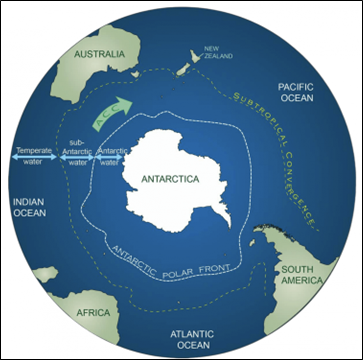
- About the Southern Ocean (Antarctic Ocean):
- Geologically Youngest Ocean: The Southern Ocean is the youngest of the world's oceans.
- Antarctic Circumpolar Current: Dominated by the clockwise circulating Antarctic Circumpolar Current.
- Climate: Known for strong winds, intense storms, dramatic seasonal changes, and cold temperatures.
98% of Urban Women involved in Household Financial Decisions: Report by AMFi-CRISIL
AMFi-CRISIL released a report titled ‘Mutual Growth’ highlighting the increasing role of women in financial decision-making in India.
Key Highlights of the Report:
- Female LFPR has risen to 41.5% from 24.6% five years ago.
- 47% of women make financial decisions independently.
- Autonomy in financial decisions is influenced by income source, age, and affluence stage.
Significance of Women's Role in Financial Decision-Making:
- Social impact: Empowerment, reduced gender disparities, and improved family well-being.
- Economic impact: Better financial planning, wealth management, and increased market depth.
- Challenges in Women's Financial Autonomy:
- Socio-cultural barriers: Patriarchy, gender stereotypes.
- Economic disparities: Lower workforce participation, gender pay gap, and unpaid domestic work burden.
Steps Taken for Women’s Financial Autonomy:
- Financial Inclusion Initiatives: Initiatives like PM Jan Dhan Yojana, Beti Bachao Beti Padhao, and Business Correspondent (BC) Sakhi program have been implemented to ensure women have access to financial services.
- Self-Help Groups (SHGs): NABARD promotes SHGs to encourage women to make collective credit decisions and engage in microfinance activities.
- Entrepreneurial Support: Schemes such as Stand-up India and MUDRA Yojana provide support to women entrepreneurs to start and grow their businesses.
Land portions from 10 cantonment boards to be merged with concerned State local bodies
Conversion of military areas within cantonments into "exclusive military stations".
Reasons for the move:
- Undo colonial legacy and usher in governance reforms.
- Provide civilians in cantonments access to more welfare schemes from state governments.
- Help defense forces focus on security, land management, and prevent encroachments.
- Reduce strain on defense budget.
About Cantonments:
- Areas primarily for housing soldiers, but also have civilian populations.
- Established by East India Company after battle of Plassey in 1757.
- Currently 61 cantonments in India.
- Administered by Cantonment Boards under Ministry of Defence.
- Perform civic duties like public health, water supply, and education.
Categories of Cantonment Board:
- Category I: Cantonment boards with a population exceeding 50,000 residents.
- Category II: Cantonment boards with a population ranging from 10,000 to 50,000 residents.
- Category III: Cantonment boards with a population ranging from 2,500 to 10,000 residents.
- Category IV: Cantonment boards with a population of less than 2,500 residents.
Microsoft released a report about the use of Artificial Intelligence (AI) to disrupt elections
Key Observations:
- China used AI in a disinformation campaign during the Taiwan presidential election.
- Various AI methods were used to influence different aspects of the elections.
Threats of AI in Election:
- Manipulation of electoral behavior through deceptive political advertisements.
- Misleading public opinion on candidates and issues.
- Easier creation and dissemination of fake news.
- Cybersecurity threats targeting election infrastructure.
- Increased foreign influence on elections.
Steps to Reduce AI Threats in Elections:
- Election Commission of India should involve AI experts.
- Government regulations for transparency in AI usage for political purposes.
- Technological companies implementing measures to stop misinformation.
- Government increasing public awareness about deceptive AI.
Right against adverse effects of Climate Change part of Right to Life and Equality: Supreme Court (SC)
- SC heard application for modification by Union MoEFCC, Ministry of Power, and Ministry of New and Renewable Energy against April 2021 order.
- April 2021 order-imposed restrictions on setting up of overhead transmission lines in certain areas of Rajasthan for conservation of Great Indian Bustard (GIB).
Key highlights of SC judgment:
- Articles 14 (Right to Equality) and Article 21 (Right to Life and Personal Liberty) are important sources of right to a clean environment and right against adverse effects of climate change.
- Inability of underserved communities to adapt to climate change or cope with its effects violates rights granted under Article 14 and 21.
- For example, food and water shortages due to climate change and environmental degradation affect poorer communities more, impacting right to equality.
- Important SC judgments regarding constitutionalization of environmental problems:
- M.C. Mehta v. Kamal Nath (1996): Any disturbance of basic environment elements would be hazardous to "life" within meaning of Article 21.
- Virender Gaur v. State of Haryana (1994): Right to clean environment is an integral facet of right to a healthy life.
Constitutional Provisions on Environment:
- Article 48A: The government must work to protect and enhance the environment, as well as preserve forests and wildlife.
- Article 51A (g): It is the responsibility of every Indian citizen to protect and enhance the natural environment, including forests, lakes, rivers, and wildlife, and to show compassion towards all living beings.