
Daily Current Affairs UPSC 11 October 2024
Welcome to our daily current affairs blog post for UPSC aspirants! In today's edition, we will be discussing the most significant events and news updates that took place on 11th October 2024. Staying updated with current affairs is crucial for UPSC preparation, as it not only helps you stay informed but also enhances your understanding of various subjects. So, let's dive into the important happenings of the day and explore their potential impact on the upcoming UPSC examinations.

South Asian Development Update report
- The South Asian Development Update report was published by the World Bank.
- The report shows that South Asia is expected to have higher output growth compared to other emerging market and developing economy regions.
- Climate change is causing South Asia to face extreme heat, floods, and other weather shocks.
- In India, smaller businesses are more vulnerable to heat and flooding.
- Female labor force participation in South Asia is low at 32%, indicating room for income growth through gender equality.
- Marriage has a negative impact on women's labor force participation in South Asia.
Caracal
- Gujarat plans to establish a Caracal Breeding and Conservation Center in Kutch's Chadva Rakhal region.
- Caracals are medium-sized wild cats known for their secretive and nocturnal nature, as well as their ability to catch flying birds.
- They are territorial animals that typically live alone or in pairs, and are found in dry savannah, woodland areas, scrubland, and rugged terrain in mountainous regions.
- Caracals are distributed in Africa, the Middle East, Central Asia, and arid areas of Pakistan and India, including Rajasthan, Gujarat, and Madhya Pradesh.
- The conservation status of caracals is listed as least concern by the IUCN and they are protected under Schedule I of the Wildlife Protection Act, 1972.
- In 2021, the National Board for Wildlife and MoEFCC listed caracals as critically endangered under the Species Recovery Program, highlighting the need for conservation efforts.
Congo Basin
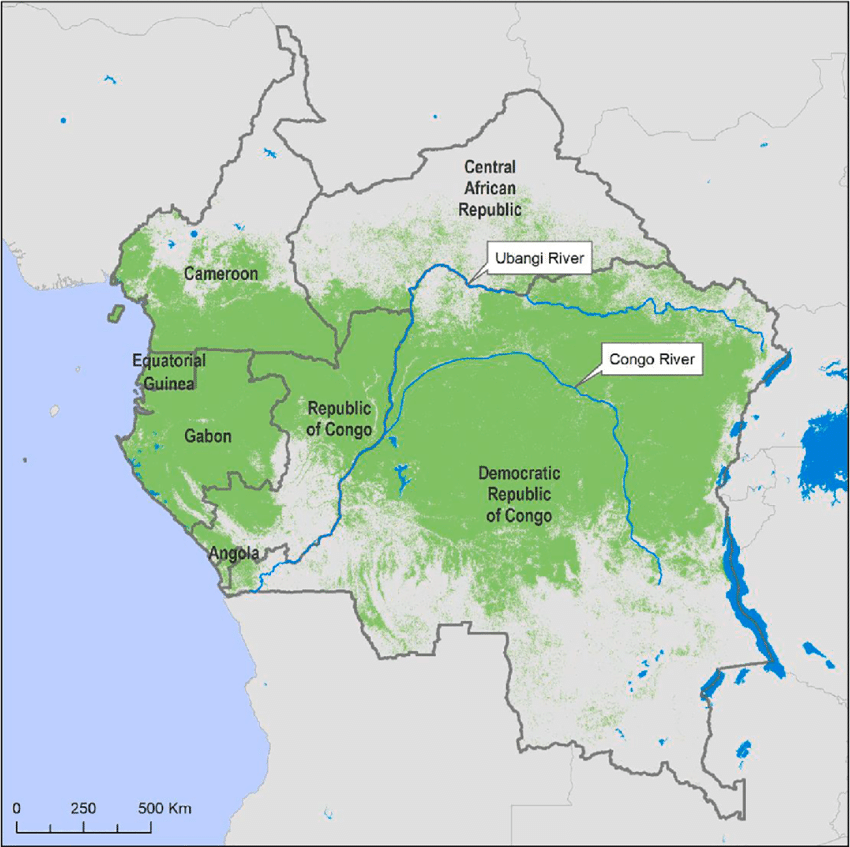
- A recent study shows that the increase in demand for chocolate has caused a rise in cacao farming in the Congo Basin, leading to deforestation.
- The Congo Basin is situated in western equatorial Africa and is home to the world's second-largest tropical forest, known as the "lungs of Africa" and the largest carbon sink globally.
- The Congo Basin also houses the world's largest tropical peatlands, which are wetland ecosystems where waterlogged conditions prevent plant material from fully decomposing.
Tele Mental Health Assistance and Networking across States (Tele MANAS)
- The Ministry of Health & Family Welfare marked World Mental Health Day and the second anniversary of Tele MANAS.
- The theme for this year's World Mental Health Day was focused on prioritizing mental health in the workplace.
- Tele MANAS aims to provide affordable and quality mental health care through 24/7 tele-mental health services as part of the National Mental Health Programme in all Indian states and UTs.
- The program operates on a two-tier system, with Tier 1 consisting of State Tele MANAS cells with trained counselors and mental health specialists, and Tier 2 involving specialists from District Mental Health Programme (DMHP) or medical colleges for physical and eSanjeevani audio-visual consultations.
Measles and Rubella
- The countries in the South East Asia Region have committed to eliminating measles and rubella by 2026.
- The resolution was passed at the 77th Regional Committee Session of the WHO South-East Asia Region.
- Measles is a serious and highly contagious airborne disease caused by a virus.
- Measles spreads easily through breathing, coughing, or sneezing by an infected person.
- Rubella is a contagious viral infection that is transmitted through airborne droplets.
- Rubella is most commonly seen in children and young adults.
Brahmi inscription
- A Brahmi inscription was discovered in Dharanikota village in Amaravathi mandal, located in Palnadu district, Andhra Pradesh.
- The script on the inscription is in the Prakrit language and Brahmi characters from the 2nd century C.E.
- Brahmi is considered one of the oldest Indian scripts, dating back to the Mauryan Period.
- Brahmi is the precursor to many present-day Indian scripts such as Devanagari, Bengali, Tamil, and Malayalam.
- Some important Brahmi inscriptions include the Ashokan Edicts, Hathigumpha Inscription, and Nasik Cave Inscriptions.
Nobel Prize
- South Korean author Han Kang was awarded the Nobel Prize in Literature for her powerful and poetic writing that addresses historical traumas and the fragility of human life.
- The Nobel Prize was established by Alfred Nobel in 1895 and has been awarded annually since 1901.
- Administered by the Nobel Foundation in Stockholm, Sweden, the award recognizes achievements in six categories: Peace, Physics, Chemistry, Medicine, Literature, and Economic Science.
- In 1968, the Economic Sciences award was established by Sweden's central bank in memory of Alfred Nobel.
- Since 1974, the statutes of the Nobel Foundation state that the prize cannot be awarded posthumously, unless the recipient has passed away after the announcement of the Nobel Prize.
TDP1- DNA repair enzyme
- Researchers at the Indian Association for the Cultivation of Science in Kolkata have discovered a potential new target for cancer treatment by activating the DNA repair enzyme TDP1.
- TDP1, also known as Tyrosyl-DNA phosphodiesterase 1, is a key enzyme in humans that helps repair damaged DNA by eliminating faulty DNA bases.
- This discovery opens up a promising path for precision medicine in the treatment of cancers, particularly those that do not respond well to current treatments.
Shri Ratan Naval Tata (1937-2024)
- Renowned Indian businessman and humanitarian, Shri Ratan Tata, has passed away.
Accomplishments under his Exemplary Leadership:
- Tata Group's revenue has increased significantly from $5 billion to over $100 billion, making it one of the largest employers in India.
- The Tata Nano was introduced to offer affordable and safe transportation to millions, becoming the world's most economical car.
- PETA India recognized Tata Motors with the Cow-Friendly Future Award for incorporating vegan interiors in its AVINYA Concept car, supporting animal and environmental welfare.
- Awards received by Tata Group's leadership include the Padma Bhushan in 2000, Padma Vibhushan in 2008, and the Ernst and Young Entrepreneur of the Year - Lifetime Achievement in 2013.
Core principles: Honesty, Empathy, Minimalism, Trailblazer

"NABARD's NAFIS 2021-22 Survey Released"
- NAFIS was launched in 2016-17 to provide a comprehensive overview of the rural population's livelihood status and financial inclusion.
- The survey offers key insights into economic and financial indicators of rural development since its inception.
Key Highlights of NAFIS Survey
- Average monthly income of households increased by 57.6%.
- Share of food in consumption basket of households declined from 51% to 47%.
- Kisan Credit Card has been effective in promoting financial inclusion in the rural farm sector.
- Average size of landholding decreased to 0.74 hectare from 1.08 hectare.
- Proportion of respondents with good financial literacy increased from 33.9% to 51.3%.
- Proportion of agricultural households taking loans from institutional sources increased from 60.5% to 75.5%.
Reasons for Rise in Rural Income
- Government support through schemes like Mahatma Gandhi National Rural Employment Guarantee Scheme has increased household incomes.
- Increase in rural female labor force participation rate from 19.7% in 2018-19 to 27.7% in 2020-21.
About NABARD
- NABARD was established in 1982 under an Act of Parliament to promote sustainable and equitable agriculture and rural development.
- It was formed based on the recommendation of the B. Sivaraman Committee.
NAFINDEX: Measure of Financial Inclusion
- NAFINDEX is constructed based on field level data collected through NAFIS 2016-17 for different states of India.
- The index considers three dimensions: traditional banking products, modern banking products, and payment systems.
"Security Committee Approves Drone and Submarine Deals"
The acquisition of 31 MQ-9B drones and the domestic production of two nuclear-powered attack submarines (SSNs) will strengthen India's military capabilities.
About MQ-9B Drones
- MQ-9B drones are high altitude long endurance unmanned aerial vehicles used for surveillance, reconnaissance, and precision strike missions.
- Features include the ability to fly over the horizon via satellite for up to 40 hours and hit targets on land, at sea, and in the air.
- The deal includes 16 Sky Guardian and 15 Sea Guardian variants, with eight each for the Indian Army and Air Force.
- The procurement of MQ-9B drones will boost India's surveillance and intelligence capabilities, especially in monitoring sensitive areas like the Line of Actual Control with China.
- This deal is part of India's broader defense modernization strategy to enhance military posture in the Indo-Pacific region and improve operational readiness with advanced technologies.
- It also deepens the defense partnership between India and the U.S.
Indigenous Construction of SSNs
- SSNs are nuclear-powered attack submarines designed for anti-submarine warfare, antisurface ship operations, and intelligence gathering.
- Features include being armed with torpedoes and sometimes cruise missiles, as well as being faster, quieter, difficult to detect, and able to remain underwater for long periods of time.
- The deal to construct two SSNs will strengthen India's deterrence and operational capabilities, enhancing underwater combat effectiveness.
- It will also bolster indigenous defense manufacturing under the Make in India initiative.

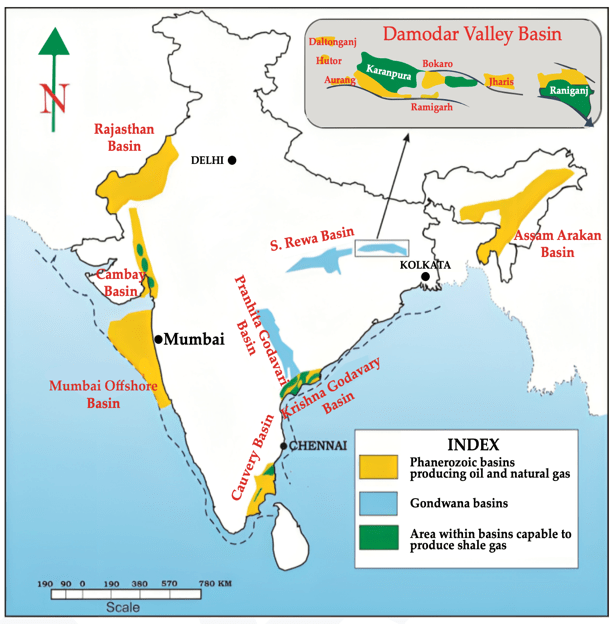
Shale Gas Potential in South Karanpura Coalfield
- Scientists from the Birbal Sahni Institution of Palaeosciences in Lucknow, an autonomous institution under the Department of Science and Technology, conducted a study.
- The study focused on the potential for hydrocarbon generation within a source rock, which is largely determined by the concentration of organic matter.
Information about Shale Gas
- Shale gas is a type of natural gas, primarily methane, that is found underground in shale rock formations.
- The gas is extracted using hydraulic fracturing, also known as fracking, which involves injecting high-pressure water, sand, and chemicals into the shale to crack it.
- The gum from Cluster bean (Guar) seeds is used in the extraction process of shale gas.
- Shale is a fine-grained sedimentary rock formed from the compaction of clay, silt, mud, and organic matter over time.
- Shales were deposited in ancient seas, river deltas, lakes, and lagoons, and can be found both on the Earth's surface and deep underground.
Government Measures Regarding Shale Gas
- The Government introduced the Hydrocarbon Exploration and Licensing Policy (HELP) in 2016, which provides a uniform licensing regime for conventional and unconventional resources, including shale gas.
- Public Sector Undertakings (PSUs) like ONGC and Oil India Limited have been granted permission to explore shale gas within their existing oil and gas blocks.
- Guidelines for Environmental Management during Shale Gas/Oil Exploration and Production have been established to ensure responsible practices during the exploration and production of shale gas.
Distribution of prospective shale basins
"Textiles Sector Set to Reach $350 Billion by 2030"
- India's textiles sector is experiencing 11% year-on-year growth in Ready-Made Garments of all Textiles exports.
- Factors contributing to the growth of the textile industry include end-to-end value chain capability, a strong raw material base, a large export footprint, and a vibrant and rapidly expanding domestic market.
India's Textile Sector
- The domestic apparel and textile industry contributes approximately 2.3% to the country's GDP, 13% to industrial production, and 12% to exports.
- India holds a 4% share of global trade in textiles and apparel and is the 3rd largest exporter in the world.
- The textiles and apparel industry is the 2nd largest employer in the country, providing direct employment to 45 million people and 100 million people in allied industries.
Challenges Faced by the Textile Sector
- Competition from Low-Cost Countries like China and Vietnam puts pressure on the Indian market.
- Shortage of skilled workers, particularly in areas like design, technology, and management, poses a challenge.
- Small and medium-sized textile enterprises often struggle to access affordable capital for investment.
- Inadequate logistics, power supply, and transportation networks affect the industry's efficiency.
Measures Implemented for the Textile Sector
- The Amended Technology Upgradation Funds Scheme provides a credit-linked subsidy scheme for modernization and technology upgradation of the textile industry.
- The National Handloom Development Programme aims to facilitate the sustainable development of handloom weavers located in and outside identified handloom clusters.
- 100% FDI (automatic route) is allowed in the textile and apparel sector in India.
- The PM Mega Integrated Textile Region and Apparel (PM MITRA) Park and the National Technical Textiles Mission are initiatives aimed at further boosting the textile sector.
"Proposed National Sports Governance Bill"
The Ministry of Youth Affairs and Sports has published the Draft National Sports Governance Bill, 2024 for public input.
Aims of the Draft National Sports Governance Bill, 2024
- The bill aims to promote sports development, welfare for athletes, and ethical practices through good governance.
- It seeks to establish institutional capacity and prudential standards for the governance of sports federations.
- The bill also aims to establish measures for the resolution of sports grievances and disputes in a unified, equitable, and effective manner.
Features of the Draft National Sports Governance Bill, 2024
- Sports Regulatory Board: A central authority to recognize National Sports Federations (NSFs) and ensure governance and ethical compliance.
- Ethical Standards: Mandatory ethical governance with Ethics and Dispute Resolution Commissions to ensure integrity and transparency.
- Athletes Commissions: Commissions to represent athletes, allowing them to raise concerns and participate in decision-making, with government funding.
- Athlete Representation: Requires 10% of voting members in sports bodies to be top athletes elected by the Athletes Commission, including one male and one female on the Executive Committee.
- Safe Sports Policy: A policy that protects athletes, especially minors and women, from harassment, in line with the Protection of Women from Sexual Harassment Act.
- Anti-Doping Compliance: Enforces strict anti-doping measures and international ethical standards.
- Public Accountability: Sports organizations are subject to the Right to Information Act for transparency.
- Gender Representation: Requires at least 30% of governing body members to be female.
PM attends 21st ASEAN-India Summit
- The Prime Minister and ASEAN leaders discussed the progress of the ASEAN-India Comprehensive Strategic Partnership and planned for future cooperation.
- A new ASEAN-India Plan of Action (2026-2030) was agreed upon to maximize the potential of the partnership.
- Two joint statements were adopted, focusing on strengthening the partnership and advancing digital transformation.
Joint Statements
- Strengthening ASEAN-India Comprehensive Strategic Partnership
- Accelerate review of ASEAN-India Trade in Goods Agreement (AITIGA) to enhance trade, simplify processes, and cooperation
- Welcome the launch of the ASEAN-India Fund for Digital Future to support joint activities
- Advancing Digital Transformation
- Digital Public Infrastructure (DPI): Sharing best practices in DPI development, implementing joint initiatives for regional integration, and addressing challenges in Health etc.
- Financial Technology: Exploring collaboration on cross-border payment systems through innovative digital solutions
- Cybersecurity: Enhancing cybersecurity cooperation for the digital economy and welcoming the ASEAN-India Track 1 Cyber Policy Dialogue.
Major points announced in 10-point plan
- Commemorating 2025 as the ASEAN-India Year of Tourism and marking a decade of the Act East Policy with various programs focused on the people.
- Reevaluation of the ASEAN-India Trade in Goods Agreement by the year 2025.
About the Association of Southeast Asian Nations (ASEAN)
- ASEAN, established in 1967, is crucial for India's economic and trade relations, accounting for 11% of India's global trade.
- ASEAN plays a significant role in India's "Act East" policy and "Indo-Pacific" strategy, promoting regional connectivity and cooperation.
- Projects like the Kaladan Multi-Modal Transport Project and the India-Myanmar-Thailand Trilateral Highway enhance connectivity with India's North East region.