
Daily Current Affairs UPSC 10 August 2024
Welcome to our daily current affairs blog post for UPSC aspirants! In today's edition, we will be discussing the most significant events and news updates that took place on 10th August 2024. Staying updated with current affairs is crucial for UPSC preparation, as it not only helps you stay informed but also enhances your understanding of various subjects. So, let's dive into the important happenings of the day and explore their potential impact on the upcoming UPSC examinations.

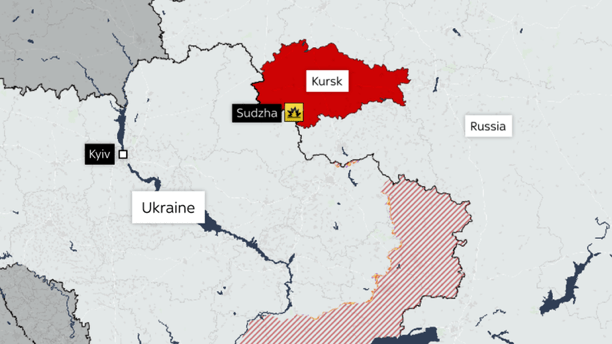
Kursk Region
- Russia has announced a state of emergency in the Kursk region.
- The Kursk region is situated in the central part of the Eastern European Plain and shares a border with Ukraine.
- The region is home to the basins of the Dnieper, Seim, Psel, and Don rivers.
- Chernozem is the predominant type of soil found in the Kursk region.
- The area has known deposits of iron ore, phosphorites, peat, and various building materials.
Cheque Truncation System (CTS)
- RBI has introduced measures for Continuous Clearing of cheques under CTS to speed up the process.
- Cheques will now be cleared within hours of submission instead of the current two days (T+1).
- CTS is an online image-based cheque clearing system that eliminates physical movement of cheques.
- Cheque images and MICR data are processed electronically in CTS.
- MICR involves the use of magnetic ink and special characters to verify the legitimacy of cheques.
- NPCI serves as a Cheque Processing Centre (CPC) in the CTS system.
- Safety and security in CTS is ensured by end-to-end Public Key Infrastructure (PKI).
Disaster Risk Transfer Parametric Insurance Solution (DRTPS)
- Nagaland is the first state to adopt the Disaster Risk Transfer and Insurance Program for States (DRTPS) after signing a Memorandum of Understanding with SBI General Insurance.
- The objective of DRTPS is to protect critical infrastructure and reduce economic losses from extreme weather events.
- The insurance premium paid by the Nagaland Government will cover costs in case a disaster occurs within a three-year period (2024-27).
- This initiative is significant for financial resilience and ensuring safe livelihoods amidst the increasing frequency of extreme weather events.
- Parametric insurance is a type of insurance that covers the probability of a loss-causing event, such as a natural disaster, and provides a predefined payout when the covered event occurs.
Polar Coupled Analysis and Prediction for Services (PCAPS)
- The World Meteorological Organization has initiated the PCAPS project to enhance weather forecasting in the Arctic and Antarctic regions.
- The main goal of PCAPS is to enhance the quality of weather, water, ice, and climate information in the Arctic and Antarctic areas.
- PCAPS aims to develop observation systems, Earth system models, and advocate for better forecasting services.
- PCAPS is a part of the World Meteorological Organization's World Weather Research Programme (WWRP).
- The WWRP focuses on advancing research of the earth system through a science-for-services value cycle approach and improving the warning process to address the changing nature of extreme weather impacts.
'Parvat Prahaar' exercise
- The Army is conducting the 'Parvat Prahaar' exercise in Ladakh to enhance their skills in high-altitude warfare and operations.
- The exercise includes the participation of different military units and equipment to ensure preparedness along the India-China border.
- The focus of the exercise is on maintaining readiness and improving capabilities in mountainous terrain.
Ceropegia Shivrayiana
- A new flowering plant called Ceropegia Shivrayiana has been discovered in the Vishalgad area of Kolhapur.
- The plant has been named after Chhatrapati Shivaji Maharaj.
- Ceropegia Shivrayiana is a rare plant endemic to India with unique tubular flowers that attract moths.
- It can be found in rocky places and can survive in soil with few nutrients.
- Belongs to the Asclepiadaceae family, which includes many medicinal plants.
- Similar to Ceropegia lawii Hooker f., but differs in its climbing habit and hairy peduncles.
- Faces a threat from habitat loss.
Clean Plant Programm (CPP)
- The Cabinet approved the Clean Planting Program (CPP) under the Mission for Integrated Development of Horticulture (MIDH).
- MIDH is a scheme by the Ministry of Agriculture aimed at the overall development of the horticulture sector, including fruits, vegetables, and root crops.
- The purpose of CPP is to provide farmers with high-quality, virus-free planting material to improve crop yields.
- The program includes nine state-of-the-art Clean Plant Centers (CPCs) and a certification system under the Seeds Act 1966.
- Enhanced infrastructure support will be provided to large-scale nurseries.
- The National Horticulture Board, in collaboration with ICAR, will be the implementing agencies for the CPP.
Unified Payments Interface (UPI)
- The Reserve Bank of India has raised the UPI transaction limit from ₹1 lakh to ₹5 lakh.
- UPI, or Unified Payments Interface, is a fast and real-time payment system that operates 24/7 and 365 days a year.
- Developed by the National Payments Corporation of India (NPCI), UPI allows for inter-bank transactions through mobile phones.
- UPI also enables users to send and receive money through "Peer to Peer" collection requests.
- According to the RBI, the user base for UPI has grown to 42.4 crore.
Personality in News.
Raghoji Bhangre
Ministry of tribal affairs recently honored Raghoji Bhangre.
About Raghoji Bhangre (1805-1848)
- Raghoji Bhangre (1805-1848) was a tribal revolutionary leader from the Koli Community in Maharashtra.
- His father, Ramji Rao Bhangre, led the Koli rising against money lenders and British rule.
- Ramji Rao Bhangre was executed in Cellular Jail for his role in the uprising.
Key Contributions of Raghoji Bhangre
- Bhangre led the Koli community in fighting against exploitative moneylenders and colonial rule.
- He was captured by Lt. Gell in 1847 and later executed.
Values associated with Raghoji Bhangre include courage, patriotism, and leadership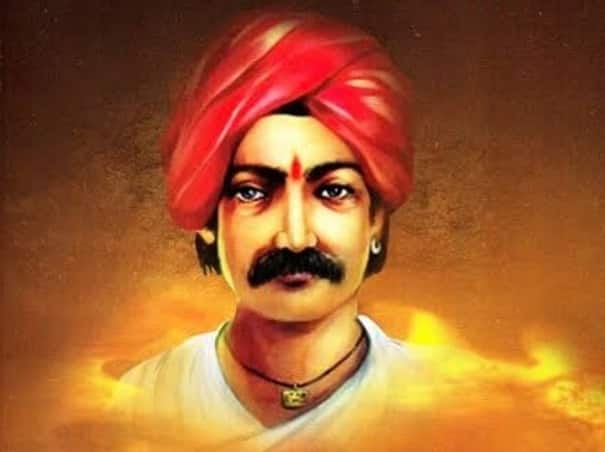
Proposed Indian Ocean Structures
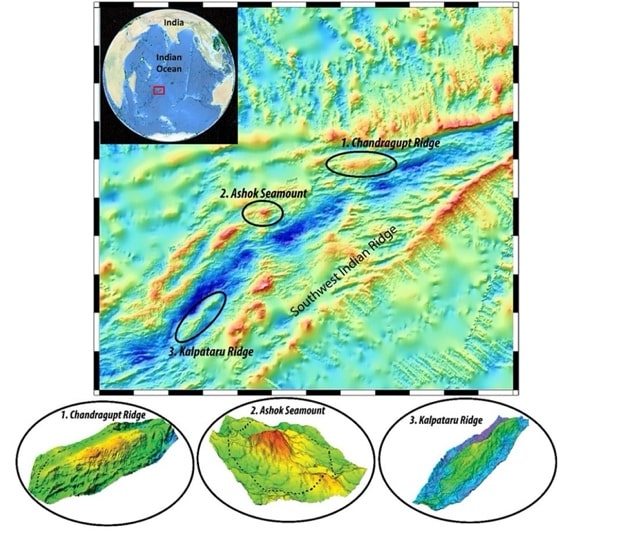
- The Indian Ocean features three underwater structures named Ashoka Seamount, Chandragupta Ridge, and Kalpataru Ridge.
- These names have been officially approved by the International Hydrographic Organization (IHO) and UNESCO's Intergovernmental Oceanographic Commission (IOC).
- The structures are situated along the Southwest Indian Ridge.
- The National Centre for Polar and Ocean Research was responsible for discovering these underwater features.
Naming of Undersea Feature
- Individuals and agencies can suggest names for unnamed features following IHO guidelines.
- Features must be identified in terms of character, extent, and position before naming.
- Proposals are reviewed by IHO Sub-Committee on Undersea Feature Names (SCUFN).
Within Territorial Sea
- National authorities within territorial sea should also follow IHO guidelines for naming features.
- Adherence to the 2013 IHO guidelines is important for consistency and standardization.
About IHO and IOC
- Established in 1921.
- An intergovernmental body with India as a member.
- Enjoys observer status at the UN.
- Recognized as a competent international authority regarding hydrography and nautical charting.
- Established in 1961.
- Promotes international cooperation in marine sciences.
- A joint project of IHO, IOC, and UNESCO to collect bathymetric data and map the oceans.
- GEBCO-SCUFN maintains and provides a digital gazetteer of names and generic feature types.
"2024 Finance Bill Changes LTCG Tax on Property"
- Amendment proposed after suggestion to remove indexation benefit in LTCG calculation on sale of immovable properties in Budget 2024-25.
- Budget proposed a lower 12.5% rate of LTCG tax on all assets without indexation, down from 20%.
Indexation Benefits
- Adjusts asset purchase prices based on inflation.
- Neutralizes impact of inflation on capital gains, reducing overall tax liability of taxpayer.
Key Provisions of Amendment
- Two LTCG tax rate options offered to individuals or Hindu undivided Families on real estate properties acquired before July 23, 2024.
- 12.5% tax rate without indexation benefit.
- 20% tax rate with indexation benefit, whichever is more advantageous.
Capital Gain (CG)
- Defined as profits from sale of any capital asset.
- Categorized as income and liable for taxation (capital gains tax.
- Types include short-term CG and long-term CG
- Short-term CG for assets held for less than a year (listed financial assets) or less than two years (unlisted financial assets and non-financial assets).
- Long-term CG for assets held for more than a year (listed financial assets) or at least two years (unlisted financial assets and non-financial assets).
"Breakthrough: Deepest Mantle Rock Sample Retrieved"
- Scientists on the US vessel JOIDES Resolution have drilled 1.2 kilometers below the Atlantis Massif, surpassing the previous drilling depth of 201 meters.
- Mantle, which makes up over 80% of Earth's volume, is the mid layer of the earth.
- Mantle rocks are typically inaccessible, except in areas of seafloor spreading like the Atlantis Massif.
- The Atlantis Massif is an underwater mountain near the Mid-Atlantic Ridge.
Key highlights:
- Programme: Drilling was conducted under the International Ocean Discovery Program, with India as a funding partner.
- Location: The drilling took place on the southern side of the Atlantis Massif, near the Lost City Hydrothermal Field.
- Sample recovered: The new rock sample contains over 70% rock.
Significance:
- Importance of samples in understanding:
- Composition of upper mantle.
- Chemical reactions between rocks and seawater at different temperatures
- Potential role in the origin of life on Earth.
- Previous drilling not deep enough to explore, Organisms like heat-loving bacteria in deeper regions.

"Union Cabinet Approves PMAY-U 2.0 Scheme"
- PMAY-U 2.0 aims to address the housing needs of one crore families with an investment of ₹10 lakh crore.
Key features
- Ministry of Housing and Urban Affairs is responsible for the scheme.
- Vision is 'Housing for All'.
- Types of eligible families include Economically Weaker Section (EWS), Low Income Group (LIG), and Middle Income Group (MIG).
- Scheme tenure is till 2028-29.
- Coverage includes all statutory towns as per Census 2011 and towns notified subsequently.
- Key Verticals:
- Beneficiary-Led Construction (BLC): Financial aid for EWS families to build homes on their land.
- Affordable Housing in Partnership (AHP): Redeemable Housing Vouchers for EWS families to own houses built through partnerships.
- Affordable Rental Housing (ARH): Government vacant houses converted into ARH or rental housing constructed by Private/Public agencies.
- Interest Subsidy Scheme (ISS): Subsidised home loans for beneficiaries.
- Technology & Innovation Sub-Mission: Promotes adoption of modern, innovative, and green technologies.
- Technology Innovation Grant (TIG) and Affordable Housing Policy by States/UTs are included.
- Special focus on equity for vulnerable groups.
PMAY-U 1.0 Overview
- Launched in 2015 to provide all-weather pucca houses to eligible beneficiaries in urban areas.
- 1.18 crore houses sanctioned and over 85.5 lakh houses constructed and delivered to beneficiaries.
"24/7 'Grain ATM' Launched in Bhubaneswar by WFP and Odisha Government"
- Annapurti is a Grain ATM that will be set up across Odisha to provide food grains to beneficiaries under the National Food Security Act.
- NFSA entitles a large percentage of the population to receive subsidized food grains.
About Annapurti
- Annapurti is a Made-in-India product designed and developed by WFP India.
- It dispenses selected grains to beneficiaries after biometric authentication.
- It can provide universal access to food grains and reduce waiting time by 70%.
- Annapurti is energy efficient and can be connected to solar panels for automatic refilling.
- It was recognized as one of the top 5 innovative solutions for disrupting hunger at the 2022 WFP Innovation Awards.
About UN World Food Programme (WFP)
- WFP was established in 1961 by the United Nations to help alleviate world hunger.
- It is the world's largest humanitarian organization saving lives in emergencies and providing food assistance.
- WFP was awarded the Nobel Peace Prize in 2020 for its efforts in combating hunger.

"New Banking Laws Bill Introduced in Lok Sabha"
- The amendment aims to improve bank governance as the banking sector evolves over time.
- The bill proposes amendments to various acts including the RBI Act, Banking Regulation Act, SBI Act, and Banking Companies Acts.
Key Provisions of the Bill
- Increased Nominees: Allows depositors to nominate up to four nominees with specified shares and in a specific order
- Successive Nomination: Nominees listed in order for claiming funds.
- Investor Education and Protection Fund (IEPF): Transfers unclaimed dividends, shares, interest, or redemption of bonds to IEPF after seven years.
- Substantial Interest in Shareholding: Threshold for directorships increased from Rs 5 lakh to Rs 2 crore.
- Provision for Cooperative Banks: Extends directors' tenure in cooperative banks from 8 to 10 years.
Significance of the Amendment
- Provides consistency in reporting to RBI and reduces unclaimed deposits.
- Decrease the amount of unclaimed deposits by adding more nominees to accounts.
- Unclaimed deposits refer to funds in savings or current accounts that have not been used for 10 years, or term deposits that have not been claimed within 10 years of maturity.
- By increasing the number of nominees on accounts, individuals can ensure that their funds are claimed and not left as unclaimed deposits.
- This can help reduce the total amount of unclaimed deposits, which was over ₹42,000 crore as of March 2023.
Investor Education and Protection Fund (IEPF)
- Created through the Companies Act, 1956 with the Companies (Amendment) Act, 1999.
- Goal is to raise awareness among investors and safeguard their interests.
- The Investor Education and Protection Fund Authority (IEPFA) operates under the Ministry of Corporate Affairs and is responsible for managing the IEPF.