
Daily Current Affairs UPSC 02 and 03 October 2024
Welcome to our daily current affairs blog post for UPSC aspirants! In today's edition, we will be discussing the most significant events and news updates that took place on 2nd and 3rd October 2024. Staying updated with current affairs is crucial for UPSC preparation, as it not only helps you stay informed but also enhances your understanding of various subjects. So, let's dive into the important happenings of the day and explore their potential impact on the upcoming UPSC examinations.

European Union Deforestation Regulation (EUDR)
- The European Commission has suggested extending the implementation of the EUDR by one year.
- The EUDR is designed to prevent certain goods from contributing to deforestation and forest degradation in the EU and globally.
- The regulation covers products like palm oil, soy, beef, cocoa, and timber.
- Companies must confirm the origin of their products and ensure they are sustainably produced.
- The EUDR will create obstacles for countries exporting these goods to the EU.
Monetary Policy Committee
- The government has announced the reconstitution of the Monetary Policy Committee (MPC) under the Reserve Bank of India Act, 1934.
- The MPC was established under Section 45ZB of the amended RBI Act, 1934 in 2016, giving the central government the authority to form the committee.
- The main goal of the MPC is to maintain price stability while also considering the objective of growth.
- The MPC consists of 6 members, with the RBI Governor serving as the ex officio chairperson and 3 members appointed by the central government for a four-year term.
- Each member of the MPC has one vote, and in the event of a tie, the Governor has the deciding vote.
PM E-DRIVE Scheme
- The Ministry of Heavy Industries has introduced the PM Electric Drive Revolution in Innovative Vehicle Enhancement (PM E-DRIVE) Scheme to promote the adoption of Electric Vehicles (EV) and establish charging infrastructure nationwide.
- The main goal of the PM E-DRIVE Scheme is to encourage cleaner and more sustainable transportation by accelerating the use of EVs.
- The scheme includes subsidies and demand incentives for various types of EVs such as e-2Ws, e-3Ws, e-ambulances, and e-trucks, as well as an E-Voucher for EV buyers to access demand incentives.
- It also aims to promote the deployment of E-Ambulances, E-Buses, and E-Trucks, and establish EV public charging stations in cities with high EV penetration.
- The PM E-DRIVE Scheme has a financial outlay of ₹10,900 crore over a two-year period and includes measures for test agency modernization.
Jan Yojana Abhiyan
- The People's Plan Campaign (Jan Yojana Abhiyan) was launched by the Ministry of Panchayati Raj.
- The campaign, themed as 'Sabki Yojana Sabka Vikas', aims to prepare Gram Panchayat Development Plans (GPDPs) for 2025-26.
- Special Gram Sabhas are being organized in over 2.55 lakh Gram Panchayats as part of this campaign.
- The goal is to strengthen grassroots democracy and promote inclusive development in rural India.
- The campaign aims to empower rural citizens to actively participate in shaping the future of their villages.
Little Prespa Lake
- Little Prespa Lake, situated on the Albanian-Greek border, is facing a decline in health due to warmer temperatures and less snowfall.
- Little Prespa Lake is a part of the larger Prespa Lake system, located in the Balkan Peninsula and spanning both Greece and Albania.
- The Prespa Lake system includes two lakes, Great Prespa Lake and Little Prespa Lake, separated by an isthmus and located at the tripoint of North Macedonia, Albania, and Greece.
- Little Prespa Lake is designated as a Ramsar Site and is a part of the Prespa National Park.
Dadasaheb Phalke Award
- Mithun Chakraborty will receive the Dadasaheb Phalke Lifetime Achievement Award for 2022.
- The Dadasaheb Phalke Award is the highest honor in Indian cinema.
- It is given out annually by the Directorate of Film Festivals.
- The award was established in 1969 to commemorate the birth centenary of Dadasaheb Phalke, known as the father of Indian cinema.
- Recipients of the award receive a Golden Lotus medallion, a shawl, and a cash prize of ₹10 lakhs.
- Some notable past winners include Satyajit Ray, Amitabh Bachchan, Rajinikanth, and Waheeda Rehman.
Sahibi River
- INTACH has successfully tracked the path of the Sahibi River.
- The Sahibi River starts in Rajasthan and passes through Haryana and Delhi.
- It is a tributary of the Yamuna River and was previously called the Drishadvati River.
- Pollution and illegal construction have greatly diminished the river's natural flow.
- The river is now divided into canals and drains, and only flows during heavy rainfall in its catchment areas.
Geographical Indications tag to 8 Assam Products
- The Geographical Indications Registry in Chennai has approved the GI tag for eight products from Assam.
- Three rice-based alcoholic beverages have been granted the GI tag: Bodo Jou Gwran, Bodo Jou Gishi, and Maibra Jou Bidwi.
- Four traditional dishes have also received the GI tag: Bodo Napham, Bodo Ondla, Bodo Gwkha, and Bodo Narzi.
- Additionally, the traditional shawl or scarf known as Bodo Aronai has been recognized with the GI tag.
Lal Bahadur Shastri
Birth Anniversary of Lal Bahadur Shastri
- Lal Bahadur Shastri's birth anniversary was observed on October 2
- He served as India's Prime Minister from 1964 to 1966
Contributions of Lal Bahadur Shastri
Pre-Independence:
- Participated in Non-cooperation movement, Civil Disobedience Movement, and Quit India Movement
- Led many campaigns and spent seven years in British jails
Post-Independence:
- Led the 1965 India-Pakistan war and inspired Indian soldiers and farmers facing a food crisis with the slogan "Jai Jawan Jai Kisan"
- Established the National Dairy Development Board and Food Corporation of India during his tenure
Values of Lal Bahadur Shastri
- Integrity, Simplicity, Courage, etc.
"MoSPI Releases EnviStats India 2024 Report"
- EnviStats are compiled following the SEEA Framework for Environment Statistics.
- EnviStats offer data on environmental changes, including factors that impact them, across different locations and time periods.
- The publication covers Energy Accounts, Ocean Accounts, Soil Nutrient Index, and Biodiversity.
Key Highlights of EnviStats India 2024
- India leads in energy transition globally.
- Total Protected Area increased by 72% in number and 16% in area from 2000 to 2023.
- Mangrove coverage increased by 8% from 2013 to 2021.
Significance of EnviStats
- Sustainable management of natural resources is crucial for long-term development.
- Balancing economic growth with environmental sustainability is essential.
- EnviStats offer alternative ways to measure prosperity and progress beyond GDP.
- Data-driven policymaking is supported by EnviStats.
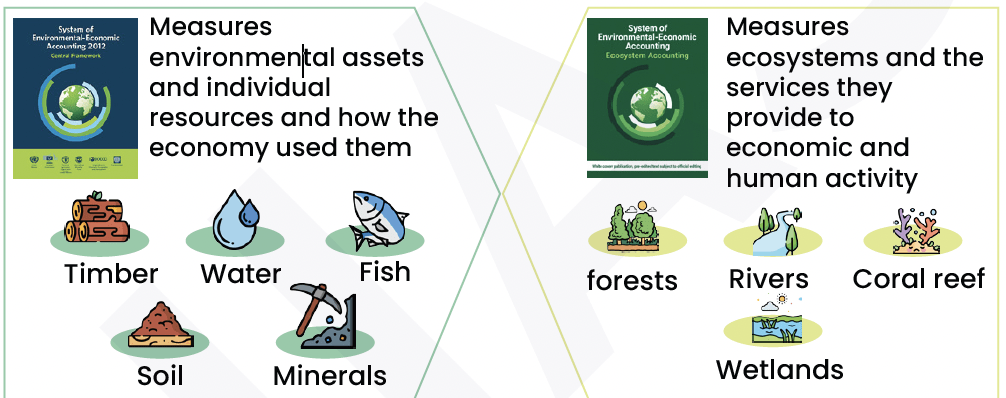
About System of Environmental-Economic Accounting (SEEA)
- SEEA is an international framework for compiling Environment Economic accounts.
- It explains the interaction between the economy and the environment, including stocks and changes in environmental assets.
- SEEA includes SEEA-Central Framework (SEEA-CF) and SEEA-Ecosystem Accounting (SEEA-EA).
Environment Accounts in India
- The National Statistical Office under MoSPI is responsible for developing environmental statistics and the methodology for National Resource Accounts in India.
- MoSPI has published the 'Strategy for Environmental Economic Accounts in India: 2022-26'.
- India has taken part in the 'Natural Capital Accounting and Valuation of Ecosystem services (NCAVES)' initiative.
- NCAVES was initiated by the United Nations Statistics Division (UNSD), UNEP, and the Secretariat of CBD in 2017.
- The first EnviStats were released in 2018 based on the recommendations of the Sir Partha Dasgupta Committee.
SEEA-CF and SEEA-EA
"Inclusion of Ladakh in Sixth Schedule"
The call for Ladakh to be included in the Sixth Schedule of the Indian Constitution is growing.
Sixth schedule
- The Sixth Schedule, found in Article 244(2), allows for the administration of tribal areas in Assam, Meghalaya, Tripura, and Mizoram.
- It was established based on the recommendations of the Bardoloi Committee.
- The Governor is given the authority to establish Autonomous District Councils (ADCs) and Autonomous Regional Councils (ARCs) in these states.
- ADCs are made up of a maximum of 30 members, with 4 appointed by the Governor and 26 elected.
- Currently, there are 10 ADCs in the four states.
- ARCs focus on a specific tribe within an autonomous district.
- ADCs and ARCs have the ability to create laws regarding various subjects such as forest management, agriculture, inheritance, marriage, and social customs.
- They also have the power to collect land revenue, levy taxes, regulate trade, and receive royalties from mineral extraction.
Difference Between Fifth and Sixth Schedule
| Parameter | Fifth Schedule | Sixth Schedule |
|---|---|---|
| Applicability | The President has declared specific Scheduled Areas in 10 states of India. | Tribal regions in Assam, Meghalaya, Tripura, and Mizoram. |
| Administration Body | Tribes Advisory Councils (TAC) | Autonomous District Councils (ADCs) & Autonomous Regional Councils (ARCs) |
| Powers |
|
|
| PESA Act 1996 | Applicable | Not applicable |
ILO's Regional Report for Asia-Pacific
- This report from Asia and the Pacific complements the ILO's global report on social protection for climate action and a just transition.
- It focuses on important changes, obstacles, and areas of focus for social protection in the region.
Key Findings:
- Over half of the population in the region is covered by at least one social protection benefit.
- Social protection programs like India's MGNREGA help people adapt to and cope with climate change by protecting their incomes and jobs.
- Nearly half of India's population is covered by at least one social protection benefit.
- Total expenditure on social protection in India is 5.1% of GDP.
Challenges for Universal Social Protection:
- Informal economy, rapid demographic aging, financial gap, emerging environmental challenges.
Recommendations:
- Strengthen social protection systems to enhance resilience, climate adaptation, and mitigation.
- Extend social protection coverage to workers in all types of employment.
- Reform fossil fuel subsidies to create fiscal space for social protection.
- Utilize technology to improve delivery and effectiveness of social protection programs.
India’s Initiatives
- MGNREGA 2005 ensures rural households receive 100 days of wage employment.
- National Food Security Act 2013 offers subsidized food grains to around two-thirds of India's population.
- NSAP is a welfare program for elderly individuals, widows, and others in need.
- Pradhan Mantri Jan Arogya Yojana provides health coverage of Rs. 5 lakhs per family per year for hospitalization to disadvantaged families.
"Ecomark Rules, 2024 Notified by Ministry of Environment"
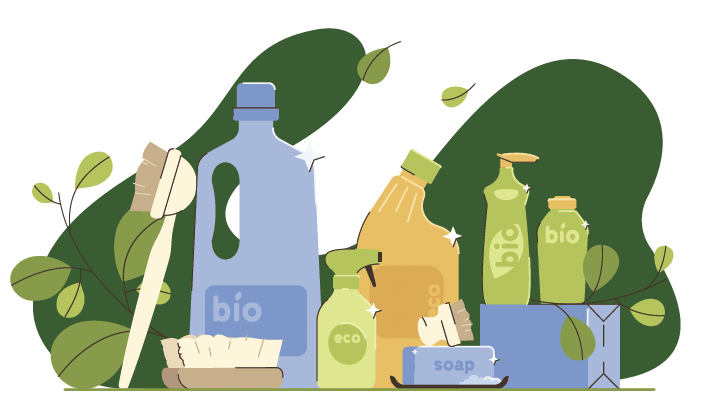
- The Ecomark labeling system aims to highlight environmentally friendly products in various categories such as food, cosmetics, soaps, and electronics.
- It is based on the principle of LIFE (Lifestyle for Environment), which emphasizes sustainability and resource efficiency.
Rules notifies
- Eligibility for the Ecomark includes having a license or certificate of conformity with Indian Standards and meeting specified environmental criteria.
- Manufacturers must apply for the Ecomark through the Central Pollution Control Board.
- The Ecomark is valid for three years.
- Oversight and implementation of the Ecomark is done by a Steering Committee led by the Environment Secretary.
Significance
- Consumers can make better purchasing choices and push manufacturers to create more eco-friendly products.
- This shift can help create a circular economy and prevent false information about a product's environmental impact.
- It will also encourage reduced energy usage, better resource management, and conservation efforts.
Other Environmental Certification in India
Indian Forest & Wood Certification Scheme
- A voluntary third-party certification program is available to encourage sustainable forest management and agroforestry in the country.
- The program covers certifications for forest management, tree outside forest management, and chain of custody.
- Entities that follow responsible forest management and agroforestry practices in their operations can receive market incentives through this program.
"Decade of Cleanliness: Swachh Bharat Mission Turns 10"
The Swachh Bharat Mission (SBM) was initiated on October 2, 2014, in honor of Mahatma Gandhi's birthday.
About SBM
Two Components:
- SBM (Gramin) was focused on promoting cleanliness in rural areas by implementing Solid and Liquid Waste Management initiatives and achieving the goal of making India Open Defecation Free (ODF). The current objective is to upgrade all villages from ODF to the ODF plus model. This initiative is overseen by the Ministry of Jal Shakti.
- SBM (Urban) 2.0's goal is to eliminate waste in all cities, promote better public habits, and improve management of grey and black water. This initiative is overseen by the Ministry of Housing and Urban Affairs.
- Main efforts: Clean India Fund, Cleanliness Survey, Cleanliness is Service campaigns, Clean Schools Mission, etc.
Impact of SBM
- Enhanced health: Prevented 60,000-70,000 infant fatalities each year through the decrease of waterborne illnesses.
- Empowerment of women: Enhanced security for women and waste management initiatives led by women self-help groups.
- Economic advantages: Attaining ODF status results in households saving approximately ₹50,000 annually by reducing medical expenses and travel time.
Challenges to SBM
- Insufficient water supply is a problem, particularly in rural regions.
- Maintaining Open Defecation Free (ODF) status is at risk due to issues like improper faecal sludge management, unsuitable toilet technologies, and a lack of human resources.
- Municipal waste management faces difficulties in dealing with old landfills that need to be remediated.
Way Forward
- Ensure the continued success of ODF status by establishing a routine maintenance system for toilets that includes participation from the community.
- Develop a strategy that combines sanitation and waste management efforts by investing in infrastructure for waste segregation.
- Implement technology for gathering data on sanitation access and consider innovative solutions such as smart toilets to improve overall sanitation practices.
"Army Chief Warns of Chinese 'Grey Zone' Tactics"
The observation was noted while evaluating the current situation at the Line of Actual Control (LAC) with China in eastern Ladakh.
About Grey Zone warfare
- Unconventional tactics and strategies are used in this form of warfare that goes beyond traditional methods.
- This type of warfare exists in the space between peace and war.
- The goal is to harm an opponent without them recognizing they are being targeted.
- Activities include cyber attacks, support for non-state groups, economic pressure, and information warfare.
- An example is China's "Salami slicing" tactic, where territory is gradually taken over to expand control, such as in the South China Sea.
Why Grey Zone warfare is preferred?
- It is challenging to rally global support to address this issue.
- It takes advantage of flaws in the established system of rules.
- The price of traditional warfare in the nuclear age is too high, and the potential for escalation is too great.
- For example, Russia's annexation of Crimea.
- Countries with limited resources or power tend to favor this approach.
India's Measures to Tackle Grey Zone Warfare
- The Chief of Defence Staff is focused on enhancing coordination, effectiveness, and integration of combat capabilities across all three branches of the military.
- Modernization efforts include incorporating technology into war-fighting systems and utilizing the iDEX initiative.
- Initiatives such as the Defence Procurement Procedure (DAP) 2020 aim to promote self-reliance in defence manufacturing.
- Collaboration with like-minded countries, such as the General Security of Military Information Agreement with the US, is a priority.
- Additional measures include the establishment of CERT-In for cyber security and regulations on foreign NGOs funding through FCRA.