
Daily Current Affairs UPSC 01 October 2024
Welcome to our daily current affairs blog post for UPSC aspirants! In today's edition, we will be discussing the most significant events and news updates that took place on 1st October 2024. Staying updated with current affairs is crucial for UPSC preparation, as it not only helps you stay informed but also enhances your understanding of various subjects. So, let's dive into the important happenings of the day and explore their potential impact on the upcoming UPSC examinations.

Digital Radio Broadcasting
- TRAI has released a consultation paper on creating a Digital Radio Broadcast Policy for Private Radio Broadcasters.
- Currently, private radio broadcasters are only allowed to transmit programs in the FM frequency band of 88-108 MHz.
- Digital radio broadcasting involves using modulation to convert audio and video signals into a digital format for transmission over airwaves.
- Digital broadcasting has the advantage of being able to broadcast 3 to 4 channels on a single frequency carrier with improved audio quality, compared to analogue broadcasting which can only broadcast 1 channel on a frequency carrier.
- Digital radio broadcasting eliminates the need for manual tuning or channel searching.
Cyber Slavery
- The telecom ministry plans to disconnect 2.17 crore mobile connections in response to reports of 'cyber slavery'.
- Cyber slavery is a modern form of exploitation that starts online and can lead to physical human trafficking.
- This type of crime is becoming more organized and widespread, with offenders using fake promises of employment to lure victims.
- Over 5,000 Indians have been reported to be victims of cyber slavery in Southeast Asia, where they are forced to commit cyber fraud.
Remission of Duties and Taxes on Exported Products (RoDTEP) Scheme
- The government has approved changes to the RoDTEP scheme, including extending the scheme for Domestic Tariff Area (DTA) units by 1 year until September 30, 2025.
- For Authorisation holders, export-oriented units, and special economic zone units, the RoDTEP scheme will be applicable until the end of this year.
- New rates for the RoDTEP scheme will be applicable from October 10, 2024, based on the recommendations of the RoDTEP Committee.
- The RoDTEP scheme was introduced in 2021 by the Ministry of Commerce and Industry with the aim of refunding taxes, duties, and levies at the central, state, and local levels on exported products.
- The RoDTEP scheme replaced the Merchandise Exports from India scheme, which had been challenged at the World Trade Organization.
Post-tropical Cyclone
- Hurricane Helene in the USA has been downgraded to a post-tropical cyclone.
- A hurricane is a tropical cyclone with sustained winds of at least 74 mph.
A post-tropical cyclone is a storm that no longer has enough tropical characteristics to be considered a tropical cyclone. - Post-tropical cyclones can still bring heavy rains and strong winds.
- There are two specific classes of post-tropical cyclones: former tropical cyclones that have become fully extra-tropical cyclones, and remnant lows that no longer have the organization of a tropical cyclone.
Exercise KAZIND-2024
- The 8th edition of the India-Kazakhstan Annual Joint Military Exercise, KAZIND-2024, has started in Auli, Uttarakhand.
- The goal of the exercise is to improve the joint military capabilities of both countries for conducting counter terrorism operations in a sub conventional setting.
Mudumalai Tiger Reserve
- Two endangered species of amphibians, the cave dancing frog and Indraneil's Night Frog, were discovered in Mudumalai Tiger Reserve.
- Mudumalai Tiger Reserve is located in the Nilgiris District of Tamil Nadu and is part of the Nilgiri Biosphere Reserve along with other protected areas.
- The Moyar River flows through Mudumalai Tiger Reserve, which is home to various types of forests including tropical evergreen, moist deciduous, and moist teak forests.
- Important flora and fauna found in Mudumalai Tiger Reserve include Elephant Grass, Tigers, Elephants, and Indian Gaur.
SARTHIE 1.0
- The Department of Social Justice and Empowerment (DoSJE) and National Legal Services Authority (NALSA) collaborated to launch SARTHIE 1.0 and signed an MoU to increase public awareness about social welfare schemes for vulnerable communities.
- SARTHIE 1.0 aims to empower disadvantaged communities through awareness and legal support to help them access welfare schemes effectively.
- The collaboration between DoSJE and NALSA aims to create synergy between the executive and judiciary to promote social justice.
- NALSA, established under the Legal Services Authorities Act, 1987, provides free legal services to eligible individuals and organizes Lok Adalats to resolve disputes.
White Dwarf Star
- The first rocky planet has been discovered orbiting a white dwarf star.
- A white dwarf star is the core left behind after a dying star has expelled its outer layers to form a planetary nebula.
- The Chandrasekhar limit is the maximum mass a stable white dwarf star can have, which is 1.44 times the mass of the Sun.
- If a star ends its nuclear-burning lifetime with a mass greater than the Chandrasekhar limit, it must become either a neutron star or a black hole.
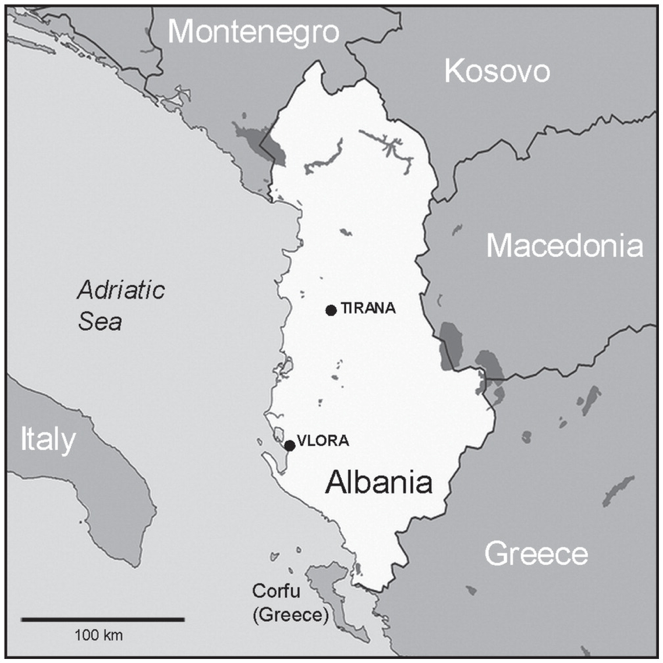
Albania (Capital: Tirana)
- India opened a new mission in Albania to expand its diplomatic presence in the region
- Political Features:
- Location: Albania is located in Southern Europe on the western part of the Balkan Peninsula
- Bordering Areas: Albania shares borders with Montenegro, Kosovo, North Macedonia, and Greece
- Maritime Boundaries: Albania has maritime boundaries with the Adriatic Sea and Ionian Sea
- Geographical Features:
- Mountains: Albania is home to the North Albanian Alps, an extension of the Dinaric Alps
- Highest Point: Mount Korab is the highest point in Albania
- Strait: The Otranto Strait connects the Adriatic Sea with the Ionian Sea
- Rivers: Albania is home to rivers such as the Drin and Seman
"CBM Sets Sail: Cruise Bharat Mission Launched"
The Ministry of Ports, Shipping, and Waterways has initiated a new mission.
About Cruise Bharat Mission
- Goal: - India aims to enhance its position as a top global cruise destination and a hub for cruise tourism.
- The goal is to increase cruise passenger traffic to 9.2 lakh by 2029, doubling the numbers from 2024.
- The country also plans to double the number of cruise calls from 254 in 2024 to 500 by 2030.
Phasewise implementation:
- Phase 1 (2024 to 2025): The main goal is to create partnerships with nearby countries in the cruise industry.
- Phase 2 (2025 to 2027): The focus will shift to building new cruise ports and attractions.
- Phase 3 (2027 to 2029): The plan is to connect all cruise routes throughout the Indian Subcontinent.
Three key cruise segments:
- Ocean & Harbour Cruise segment includes deep-sea and coastal cruises, as well as harbour-based yachting and sailing cruises.
- River & Inland Cruise segment focuses on cruises on rivers, canals, backwaters, creeks, and lakes.
- Island Cruise segment features inter-island cruises, lighthouse tours, and other island-based excursions.
Significance of Mission
- 4 lakh jobs will be created in the revamped Cruise Sector to boost employment.
- The promotion of cultural, historical, and natural circuits in the Indian Subcontinent will be emphasized.
- The development of high-quality infrastructure will not only benefit the Cruise Sector but also maritime trade.
Five Strategic Pillars
- Sustainable Infrastructure & Capital: Focuses on filling infrastructure gaps
- Operations Including Technology Enabled: Aims to make operations more efficient
- Regulatory, Fiscal & Financial Policy: Introducing a National Cruise Tourism Policy
- Cruise Promotion & Circuit Integration: Concentrating on international marketing and investment promotion
- Capacity Building and Economic Research: Prioritizes skill development and research efforts
"MoHUA's "Jal Hi AMRIT" Program Launched"
The new program introduced as part of AMRUT 2.0 aims to enhance the standard of discharged treated effluent and encourage the reuse of treated water in urban regions.
About Jal Hi Amrit Program:
Main objective: To encourage States and Union Territories to effectively operate sewage treatment plants (STPs) in order to produce high-quality treated water that can be reused.
Key Aspects of Initiative:
- The Clean Water Credit System aims to create competition between cities, enhance their capabilities, and motivate them to achieve high-quality treated water.
- STPs will receive clean water credits in the form of a star-rating certificate (ranging from 3 to 5 stars) that is valid for six months.
- Performance-based incentives will be given to STPs based on their star ratings and Clean Water Credit.
- The system aims to promote water circularity and encourage the reuse of treated water.
About AMRUT 2.0
Ministry: Ministry of Housing and Urban Affairs (MoHUA)
- The Ministry of Housing and Urban Affairs (MoHUA) launched a program in 2021 with a tenure of 5 years.
- The purpose of the program is to ensure that all households in statutory towns have access to water supply through functional taps.
- The program also aims to provide coverage of septage management in 500 cities as part of the first phase of the Atal Mission for Rejuvenation and Urban Transformation (AMRUT) scheme.
Atal Mission for Rejuvenation and Urban Transformation (AMRUT) 1.0
- AMRUT 1.0 was launched in 2015 with the goal of providing basic civic amenities such as water supply, septage management, and storm water drainage in selected cities and towns.
- The program aims to improve the quality of life in urban areas by ensuring access to essential services and infrastructure.
"2024 India BioEconomy Report Revealed"
- A recent report from the Department of Biotechnology and BIRAC highlights the significant advancements in the Indian Bio-Economy Sector.
- The bio-economy involves utilizing biological resources in a sustainable economic system to create products, processes, and services through knowledge-based production.
Key Findings:
- India's BioEconomy has grown to $151 billion by 2023, making up 4.25% of the country's GDP and providing jobs for over 3.3 million individuals.
- It is projected to double in size to $300 billion by the year 2030.
Key Sub Sector Contributing to India’s Bio Economy:
- BioIndustrial sector makes up approximately 48% of the industry and includes biofuels, chemicals, and bioplastics.
- BioAgri sector accounts for around 8% and involves genetically modified crops like Bt Cotton.
- BioPharma sector represents about 36% and focuses on pharmaceuticals, medical devices, and diagnostics.
- BioIT/Research Services sector makes up approximately 8% and includes contract research, clinical trials, and bioinformatics.
Major achievements Made:
- Global Vaccine Manufacturer: India supplied 25% of vaccines purchased by the WHO and 20% of exports went to Africa. This shows India's significant contribution to global vaccination efforts.
- Energy Independence Boost: India is the third-largest producer and consumer of ethanol in the world. This highlights India's efforts towards achieving energy independence and promoting sustainable energy sources.
- Precision Healthcare Breakthroughs: India recently approved its first gene therapy clinical trial for Hemophilia A, showcasing advancements in precision healthcare in the country. This signifies India's progress in adopting cutting-edge medical technologies.
- Growth in Biotech Startups: The number of biotech startups in India surged to approximately 8,500 between 2021 and 2023, marking a 59% increase. This demonstrates the rapid growth and potential of the biotech industry in India, indicating a thriving ecosystem for innovation and entrepreneurship.
Government Initiatives to boost BioEconomy
- Bio-manufacturing Initiative: The Department of Biotechnology (DBT) has introduced the BioE3 Policy to promote bio-manufacturing in India.
- Intellectual Property (IP) Guidelines: New IP guidelines will be implemented in 2023 to enhance the commercialization of research funded by the public.
- Governance and Structural Reforms: The restructuring of 14 autonomous institutes into the Biotechnology Research and Innovation Council aims to improve governance and efficiency in the biotechnology sector.
- Regulatory Streamlining with BioRRAP: The Biological Research Regulatory Approval Portal (BioRRAP) has been launched to simplify the approval process for biological research, making it easier for researchers to conduct their work.
ASI Report for FY 2022-23 Released by MoSPI
ASI offers information on how the composition, growth, and structure of manufacturing industries are changing by analyzing important economic indicators.
Key Highlights
- Manufacturing Gross Value Added (GVA) increased by 7.3% in current prices in 2022-23 compared to the previous year.
- Maharashtra was the top state in terms of Manufacturing GVA, with Gujarat following closely behind.
- Economic parameters such as invested capital, GVA, employment, and wages have exceeded pre-pandemic levels in absolute value terms.
- Growth drivers in the Manufacturing Sector include the production of Basic metal, Coke & Refined Petroleum Products, and Food Products.
- Manufacturing employment saw a 7.4% increase in 2022-23 compared to the previous year.
- Tamil Nadu was the highest employing state in the manufacturing sector, with Maharashtra coming in second.
About ASI:
The gathering of statistics is regulated by the Collection of Statistics Act, 2008, with the exception of Jammu & Kashmir, which is governed by the J&K Collection of Statistics Act, 2010.
Industries covered:
- Factories that are registered under Sections 2m(i & ii) of the Factories Act, 1948
- Bidi and cigar manufacturing establishments that fall under the Bidi & Cigar Workers (Conditions of Employment) Act, 1966
- Electricity undertakings that are not registered with the Central Electricity Authority (CEA)
- Units with 100 or more employees that are registered in the Business Register of Establishments (BRE) maintained by the States.
About GVA:
- Gross Value Added (GVA) is the difference between the value of output and the value of intermediate consumption, representing the contribution to GDP by a producer, industry, or sector.
- GVA is calculated by subtracting intermediate consumption from gross output.
- GVA includes depreciation of capital, unlike Net Value Added which does not account for depreciation.
"India Unveils BharatGen: First Government-Funded MLLM"
- BharatGen was created by the Ministry of Science & Technology.
- The initiative is in line with the objectives of developing AI technology in India and creating AI solutions specifically for the Indian market.
About BharatGen
- The goal is to develop AI systems that can produce text and multimodal content in different Indian languages.
- IIT Bombay is responsible for carrying out this project as part of the National Mission on Interdisciplinary Cyber-Physical Systems (NMICPS).
Features:
- Developing and educating using Indian data sets: Gathering and organizing data specific to India to decrease reliance on foreign models.
- Supporting multiple languages and modes of communication: Guaranteeing that all of the country's various languages, dialects, and cultural backgrounds are represented.
- Providing an open-source platform: Available to all individuals: Promoting technological advancement in industry, commerce, culture, and inclusivity.
About MLLM and Generative AI
- MLLM are advanced Large Language Models that have been trained on extensive datasets containing various types of data, such as text, images, audio, and video.
- These models utilize machine learning techniques to understand and interpret human languages and complex information.
- Generative AI, a popular application of LLM, involves the use of algorithms and deep-learning models to generate new content across different formats like audio, code, images, and text.
National Mission on Interdisciplinary Cyber-Physical Systems (NM-ICPS), 2018
- Goal: To create a collaborative environment between academia, industry, government, and international organizations to support entrepreneurship, research, and commercialization of CPS technologies.
- CPS refers to systems where the cyber and physical components are closely connected, such as autonomous vehicles.
- Responsible organization: Department of Science and Technology (DST) is in charge of implementing this initiative.
"Thematic Hubs: A Key Component of NQM"
The Ministry of Science & Technology has announced the creation of four Thematic Hubs (T-Hubs) that will include 14 Technical Groups spread across 17 states and 2 Union Territories as part of the National Quality Movement (NQM).
About T-Hubs
Different areas of focus and the institutions associated with them are as follows:
- Quantum Computing is studied at the Indian Institute of Science in Bengaluru.
- Quantum Communication research is conducted at IIT Madras.
- IIT Bombay is known for its work in Quantum Sensing & Metrology.
- Quantum Materials & Devices research is carried out at IIT Delhi.
- Importance of T-Hubs: T-Hubs bring together specialists from various disciplines such as physics and computer science, facilitating collaboration between research and industry.
- Operational approach: T-Hubs operate on the Hub-Spoke-Spike model, establishing a network that connects central hubs with research projects (Spokes) and individual research groups (Spikes).
About National Quantum Mission (NQM)
- Goal: Foster growth in Quantum Technology (QT) through research and development
- Implementing Agency: Department of Science & Technology (DST) under the Ministry of Science & Technology
- NQM Mission: Part of the Prime Minister’s Science Technology Innovation Advisory Council (PMSTIAC)
- Duration: 2023 to 2031
- Targets: Development of intermediate-scale quantum computers, Satellite-based secure quantum communications, etc.
Related News
Quantum Key Distribution technology (QKD)
- The Indian Army has entered into an agreement for Quantum Key Distribution technology as part of the iDEX initiative.
- The iDEX initiative aims to promote innovation in the Defense and Aerospace Sector by collaborating with various industries such as MSMEs, startups, and individual innovators.
About QKD
- Utilizes principles of quantum mechanics to allow two parties to generate secret keys that only they know, which can be used for encryption and decryption of messages.
- The process involves sending photons, which are quantum particles of light, through optical links.