
PT 360 IR (International Relations) June 2024: UPSC Prelims 2025
Tip: For reading free UPSC Prelims 2025 Current Affairs for International Relations online, use the Next/Previous buttons or refer to the Sidebar. If you are using a mobile device, click the menu icon (three horizontal lines) to access the sidebar.
Click here for Printable PDF and Lectures.

COLOMBO PROCESS
India held its inaugural meeting as the Chair of the Colombo Process.
About the Colombo Process
- It is a Regional Consultative Process (RCP) that serves as a platform for discussions on managing overseas employment and contractual labor.
- The Colombo Process includes 12 Asian member states, including Bangladesh and Sri Lanka.
- India is a founding member of this group.
- Key focus areas include skills and qualifications recognition processes and promoting ethical recruitment practices.
- The United Nations' International Organization for Migration (IOM) provides technical and administrative support for the Colombo Process.
GROUP OF 7 (G7)
News Context
- India participated in the 50th G7 Summit held in Apulia, Italy, where it joined as an Outreach Country.
- Key Highlights of India's Address:
- Technology: Emphasized transforming technological monopolies into tools accessible for widespread use.
- Energy: India became the first nation to meet all its COP commitments ahead of schedule. Under Mission LiFE, it launched the "Ek Ped Maa Ke Naam" initiative on World Environment Day (June 5).
- Global South: India has taken on the role of advocating for the concerns and interests of Global South countries.
About the Group of 7 (G7)
- Nature: The G7 is an informal coalition of leading democracies that convenes each year to discuss and align on global economic strategies and other cross-border challenges such as migration, climate change, and conflict.
- Origin: Established in 1975, the G7 was formed to promote economic and financial cooperation, particularly in response to the energy crisis.
- Functioning: The G7 does not have a permanent structure; instead, a rotating Presidency determines the agenda each year.
- The annual G7 Summit concludes with a communiqué outlining agreed-upon political commitments.
- Membership: The G7 includes seven countries: the United States, Germany, Canada, the United Kingdom, Japan, Italy, and France. Russia joined in 1998, forming the G8, but was suspended in 2014 following its annexation of Crimea.
- While the European Union is not a member, it participates in the annual summit.
The G7 countries account for:
- 40% of the world’s economic output and are home to 10% of the global population.
- 36% of worldwide power generation capacity.
- 30% of global energy consumption.
- 25% of global carbon dioxide (CO2) emissions from energy-related activities.
Key achievements of the G7:
- 2002: Significantly contributed to the establishment of a global fund focused on combating malaria and AIDS.
- 2009: Initiated the L'Aquila Food Security Initiative (AFSI).
- 2021: Introduced the Build Back Better World (B3W) partnership to tackle the $15 trillion shortfall in global infrastructure by 2040.
- 2022: Announced the Partnership for Global Infrastructure and Investment (PGII).
Key Outcomes of the Summit:
- Regional Developments:
- Ukraine-Russia Conflict: Pledged to intensify economic pressures on Russia; for instance, G7 committed $50 billion using frozen Russian assets.
- Israel-Hamas Conflict: Reaffirmed support for a two-state solution and countries' rights to safeguard their vessels in the Red Sea, with actions such as the EU's Aspides and the US-led Prosperity Guardian maritime initiatives.
- Strengthening Economic Resilience: Emphasized diversifying supply chains (e.g., G7’s PGII initiatives, IMEC) and coordinating on critical minerals (e.g., Partnership for Resilient and Inclusive Supply Chain Enhancement, Mineral Security Partnership).
- Energy, Climate, and Environmental Goals: Targeted a 43% reduction in global greenhouse gas emissions by this decade’s end and 60% by 2035, based on 2019 levels. Energy for Growth in Africa was introduced to foster sustainable development, positioning Africa with an investment alternative to China.
- Health and Food Security: The G7 launched Apulia Food Systems to boost food security and sustainable agriculture, and committed continued support for Gavi in expanding immunization coverage.
India and G7:
| Topic | Details |
|---|---|
| Significance of India in G7 | Frequent invitations highlight India's global importance. Invited 11 times to G7 summits. Economic and military growth position India as a potential future G7 member. Projected to surpass Japan as the 4th largest economy. |
| Relevance of G7 for India | Voice of the Global South: Platform for India to address Global South priorities on the global stage. Comity of Democracies: Reflects democratic values (unlike BRICS, SCO, G20 with non-democratic states). Alternative to China: As a responsible democracy, India offers an alternative voice for emerging economies. |
| Global South Representation | Inclusion helps G7 engage with Global South perspectives. Focus on Global South began at 49th G7 Summit in Japan. |
| G20 Chairmanship Link | Complements G7 participation, bridging developed and developing world interests. |
| Outreach Session & Showcasing | G7 outreach session allows India to display achievements and global outlook. |
| Opportunity to Engage Leaders | G7 provides a platform for India to meet global leaders and set priorities. |
INDIA: GLOBAL PEACEMAKER
News Context
- Summit on Peace in Ukraine: The “Path to Peace Summit” on Ukraine was recently held in Switzerland to explore solutions for ending the ongoing conflict.
About the Peace Summit
- Objective: The primary goal of the summit was to create a shared understanding and framework to establish a fair and lasting peace in Ukraine.
- India's Representation:
- Attendance: India was represented by the Secretary of the Ministry of External Affairs, reflecting its commitment to supporting peaceful resolutions.
- Approach to Dialogue: India’s participation underscores its consistent stance of encouraging peace through diplomatic means rather than direct intervention.
- Non-signatory to Joint Communique: India refrained from signing the joint statement issued at the summit, emphasizing its preference for direct, practical engagement and dialogue among the conflicting parties rather than formal declarations.
Why is Global Peace-making in India’s Interest?
- Global Disruptions: Ongoing global conflicts, such as those in Ukraine, Gaza, and potential conflicts near Taiwan, impact trade, inflation, energy supplies, food security, and supply chains worldwide. Such disruptions could hinder India’s vision of becoming a developed economy by 2047.
- Declining Effectiveness of the UN: Traditionally, the United Nations Security Council has been tasked with global peacekeeping, yet its credibility has weakened, as its permanent members are themselves engaged in global conflicts.
- Opportunity to be a Global Leader: Active involvement in peace mediation could elevate India’s standing on the global stage and further its aspirations to serve as a net security provider.
- National Security Concerns: Reducing tensions, especially on the Korean Peninsula, aligns with India’s security interests due to connections between Pakistan’s nuclear program and North Korea’s missile capabilities.
India’s Contributions and Potential for Promoting International Peace
- Voice of the Global South: India acts as a bridge between the Global South and the North, evident in its push for the African Union's inclusion in the G20, amplifying perspectives from the South.
- Legacy of Non-Alignment: India’s historical role in the Non-Alignment Movement (NAM) positioned it as a neutral mediator, as seen in its diplomatic efforts to help Austria gain freedom from Soviet influence in 1953.
- Conflict Resolution Experience: India’s experience in addressing both internal and regional conflicts reinforces its potential as a peace mediator. Its involvement in Afghanistan, mediation in the Sri Lankan civil conflict, and resolutions of domestic issues in Mizoram showcase its capacity for conflict resolution.
- Influence in the Emerging Global Order: India’s positive bilateral relations with various countries have enhanced its image internationally, as exemplified by Iran’s request for India to mediate tensions with the U.S. following the 2020 incident involving an Iranian military commander.
- Peacebuilding through Development Partnerships: India has contributed to peace through development initiatives in Africa and Afghanistan, including ITEC Programs and infrastructure projects like the Salma Dam.
- Cultural Diplomacy: India’s philosophy of ‘Vasudhaiva Kutumbakam’ (the world is one family) and its civilizational values resonate globally, promoting harmony and understanding.
- Multialignment Strategy: India’s balanced approach, engaging all major global powers (Russia, USA, Israel, Iran, Japan), underscores its role as a bridging power in the international system.
India’s contributions to UN peacekeeping missions:
| Participation | Troops | Training |
|---|---|---|
|
|
|
India’s Peacemaking Role in the Ukraine-Russia War
- Humanitarian Support: India has sent numerous shipments of humanitarian aid to Ukraine, including essential medicines and medical equipment.
- Diplomatic Neutrality: India's non-aligned stance and strong diplomatic ties with both Ukraine and Russia enable it to promote peace effectively in the region.
- Although India has not directly condemned Russia's invasion, it has called for an international investigation into the Bucha massacre and voiced concerns about Russia’s nuclear threats.
- Mediator: As a trusted partner to Russia, India holds a unique position that allows it to mediate and potentially help de-escalate the ongoing conflict.
INDIA-BANGLADESH RELATIONS
What in News?
The Prime Minister of Bangladesh recently undertook an official state visit to India, marking a continuation of the strong and collaborative relationship between the two nations.
Key Agreements and Outcomes of the Visit
Several Memorandums of Understanding (MoUs) were signed to enhance cooperation in various sectors:
- India-Bangladesh Digital Partnership: A shared vision to strengthen digital collaboration.
- India-Bangladesh Green Partnership: Focused on fostering a sustainable and eco-friendly future.
- Maritime Cooperation and Blue Economy: An MoU on collaboration in maritime fields, including oceanography.
- UPI Launch: A commercial agreement between NPCI and Bangladesh Bank to initiate UPI in Bangladesh.
- Ganga Water Treaty Renewal: Establishment of a Joint Technical Committee to discuss the renewal of the treaty.
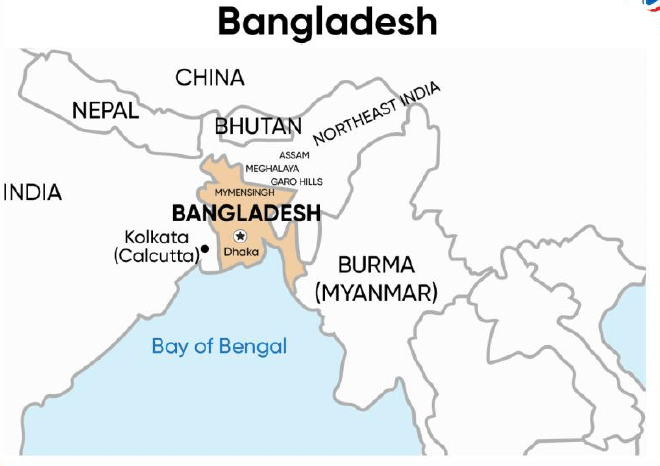
Recent Advances in India-Bangladesh Bilateral Relations:
- Regional Cooperation: Bangladesh has joined the Indo-Pacific Oceans Initiative.
- Power and Energy Collaboration: The India-Bangladesh Friendship Pipeline is now operational, transporting high-speed diesel to Bangladesh, while the Maitree Super Thermal Power Plant supplies electricity to Bangladesh's power grid.
- Digital Public Infrastructure Partnership: An MoU was signed between the National Payments Corporation of India (NPCI) and Bangladesh Bank to support cross-border UPI payments.
- Space Cooperation: Both nations are working on the joint development and launch of small satellites using Indian launch vehicles.
- Medical Tourism: India has extended e-Medical visa facilities for Bangladeshi nationals.
Steps to be taken:
- Initiate negotiations early for a Comprehensive Economic Partnership Agreement (CEPA) and expedite the establishment of Special Economic Zones (SEZs) allocated by Bangladesh for India.
- Strengthen hydro-diplomacy by finalizing a Water Sharing Treaty, particularly for the Teesta River, to address issues in transboundary river management.
- Utilize the Joint Rivers Commission to develop an interim framework for water sharing.
- Expand power and energy cooperation to facilitate intra-regional electricity trade.
- Speed up Connectivity Projects, potentially boosting India’s exports to Bangladesh by 172% (World Bank, 2021).
- For instance, advance the implementation of the BBIN Motor Vehicle Agreement.
- Position Bangladesh as a central partner for regional and sub-regional integration within BIMSTEC, SAARC, and IORA, while also supporting the shared goals of the Global South.
- Establish a new Framework Agreement for Development Partnership to broaden the scope of initiatives and projects.
- Enhance cross-border immigration management through digitalization at the local level.
INDIA-EURASIA RELATIONS
News Context
The increasingly intricate ties between European and Asian security are opening up fresh strategic opportunities for nations like India.
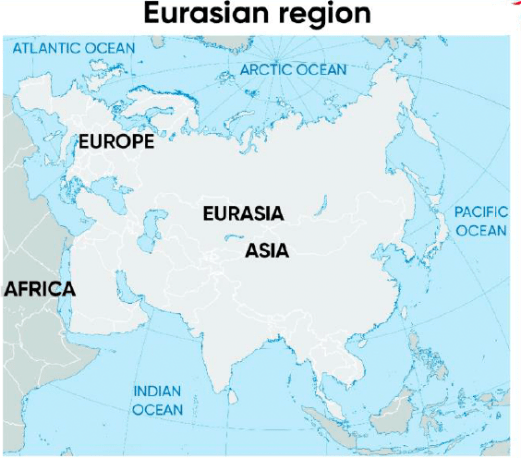
Opportunities for India in the Eurasian region include:
- Developing a Eurasian energy grid, such as through initiatives like the Green Grids Initiative (GGI).
- Addressing non-traditional security challenges, including food and environmental security.
- Collaborating on specialized technologies, like Quantum Technology and space exploration.
- Engaging in Arctic cooperation and supporting peace-building efforts in Afghanistan.
INDIA-FRANCE RELATIONS
News Context
The Prime Minister met with the President of France on the sidelines of the G7 Summit.
Details of the Meeting:
- The discussions centered around the "Horizon 2047" roadmap and the Indo-Pacific strategy.
- The "Horizon 2047" roadmap is built on three main pillars:
- Security and Sovereignty Partnership: Aims to promote stability in the Indo-Pacific, counter online radicalization, and address terrorism through initiatives like the "No Money for Terror" (NMFT) program.
- Planet Partnership: Involves collaboration on environmental efforts such as the Indo-Pacific Parks Partnership, the International Solar Alliance, and the Indo-Pacific Oceans Initiative (IPOI).
- People Partnership: The 2021 Migration and Mobility Partnership Agreement is set to increase the exchange opportunities for students and graduates.
- Both leaders also agreed to strengthen strategic defense cooperation with a focus on supporting "Make in India" initiatives.
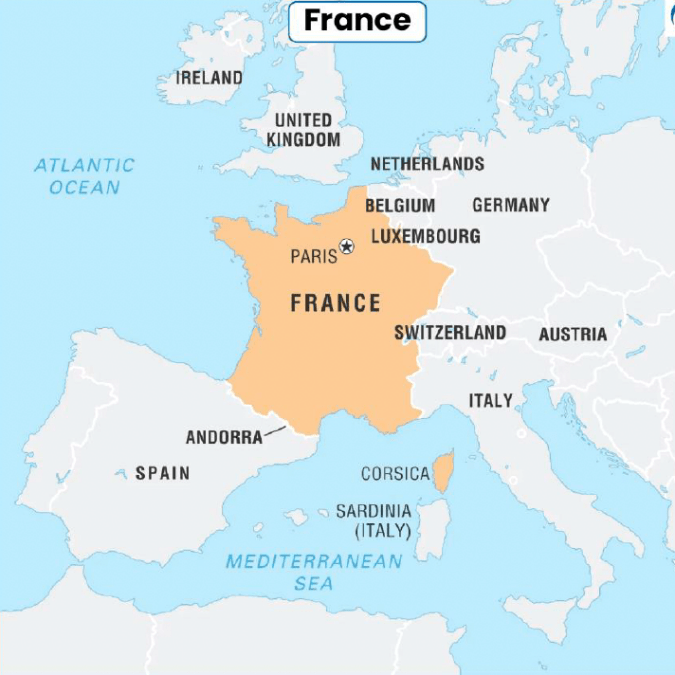
The growing convergence between India-France Relations
- Defense Cooperation: France, accounting for 33% of India’s arms imports, is India’s second-largest arms supplier, as reported by the Stockholm International Peace Research Institute (SIPRI). Significant projects include the Rafale fighter jet acquisitions and the P-75 Scorpene submarine initiative.
- Defense Industrial Roadmap: India and France have laid out a roadmap for joint design, development, and production, aiming to fulfill India's defense needs and supply friendly nations.
- Notable projects include establishing Maintenance, Repair, and Overhaul (MRO) facilities for advanced aviation propulsion, including LEAP engines and Rafale engines.
- Military Exercises: Joint military drills include bilateral exercises like VARUNA and FRINJEX-23, along with multilateral exercises like La Perouse and ORION.
- Geo-Strategic Cooperation: The 2023 India-France Indo-Pacific Roadmap expands bilateral cooperation from the Indian Ocean Region (IOR) to cover the entire Indo-Pacific region.
- Space Cooperation: France remains a key component supplier for India’s space program, with joint plans for new launch vehicles and the TRISHNA Earth Observation mission.
- Economic Cooperation: France is a significant investor in India, with $659.77 million in FDI during FY 2022-23.
- Industrial Partnerships: India’s Tata Group and France’s Airbus have collaborated to manufacture civilian helicopters.
- In aviation, CFM International has secured a deal with India’s Akasa Air for over 300 LEAP-1B engines.
- Digital Cooperation: The Unified Payments Interface (UPI) was launched at the Eiffel Tower, enabling secure and convenient transactions for Indian visitors and NRIs in France.
- A French company has also developed 14 supercomputers for India, including Param Siddhi, which operates at a speed of 4.6 petaflops/second.
- Multilateral Cooperation: France has consistently advocated for India’s permanent seat on the United Nations Security Council (UNSC).
- It also supports India’s positions on Kashmir and counter-terrorism in the United Nations (UN) and agencies like the Financial Action Task Force (FATF).
- France assisted India’s membership in the Missile Technology Control Regime (MTCR), Wassenaar Arrangement (WA), and Australia Group (AG).
India-France Indo-Pacific Roadmap: Main Highlights
India's SAGAR vision aligns with France's Indo-Pacific strategy, focusing on broad regional collaboration.
- Enhance maritime security coordination through platforms like IFC-IOR (India), EMASOH (UAE), and Atalanta.
- Strengthen plurilateral partnerships with Australia (initiated in 2020) and the UAE (launched in 2023).
- Collaborate across French overseas territories, including La Réunion, New Caledonia, and French Polynesia.
- Boost engagement in regional bodies like the Indian Ocean Rim Association, Indian Ocean Naval Symposium, Indian Ocean Commission, and Djibouti Code of Conduct.
INDIA-ITALY STRATEGIC PARTNERSHIP
On the sidelines of the G7 Summit, the Prime Ministers of India and Italy reviewed ongoing progress and agreed to deepen their cooperation in global and multilateral platforms, including the India-Middle East-Europe Economic Corridor (IMEC).
Key Aspects of the Bilateral Partnership
Political Relations
- Established in 1947, political relations between India and Italy were elevated to a Strategic Partnership in 2023.
- During a Virtual Summit in 2020, both countries adopted the 2020-2025 Action Plan, outlining an ambitious agenda to enhance their partnership.
Economic Relations
- Italy is India’s fourth-largest trading partner within the EU, following Germany, Belgium, and the Netherlands.
- The Indo-Italian Joint Economic Commission, active since 1976, facilitates bilateral economic cooperation.
- A Migration and Mobility Partnership Agreement was signed in 2023 to support safe and regulated migration.
Technology Cooperation
- A Science and Technology Cooperation Agreement was signed in November 2003, focusing on joint research in areas like Electronics, Biotechnology, and Energy.
- A new Executive Programme of Cooperation for 2025-27 aims to foster joint R&D in Science and Technology.
Defence and Security
- Italy joined the Science and Technology Pillar of the Indo-Pacific Ocean Initiative in 2023.
- Joint military exercises include PASSEX and MILAN (Naval Exercises).
Multilateral Cooperation
- Italy has joined several India-led initiatives, including the International Solar Alliance, Coalition for Disaster Resilient Infrastructure, Global Biofuels Alliance, and IMEC.
INDIA-JAPAN RELATIONS
News Context
The Prime Ministers of India and Japan held a bilateral meeting on the sidelines of the G-7 Summit in Apulia, Italy.
Further Details
- The leaders discussed expanding collaboration, incorporating new and emerging sectors, and enhancing Business-to-Business (B2B) and People-to-People (P2P) ties.
- Both nations acknowledged the 10th anniversary of the India-Japan Special Strategic and Global Partnership.
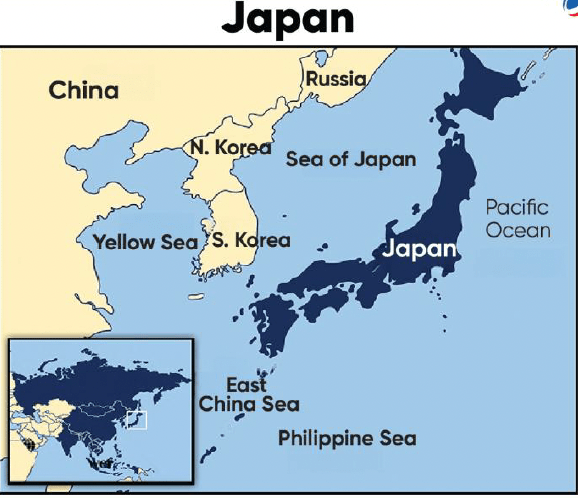
Steps to be Taken
- Expedite trade and investment by reassessing the Comprehensive Economic Partnership Agreement (CEPA) implementation and revisiting the rules of origin to establish a stable and consistent trade policy framework.
- Strengthen defense collaboration with an emphasis on shared security objectives.
- Harmonize Indo-Pacific strategies across platforms like QUAD to support freedom of navigation and a rules-based order, particularly in the Indo-Pacific region.
- Expand cooperation in emerging fields like modern biology, biotechnology, healthcare, agriculture, nanoscience, information and communication technology, and robotics.
- Increase dialogue and exchanges to reinforce business cooperation and foster stronger people-to-people connections.
INDO-PACIFIC ECONOMIC FRAMEWORK FOR PROSPERITY
India participates in the Indo-Pacific Economic Framework for Prosperity (IPEF) ministerial meeting.
- During the meeting, IPEF members signed several pioneering agreements aimed at tackling modern challenges and enhancing economic cooperation across the Indo-Pacific region.
- Key outcomes of the meeting:
- IPEF Clean Economy Agreement: This aims to boost partners' efforts in achieving energy security, advancing the energy transition, enhancing climate resilience, adapting to climate impacts, and reducing greenhouse gas emissions.
- IPEF Fair Economy Agreement: Focuses on creating a more transparent and predictable business environment across member nations.
- Cooperative Work Programme (CWP): Announced three new CWPs on emissions intensity accounting, e-waste urban mining (led by India), and Small Modular Reactors.
- Operational launch of IPEF Catalytic Capital Fund: Intended to support the expansion of clean economy infrastructure projects by financing quality initiatives.
- Note: These agreements will come into effect once at least five IPEF partners complete their internal ratification or approval processes.
- India has not formally signed these agreements yet, as domestic approvals are pending and expected to be completed after the formation of the new government.
Indo-Pacific Economic Framework (IPEF)
- Inception: Initiated in 2022 by a coalition of 14 nations, including India, the USA, and Australia.
- Goal: To foster stronger economic cooperation among member countries, promoting growth, stability, and prosperity within the Indo-Pacific region.
- Key Areas (4 Pillars):
- Trade (Pillar I)
- Supply Chains (Pillar II)
- Clean Economy (Pillar III)
- Fair Economy (Pillar IV)
- India's Role: India is actively participating in Pillars II, III, and IV, while maintaining an observer role in Pillar I.
INDUS-X INITIATIVE MARKS ONE YEAR ANNIVERSARY
India-US Defence Acceleration Ecosystem (INDUS-X) Launched in June 2023, the INDUS-X initiative aims to strengthen a defense innovation bridge between India and the United States, operating under the Initiative on Critical and Emerging Technologies (iCET).
- Purpose: INDUS-X promotes partnerships between U.S. and Indian defense firms, incubators, accelerators, investors, and academic institutions.
Key Achievements of INDUS-X
- Fostered commercial collaborations across defense sectors like intelligence, surveillance, reconnaissance (ISR), and semiconductors.
- Investigated methods for bilateral joint innovation funding.
- Introduced Indus-X Gurukul, a hybrid information-sharing platform for U.S. and Indian defense startups.
- Facilitated Industry-Academia Linkages to share best practices in technology transfer, licensing, and research in emerging defense technology areas.
Significance of India-U.S. defence ties
- Importance of India-U.S. Defense Partnership: Supports shared strategic goals for a free, open, and rules-based Indo-Pacific region.
- Advancement of Defense Industry: Encourages the growth of high-tech capabilities and innovation in defense sectors.
- Response to Strategic Challenges: Enables both countries to address challenges posed by China’s rise.
- Expansion into Emerging Defense Areas: Focuses on developing new defense domains, including Space Force, AI applications in defense, and maritime domain awareness.
India-US Defence Technology Cooperation
- Since 2016, the U.S. has recognized India as a “Major Defence Partner.”
- Key defense agreements between India and the U.S. include:
- Logistics Exchange Memorandum of Agreement (LEMOA), 2016
- Communications Compatibility and Security Agreement (COMCASA), 2018
- Industrial Security Agreement, 2019
- Basic Exchange and Cooperation Agreement (BECA), 2020
- iCET: Serves as a comprehensive framework covering both commercial and defense technology collaboration.
- US-India Roadmap for Defence Industrial Cooperation: Aims to accelerate technology collaboration and co-production in areas of shared interest.
NUCLEAR WEAPONS ARSENAL
News Context
The Stockholm International Peace Research Institute (SIPRI) recently published its SIPRI Yearbook 2024, highlighting a worrisome trend in the expansion and deployment of nuclear arsenals globally.
Key Findings
- India's Nuclear Arsenal: India's nuclear stockpile grew from 164 warheads in 2023 to 172, giving it a slight advantage of two warheads over Pakistan.
- Nuclear Deterrence and Modernization: The reliance on nuclear deterrence has intensified, with all nine nuclear-armed nations upgrading their arsenals and introducing new nuclear-capable systems.
- Currently, there are 12,121 nuclear warheads globally, with 2,100 on high alert.
- Transparency Concerns: Russia and the United States have become less transparent regarding their nuclear capabilities.
- Shift in Operational Warheads: Although the total number of nuclear warheads has decreased, the number of operational warheads has risen each year, underscoring heightened global tensions.
Treaties and Non-Proliferation Efforts:
- The Comprehensive Nuclear Test Ban Treaty (CTBT) prohibits all nuclear explosion tests worldwide.
- The Nuclear Non-Proliferation Treaty (NPT) aims to restrict the spread of nuclear weapons, focusing on non-proliferation, disarmament, and the peaceful application of nuclear energy.
- India has not signed either the CTBT or NPT.
- The International Convention for the Suppression of Acts of Nuclear Terrorism (2005) criminalizes the planning, threat, or conduct of nuclear terrorism acts. India is a signatory.
- The Nuclear Security Summits (NSS) unite participants in a shared objective of securing all vulnerable nuclear materials within four years. India is an NSS participant.
- Established in 1979, the Conference on Disarmament (CD) serves as a global forum for multilateral disarmament negotiations, with India as a regular, active participant.
- The International Campaign to Abolish Nuclear Weapons (ICAN), a coalition of NGOs, advocates for the United Nations Treaty on the Prohibition of Nuclear Weapons, adopted in New York in 2017. India has not signed this treaty.
- ICAN received the Nobel Peace Prize in 2017.
Threats Posed by Nuclear Weapons
Global Threat Perception
- Escalation of Nuclear Risks: The complexity of nuclear disarmament and non-proliferation is intensified as nuclear issues become entangled with broader geopolitical conflicts.
- Example: Russia’s withdrawal from the Comprehensive Nuclear Test Ban Treaty and suspension of the New START treaty.
- Nuclear Sabre-Rattling: The use of nuclear threats or intimidation to influence global politics.
- Examples: Russia's 2023 statement warning of a looming "nuclear apocalypse"; North Korea’s threat in response to U.S.–South Korea joint military drills.
- Nuclear Disaster Risk in Ukraine: Ukraine’s Zaporizhzhia Nuclear Power Plant came under attack by suicide drones in 2024.
- Cyber-Nuclear Security Threats: Cyber threats can compromise the security of nuclear materials, disrupt facility operations, and weaken nuclear command and control systems.
- Space-Based Nuclear Weapons: A nuclear explosion in space could generate an electromagnetic pulse, damaging non-hardened satellites indiscriminately and creating dangerous debris.
India’s Threat Perception
- Rising Concerns with China: China’s nuclear arsenal modernization and potential shift from its "minimum deterrence" and "no first use" policy increase concerns for India.
- Cascading Security Dilemma with Pakistan: India’s actions to counter China spur Pakistan to enhance its own nuclear capabilities.
- Pakistan has focused on developing smaller, battlefield, or “tactical” nuclear weapons (TNWs) to counter India’s stronger conventional forces.
- TNWs, with limited range and yield, are designed to contain destruction within a targeted area.
- TNWs also serve as a response to India’s ‘Cold Start Doctrine,’ which involves rapid military strikes to weaken adversaries like Pakistan.
- Pakistan, unlike India, has not adopted a No First Use policy, thereby lowering the nuclear threshold and heightening risks.
- This dynamic could escalate into an accelerated nuclear arms race in Southern Asia.
- Pakistan has focused on developing smaller, battlefield, or “tactical” nuclear weapons (TNWs) to counter India’s stronger conventional forces.
- Nuclear Terrorism Risk: The possibility of terrorist groups, potentially supported by other countries, gaining access to nuclear materials remains a constant threat to India, especially amid regional instability.
Nuclear Weapon Technologies
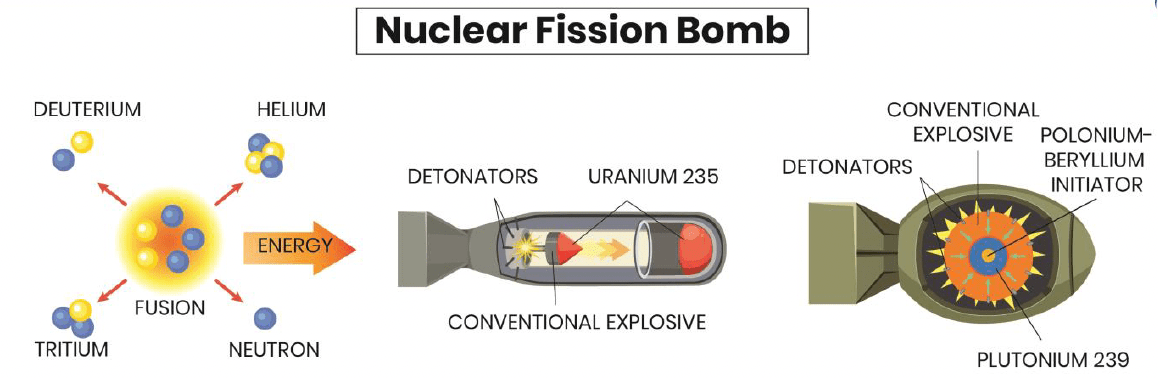
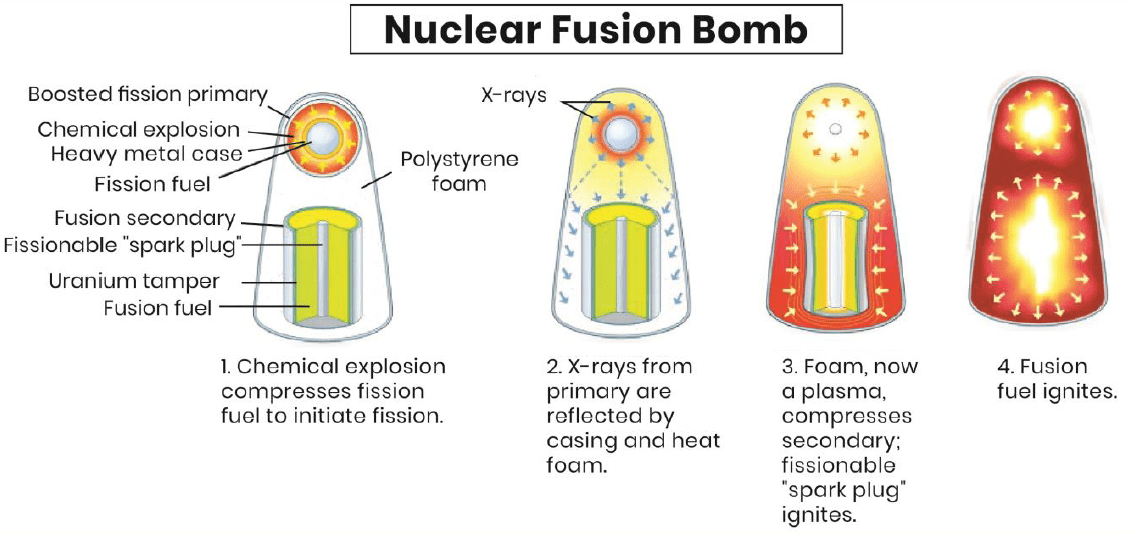
- A nuclear weapon is a device engineered to unleash energy explosively through nuclear fission, nuclear fusion, or a combination of both processes.
| Type of Weapon | Fission Weapon | Fusion Weapon |
|---|---|---|
| Common Name | Atomic Bomb | Thermonuclear Bomb / Hydrogen Bomb |
| Fuel | Uranium-235 (U-235) | Deuterium and Tritium (Hydrogen Isotopes) |
| Process | Neutron absorption splits U-235, releasing energy and neutrons for explosions | Fission reaction initiates hydrogen fusion, releasing immense energy |
| Energy Output | Ranges from a ton of TNT up to 500 kilotons | Yields in megatons, thousands of times stronger than fission bombs |
RISE OF MINI LATERALS
News Context
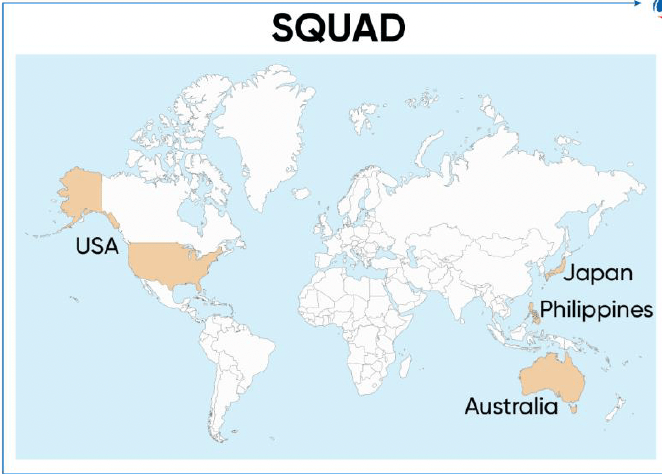
Rising Chinese assertiveness in the Indo-Pacific has led to the formation of the "Squad," a new minilateral alliance involving the US, Japan, Australia, and the Philippines.
Additional Details
- The Squad joins a lineup of security-focused minilateral alliances in the Indo-Pacific, such as the QUAD, AUKUS, the US-Japan-Philippines trilateral, and the US-Japan-South Korea trilateral.
- Its establishment underscores a shift towards minilateralism as a favored approach for cooperation within the evolving global order.
What are Minilaterals?
- Minilaterals are informal, focused alliances involving a small number of states (typically 3 or 4), formed to tackle specific threats, contingencies, or security concerns. These groups are united by shared interests and aim to resolve these issues within a set timeframe.