
PT 360 IR (International Relations) July 2024: UPSC Prelims 2025
Tip: For reading free UPSC Prelims 2025 Current Affairs for International Relations online, use the Next/Previous buttons or refer to the Sidebar. If you are using a mobile device, click the menu icon (three horizontal lines) to access the sidebar.
Click here for Printable PDF and Lectures.

COLOMBO SECURITY CONCLAVE (CSC)
Recently, Bangladesh was officially added as the fifth member of the CSC.
About CSC:
- A regional organization focused on security.
- Objective: Prioritizes maritime security, marine pollution response, and maritime search and rescue in the Indian Ocean Region (IOR).
- Origin: Established in 2011 as a trilateral maritime security group including India, Sri Lanka, and the Maldives, with Mauritius joining later.
- Rebranded as the CSC in 2020.
- Seychelles holds observer membership status.
COLOMBO PROCESS
India recently chaired its inaugural meeting as the Chair of the Colombo Process.
About the Colombo Process
- A Regional Consultative Process serving as a platform for discussions on managing overseas employment and contractual labor.
- Includes 12 Asian member countries, including Bangladesh and Sri Lanka, with India as one of the founding members.
- Focuses on thematic priorities like: Skills and Qualification Recognition Processes, Promoting Ethical Recruitment Practices, and more.
- Supported by the UN’s International Organization for Migration (IOM), which provides technical and administrative assistance to the Colombo Process.
INSTABILITY IN INDIA’S NEIGHBOURHOOD
News Context
Bangladesh's Prime Minister has stepped down following large-scale protests.
- An interim administration has been appointed, led by Bangladesh's only Nobel Laureate, an economist famous for establishing Grameen Bank and advancing the principles of microcredit and microfinance.
- Recent political instability across South Asia, with unrest in Bangladesh and neighboring countries, holds important consequences for India's strategic interests and regional stability.
Possible Implications of Recent Developments in Bangladesh
- Strain on India-Bangladesh Relations: The removal of Bangladesh's previous Prime Minister could result in India losing a reliable ally in the region.
- The former government maintained strong relations with India, cooperating closely on efforts to counter terrorist activities originating from Bangladesh.
- Potential Surge in Illegal Migration and Displacement: Rising extremism in Bangladesh may endanger minority populations, prompting them to seek refuge in India and potentially burdening resources, especially in border areas.
- Increased Foreign Influence in Bangladesh's Politics: External interference in Bangladesh's internal affairs could pose a security challenge for India.
- Economic and Investment Risks: Since 2016, India has extended $8 billion in credit to support infrastructure development in Bangladesh, including projects in roads, railways, shipping, and ports.
- Critical initiatives at risk include the Akhaura-Agartala rail link and the Khulna-Mongla Port railway.
India's Strategic Approach to Political Instability in the Region
- Diplomatic Adjustments: Engage proactively with new leadership while safeguarding core strategic interests.
- Security Enhancements: Strengthen border security and intelligence to address potential risks.
- Multilateral Collaboration: Utilize international partnerships to uphold regional stability, including organizations like BIMSTEC.
- Socio-Economic Support:
- Humanitarian Aid: Extend assistance to mitigate humanitarian crises.
- Economic Leverage: For example, offering Lines of Credit.
- Asylum Management: Strategically manage temporary asylum for former leaders.
- Long-Term Initiatives:
- Neighborhood Empowerment: Maintain policies to strengthen neighboring nations, as demonstrated by Bangladesh’s unique invitation to the G20 summit from South Asia.
- Non-Reciprocal Neighbourhood First Policy: Continue initiatives like Vaccine Maitri and first-responder disaster support.
- Adaptive Policies: Formulate flexible, future-focused strategies to navigate the shifting political environment in South Asia.
Instability in India's Neighborhood
- Myanmar: The 2021 military coup disrupted democracy, leading to widespread protests and violence.
- Afghanistan: The Taliban's return to power in 2021 caused the democratic government to collapse.
- Sri Lanka: An economic crisis in 2022 resulted in political instability and widespread public unrest.
- Maldives: Political turmoil began in 2012 when radicals forced the President to resign under threat.
- Nepal: Ongoing political instability due to frequent changes in government.
Impact of Instability in India’s Neighbourhood
- Myanmar: The instability in Myanmar is especially alarming due to its shared border with India, which raises the risks of increased insurgency and refugee inflows.
- Already, over 32,000 ethnic Chin have sought refuge in Mizoram, and thousands more have fled to Manipur, sparking ethnic tensions and violence.
- Afghanistan: India is concerned about safeguarding its investments in Afghanistan and addressing security risks associated with Taliban rule.
- The situation threatens India’s national security, as extremist groups may gain a foothold in the region, heightening the possibility of cross-border terrorism.
- Sri Lanka: The situation in Sri Lanka is critical for India, given the geographical closeness and cultural ties.
- India faces potential issues from refugee inflows, economic impacts, and strategic concerns about growing Chinese influence in the region.
- Maldives: Challenges in the Maldives for India include curbing radicalization, countering Chinese influence, securing the Indian Ocean, and managing diplomatic relations amid the country’s political instability.
- Nepal: The frequent leadership changes and increasing Chinese presence complicate India’s regional interests and diplomatic relations.
- Nepal recently swore in its 14th government in 16 years, highlighting the political instability India must navigate.
5S Approach
- Samman (Respect): India should reinforce its 'Neighbourhood First' policy by actively representing and addressing the concerns of neighboring countries on international platforms.
- Samvad (Dialogue): Pursue Track 2 diplomacy with Afghanistan and Myanmar, and leverage platforms like the Indo-Pacific Regional Dialogue to involve stakeholders in tackling challenges ranging from climate change to piracy.
- Sahyog (Cooperation): Support neighboring countries during crises, exemplified by over $4 billion in assistance to Sri Lanka during its 2022 economic crisis and the 50% increase in aid to Maldives despite the 'India Out Campaign.'
- Shanti (Peace): In contrast to China, India's approach to resolving disputes with neighbors is based on peaceful principles, a stance that should be consistently upheld.
- Samriddhi (Prosperity): With intraregional trade in South Asia accounting for just 5% of its total trade—far below Europe’s 60% and ASEAN’s 25%—India must expedite infrastructure projects to enhance regional economic integration.
INTERNATIONAL HUMANITARIAN LAW
News Context
- 2024 marks the 75th anniversary of the 1949 Geneva Conventions, a foundational element of International Humanitarian Law (IHL).
- The Geneva Conventions consist of a series of treaties outlining protections for civilians, prisoners of war (PoWs), and soldiers who are incapacitated or "hors de combat" (unable to continue fighting).
- Recent conflicts, including those between Russia and Ukraine and in Gaza, have highlighted serious breaches of humanitarian laws, revealing limitations in IHL's ability to prevent atrocities effectively.
About of International Humanitarian Law
- International Humanitarian Law (IHL), also known as the law of war or the law of armed conflict, is a set of principles designed to reduce the humanitarian impact of armed conflict, ensuring the protection of individuals not participating or no longer participating in hostilities.
- The core of modern IHL lies in the 1949 Geneva Conventions (GC I, II, III, and IV) along with three Additional Protocols:
- These conventions have been universally ratified or acceded to by all nations worldwide.
- They apply in cases of declared war or any other armed conflict between states and also extend to situations where a territory is occupied by foreign forces, regardless of any armed resistance.
- Additional key treaties related to IHL include:
- The 1954 Hague Convention for the Protection of Cultural Property,
- The 1972 Biological Weapons Convention,
- The 1993 Chemical Weapons Convention,
- The 1998 Rome Statute for the International Criminal Court.
Key Principles of International Humanitarian Law (IHL):
- Principle of Distinction: Emphasizes the need to consistently differentiate between civilians and civilian objects, and combatants and military targets.
- Principle of Proportionality: Mandates that parties involved in a conflict assess potential collateral damage from direct attacks, including any foreseeable indirect consequences.
- Principle of Precaution: Instructs conflict parties to exercise continual caution to protect civilians, civilian structures, and the civilian population throughout military actions.
India's Efforts to Uphold International Humanitarian Law (IHL)
- Constitutional Commitment: Article 51 of the Indian Constitution mandates the State to promote global peace, security, and respect for international law and treaty obligations.
- Military Training and Awareness: The Indian Armed Forces integrate IHL into their training programs, organize workshops in collaboration with the International Committee of the Red Cross, and conduct other awareness initiatives.
- Peacekeeping Contributions: India is among the largest contributors to United Nations peacekeeping missions, playing a vital role in protecting civilians and supporting adherence to IHL in conflict-affected areas.
- Engagement with Non-State Actors: India engages in dialogues with non-state actors in regions like the Northeast and Jammu & Kashmir to encourage compliance with humanitarian principles.
INDIA-PACIFIC ISLANDS NATIONS RELATIONS
News Context
- India recently extended assistance to Papua New Guinea, a Pacific Island nation struck by a natural disaster, underscoring India’s dedication to its partnership with the Forum for India–Pacific Islands Cooperation (FIPIC).
- Papua New Guinea experienced a severe landslide, leading to extensive damage and significant loss of life.
- It is the largest Pacific Island nation in terms of both land area and population.
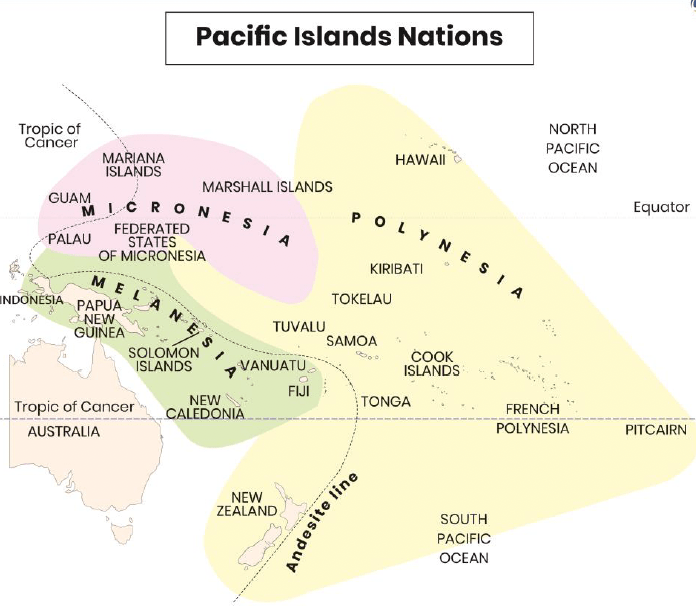
- The Pacific Island nations are located in the Pacific Ocean and are grouped into three main regions: Melanesia, Micronesia, and Polynesia.
Forum for India-Pacific Islands Cooperation (FIPIC)
- Established in 2014.
- A multinational coalition of Pacific island nations created to foster collaboration between India and 14 Pacific Islands.
- Launched as part of India's expanded "Act East" policy.
- Member nations include: Cook Islands, Fiji, Kiribati, Marshall Islands, Micronesia, Nauru, Niue, Samoa, Solomon Islands, Palau, Papua New Guinea, Tonga, Tuvalu, and Vanuatu.
- Summits held: 1st in 2014 (Suva, Fiji), 2nd in 2015 (Jaipur, India), 3rd in 2023 (Port Moresby, Papua New Guinea).
India’s Engagement with Pacific Island Nations:
- Indo-Pacific Oceans Initiative (IPOI, 2019): A non-treaty-based, open global initiative aimed at managing, conserving, sustaining, and securing the maritime domain in the Indo-Pacific region.
- Grant-in-Aid and Concessional Lines of Credit: Provided to support renewable energy and climate-related projects.
- Humanitarian Assistance and Disaster Relief (HADR): Includes initiatives like vaccine supply during the COVID-19 pandemic.
- Support in Election Processes: For example, India supplied indelible ink to Papua New Guinea to facilitate their elections.
- Indian Technical and Economic Cooperation (ITEC): Includes the Sagar Amrut Scholarship Scheme, offering 1,000 training opportunities under the Forum for India-Pacific Islands Cooperation (FIPIC).
- India-UN Development Partnership Fund (2017): Extends assistance to Least Developed Countries (LDCs) and Small Island Developing States (SIDS).
- Community Development Initiatives:
- For instance, India signed an MoU with the Marshall Islands to fund community projects.
- A 12-Step Action Plan to strengthen healthcare, such as establishing a Super Specialty Cardiology Hospital in Fiji.
INDIA-RUSSIA RELATIONS
News Context
The Indian Prime Minister paid an official visit to Russia in July 2024 for the 22nd India-Russia Annual Summit.
Details of the Visit
- The summit marked a resumption of India-Russia annual meetings, the previous one having taken place in New Delhi in 2021.
- The visit highlighted India’s strategic capacity to maintain a balanced and independent foreign policy, conveying its stance on strategic autonomy to Western nations.
Key Outcomes of the Visit
- Trade and Economic Partnership: Strengthening the "Enduring and Expanding Partnership" with a focus on economic ties.
- Set a bilateral trade goal of USD 100 billion by 2030.
- Agreed to use national currencies for bilateral transactions.
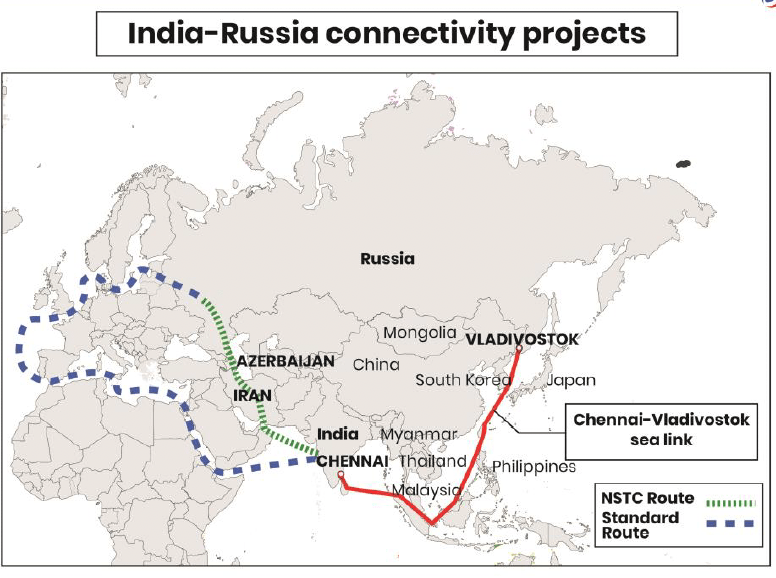
- Signed a cooperation program for trade, economic, and investment in Russia's Far East (2024-2029) and principles for collaboration in the Arctic region.
- Military Cooperation: Agreed to enhance joint manufacturing of spare parts and components for the maintenance of Russian-origin defense equipment in India, aligning with the Make-in-India initiative.
- On Ukraine: Advocated for a peaceful resolution to the Ukraine conflict through dialogue and diplomacy, encouraging engagement between the concerned parties.
- New Consulates: India will open two new consulates in Kazan and Yekaterinburg to support the growing Indian community in Russia.
Key Milestones in India-Russia Relations
- 1947: Diplomatic ties established between India and the Soviet Union.
- 1962: The Soviet Union transferred technology and authorized local production of the MiG-21 fighter aircraft.
- 1971: Signing of the Treaty of Peace, Friendship, and Cooperation.
- 1975: Launch of India's first satellite, 'Aryabhata,' on the Soviet 'Soyuz' launch vehicle.
- 1988: Agreement signed for the construction of the Kudankulam Nuclear Power Plant.
- 1993: Treaty of Friendship and Cooperation reaffirmed.
- 2000: India and Russia signed a Strategic Partnership agreement.
- 2010: Strategic Partnership upgraded to a Special and Privileged Strategic Partnership.
- 2021: Inaugural India-Russia 2+2 Ministerial Dialogue held, involving Defence and Foreign Ministers.
Related News:
The Russian president recently conducted official visits to North Korea and Vietnam.
Key Outcomes of Russian President's Visits:
- North Korea: Signed a Treaty on the Comprehensive Strategic Partnership, strengthening ties between Russia and North Korea.
- Vietnam: Marked the 30th anniversary of the 1994 Treaty on Basic Principles of the Vietnam-Russia Relationship, though no new alliance treaty was signed.
Potential Implications of the Visits:
- Evolving dynamics in Northeast Asia: Two strategic alliances are taking shape—one between the US, South Korea, and Japan, and the other among Russia, North Korea, and China.
- Shift in Asia-Pacific security landscape: South Korea and Japan, as non-nuclear states, may intensify their security cooperation with the US in response, potentially escalating regional militarization.
- Global security concerns: With support from Russia and China, North Korea may advance its military modernization plans, raising international security risks.
- India has long viewed North Korea’s proliferation activities, especially missile technology transfers to Pakistan, with concern.
INDIA-UNITED KINGDOM RELATIONS
News Context
The Foreign Secretary of the United Kingdom recently made an official visit to India.
Details of the Visit
- The UK and India launched the Technology Security Initiative (TSI) to strengthen collaboration in essential and cutting-edge technologies.
- This initiative covers sectors such as telecommunications, critical minerals, semiconductors, artificial intelligence, quantum technology, and more.
- The National Security Advisors (NSAs) of both nations will oversee the coordination of the TSI.
Strengthening India-UK Relations
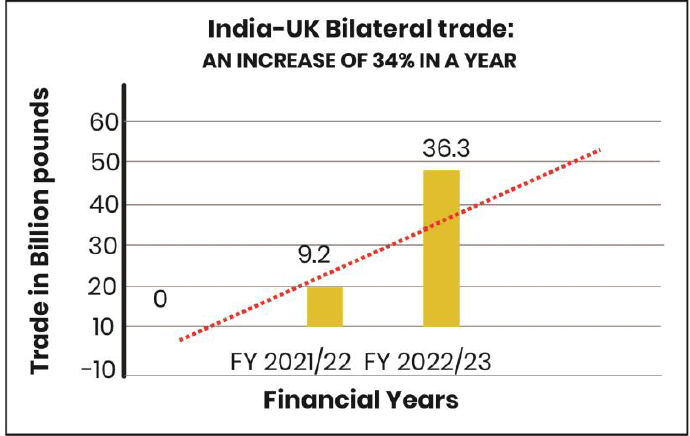
- India-UK Bilateral Trade: Witnessed a 34% increase over the past year.
- Strategic Partnership: In 2021, India-UK relations were upgraded to a 'Comprehensive Strategic Partnership.'
- Defense Cooperation: The two nations signed the Defence and International Security Partnership (DISP) in 2015.
- Joint Military Exercises: India and the UK participate in various military drills, including Ajeya Warrior, Konkan, and Cobra Warrior.
- Health Collaboration: The AstraZeneca-Serum Institute collaboration on the COVID-19 vaccine highlights the partnership's global impact.
- Indian Diaspora Contribution: Despite forming only 1.8% of the population, the Indian diaspora contributes 6% to the UK's GDP.
- Trade Figures (in Billion Pounds):
- FY 2021/22: £36.3 billion
- FY 2022/23: £9.2 billion
- Trade and Investment Cooperation:
- During this period, India ranked as the UK’s 12th largest trading partner, comprising 2.1% of the UK's total trade.
- The UK is the 6th largest investor in India from 2000-2023.
- India is the UK’s second-largest source of Foreign Direct Investment (FDI), following the US.
India-UK Free Trade Agreement (FTA)
The India-UK Free Trade Agreement is a bilateral trade deal, initiated in 2022, aiming to restructure 90% of the current tariff categories to enhance trade between the two nations.
Potential Benefits of the FTA
- Tariff Reductions: India is negotiating for lower tariffs on goods such as fashion, homeware, furniture, and electronics.
- Import Duty Exemptions: Small and medium enterprises (SMEs) in sectors like textiles, clothing, and gems and jewelry are expected to benefit from the elimination of import duties.
- Double Taxation Relief: India advocates for strengthening the Double Taxation Avoidance Agreement.
- Access to Finance: The agreement could provide Indian businesses with access to UK funding and expertise, particularly in green and sustainable infrastructure.
- Reduced Dependence on China: The FTA would facilitate the relocation of companies from China to India, aiding in economic diversification.
Key Concerns
- Liberal Rules of Origin: Risk of EU products being incorrectly labeled as UK goods.
- India's New Bilateral Investment Treaties (BITs): These treaties, requiring local dispute resolution before international arbitration, face opposition in negotiations.
- Intellectual Property Commitments: The UK seeks intellectual property protections exceeding the WTO’s TRIPS agreement, which India opposes.
- UK's Import Duty Reduction Demands: The UK is pushing for significant import duty cuts on goods like scotch whiskey and automobiles, which could negatively impact India’s trade balance.
INDIA JOINS UN LED CONFERENCE ON AFGHANISTAN IN DOHA
India is among 25 nations attending this third conference focused on exploring ways to enhance the lives of Afghan citizens under Taliban rule.
- This conference will build on previous initiatives, such as the Delhi Regional Security Dialogue on Afghanistan and the Moscow Format consultations.
- The gathering has also allowed the Taliban to present themselves as the sole representatives of Afghanistan.
- The Taliban regained power in 2021 after conducting a prolonged insurgency against the U.S.-backed government since 2001.
A peaceful and stable Afghanistan holds importance for both the region and India:
- Regional Connectivity: Afghanistan serves as a strategic gateway to Central Asia.
- Security: Reduced insurgency and cross-border terrorism can enhance security along India's northern and western borders.
- An unstable Afghanistan could become a refuge for terrorist groups.
- Energy and Resources: Stability could facilitate projects like the Turkmenistan–Afghanistan–Pakistan–India (TAPI) pipeline.
- Combating Drug Trafficking: A stable Afghan government could more effectively address drug trafficking issues.
- Afghanistan is part of the "Death Crescent" with Pakistan and Iran.
- Indian states like Punjab are heavily impacted by the trafficking network.
India-Afghanistan Relations After Taliban Takeover
- Although India has not formally recognized the Taliban, it continues to support the Afghan people in various ways:
- Humanitarian Assistance: India has sent multiple shipments of aid, including wheat, medical supplies, and earthquake relief.
- Education Support: The Indian Council for Cultural Relations (ICCR) scholarship program for Afghan students remains active.
- Trade and economic exchanges between the two countries are ongoing, with routes like the Chabahar port playing a key role.
- An Indian technical team in Kabul oversees and assesses the status of Indian-built projects.
JAN AUSHADHI KENDRA INAUGURATED IN MAURITIUS
India recently inaugurated its first overseas Jan Aushadhi Kendra (JAK) in Mauritius, marking a milestone in strengthening India's ties with littoral and island nations of the Indian Ocean Region (IOR).
- Importance of the IOR's Littoral and Island Nations for India:
- Strategic Location: These nations are near vital sea lanes such as the Malacca Strait, essential for global trade, anti-piracy efforts, and maritime security. Approximately 80% of India’s international trade and 90% of its energy imports pass through the IOR.
- Regional Leadership: The IOR has become a focal point for geopolitical rivalry among global powers, including the USA and France. This strategic environment supports India's vision of acting as a net security provider while countering China’s expanding influence.
- Blue Economy: The IOR accounts for about 15% of the global fish catch (FAO, 2020) and holds vast potential for sustainable deep-sea mining.
- Climate Security: According to the IPCC (2021), the Indian Ocean has warmed more quickly than any other ocean since the 1950s. Rapid population growth and increasing climate-related disasters in the region call for coordinated efforts to reduce human vulnerability and promote regional stability.
India’s Initiatives:
- Information Fusion Centre – Indian Ocean Region (IFC-IOR): Operated by the Indian Navy to enhance maritime safety and security across the Indian Ocean Region.
- Humanitarian Assistance and Disaster Relief (HADR): Includes initiatives like Vaccine Maitri and Operation Karuna to support regional needs.
- Indian Navy’s MAHASAGAR Outreach: An initiative focusing on active maritime security and inclusive growth for the entire region.
- SAGAR Doctrine and Neighbourhood First Policy: Policies prioritizing regional cooperation and strategic security in alignment with India’s regional vision.
MERCOSUR
Bolivia has gained full membership in MERCOSUR.
About MERCOSUR:
- MERCOSUR, short for the Southern Common Market (using its Spanish acronym), is a regional economic bloc in Latin America.
- Founded in 1991 by Argentina, Brazil, Paraguay, and Uruguay, it later expanded to include Venezuela and Bolivia.
- Venezuela, however, has been suspended since December 1, 2016.
- Objective: To enable the free movement of goods, services, capital, and people among its four main member countries.
- India holds a Preferential Trade Agreement with MERCOSUR.
ROLE OF EDUCATION/RESEARCH IN THE RISE OF GLOBAL POWERS
According to the WIPO Patent Landscape Report on Generative AI, China leads with 70.3% of all GenAI patents filed between 2014 and 2023, while India stands 5th, contributing 2.5% of these patents.
- Intensified Competition: There is growing competition in high-level, research-driven education, especially in applied sciences and tech areas that are key to global influence.
Role of Education and Research in Global Competitiveness:
- Comprehensive National Power (CNP): Education, innovation, research, and technology are essential soft power elements that contribute to a nation's CNP.
- CNP reflects a country’s overall strength and capacity to pursue strategic goals effectively on an international scale.
- Economic Growth: Developing human capital through education is crucial for boosting labor force participation and productivity.
- Technological Leadership: Education and innovation are critical, especially as strategic areas like AI and cyberspace continue to evolve.
Challenges in India's Research and Higher Education Development:
- Low R&D Investment: In 2020–21, India invested only 0.64% of its GDP in R&D, while most developed nations allocate over 2% of their GDP.
- Limited Private Sector Involvement: The private sector accounts for just 36.4% of India’s total R&D expenditure, whereas it contributes over 50% in many developed countries.
- Shortage of Skilled Researchers: India has 262 researchers per million people as of 2020, which, though increasing, still lags behind countries like the USA and China.
- Low Research Quality with Limited Industrial Application: This results in a significant "brain drain" from India.
Path Forward:
- Fostering more innovation is essential for gaining geopolitical, economic, and military influence in the modern world.
- Research and education are fundamental factors in the rise and decline of global powers.
- Strengthening international R&D partnerships, with a focus on investment, infrastructure, and skilled personnel, could enhance India’s global position.
SHANGHAI COOPERATION ORGANIZATION (SCO)
News Context
The 24th Summit of the Council of Heads of State of the Shanghai Cooperation Organization (SCO) took place in Astana, Kazakhstan, resulting in the adoption of the Astana Declaration.
Key Highlights of the Summit
- Summit Theme: "Strengthening Multilateral Dialogue—Striving Towards Sustainable Peace and Prosperity."
- Significant Attendance: The UN Secretary-General attended for the first time.
- Major Outcomes:
- Counter-Terrorism Cooperation: Approval of the Cooperation Program for Countering Terrorism, Separatism, and Extremism for 2025-2027.
- Global Peace Initiative: Kazakhstan proposed the "World Unity for Just Peace and Harmony" initiative.
- Drug Trafficking: Adoption of the SCO Anti-Drug Strategy for 2024-2029.
- New Membership: Belarus officially joined as the 10th member of the SCO.
Shanghai Cooperation Organisation (SCO)
- Origin: Established in 2001 at the Shanghai summit by Russia, China, Kyrgyzstan, Kazakhstan, Tajikistan, and Uzbekistan.
- Membership: SCO currently comprises 10 member countries: China, Russia, Kazakhstan, Kyrgyzstan, Tajikistan, Uzbekistan, India, Pakistan, Iran (joined in 2023), and Belarus (joined in 2024). Additionally, it has 3 observer states and 6 dialogue partners.
Organisational Structure:
- Council of Heads of State: The primary decision-making body.
- Council of Heads of Government: The second most significant governing council.
- Two permanent bodies: The Secretariat, located in Beijing, China, and the Regional Anti-Terrorist Structure (RATS), based in Tashkent, Uzbekistan.
Key Goals and Objectives:
- Addressing security concerns and resolving border disputes.
- Fostering military cooperation and intelligence sharing.
- Conducting joint exercises, such as the 2021 Peaceful Mission led by Russia.
- Combating terrorism and promoting collaboration in sectors like education, energy, and transportation.
India and the Shanghai Cooperation Organisation (SCO)
- India became an observer in the SCO in 2005 and gained full membership in 2017.
- During the 2024 SCO meeting, India’s External Affairs Minister met with his Chinese counterpart, emphasizing that the India-China relationship is best maintained through the principles of mutual respect, mutual sensitivity, and mutual interests.
- Similar to BRICS, the SCO is aiming to expand its influence, aligning with the Sino-Russian global perspective.
- India, however, aims to steer the SCO towards a development-focused organization, rather than one driven by an anti-Western stance.
- In line with this goal, India carefully maintains a balanced approach, aiming to prevent the SCO from becoming overly influenced by Chinese interests.
India's Approach and Priorities within the SCO
- The Indian Prime Minister did not attend the 24th SCO Summit held in Astana.
- India hosted the 2023 SCO Summit virtually, marking its first-ever presidency.
- Infrastructure: India leverages the SCO platform to enhance connections with Central Asian Republics (CARs), aiming to balance China’s influence in regional connectivity.
- Counter-Terrorism: India's primary focus at the SCO is combating terrorism, particularly along its northwest border.
- Influence on Declarations: India contributed key themes to the SCO declaration, including concepts from the G20 such as "One Earth, One Family, One Future," alongside initiatives like the startup forum and the Life for the Environment (LiFE) program.
- Guiding Vision: India's priorities align with the Prime Minister’s ‘SECURE’ vision for the SCO, emphasizing Security, Economic Cooperation, Connectivity, Unity, Respect for Sovereignty and Territorial Integrity, and Environmental Protection.
TIBET-CHINA DISPUTE
US Congress Enacts ‘Promoting a Resolution to the Tibet-China Dispute Act’
- The Act expresses the United States' stance that the Tibet-China conflict should be resolved peacefully through dialogue, in line with international law, including the UN Charter, and without any preconditions.
- It endorses the Dalai Lama’s “Middle Way Approach,” which proposes that Tibet remain part of China while Tibetans exercise meaningful autonomy.
Overview of the Tibet-China Dispute
- After a brief military conflict with China at the start of the 20th century, Tibet declared independence in 1912, operating as an autonomous region until 1950.
- In 1951, the Dalai Lama's representatives signed a seventeen-point agreement, marking China’s sovereignty over Tibet for the first time.
- China views this agreement as validation of its sovereignty over Tibet, while Tibet claims it was forced into signing.
India’s Position on Tibet
- In 1959, following a failed uprising, India granted asylum to the Dalai Lama.
- Since 2003, India has officially recognized the Tibet Autonomous Region as part of China, as outlined in the Declaration on Principles for Relations and Comprehensive Cooperation between India and China.
WESTERN INDIAN OCEAN
News Conetxt:
The Western Indian Ocean is becoming a significant area for US-India cooperation within the Indo-Pacific framework.
Overview of the Western Indian Ocean Region (WIOR):
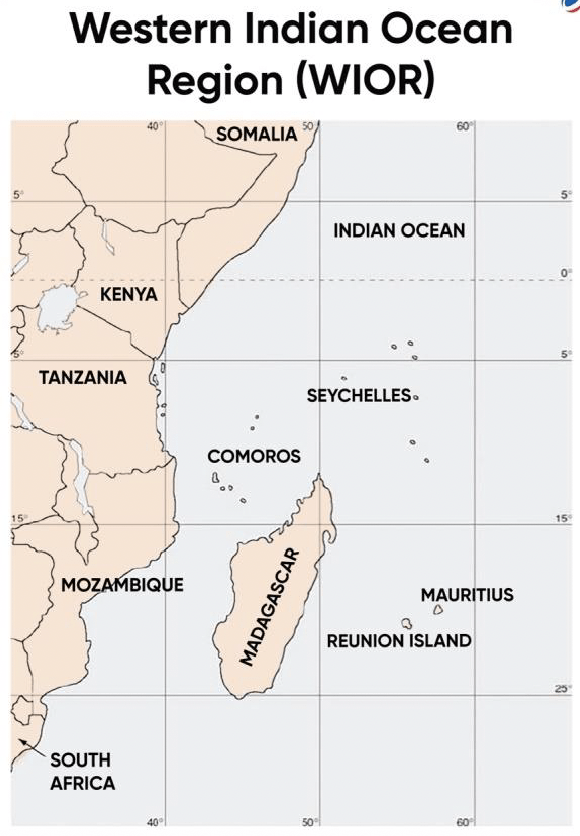
- The region extends from Africa’s eastern coast to India’s western coastline.
- It includes Eastern African coastal nations such as Kenya, Mozambique, Somalia, South Africa, and Tanzania, as well as island nations like Comoros, Madagascar, Mauritius, Seychelles, and the French territories of Mayotte and Reunion.
India's Engagement with the Western Indian Ocean (WIO) Region
- SAGAR Initiative (Security and Growth for All in the Region): Through Mission SAGAR, India has extended Covid-19 support to WIO nations, providing essential supplies such as food, medicines, and deploying medical assistance teams.
- Capacity Building: India aids in building the maritime skills of WIO nations by supplying training and equipment to their coast guards and naval forces.
- Example: The Indian Air Force Training Team stationed in Mauritius assists local police with training programs.
- Joint Military Exercises: For example, the Africa India Field Training Exercise (AFINDEX-19) took place in Pune in 2019, involving participants from 17 African nations.
- Operation Sankalp: The Indian Navy has undertaken security operations in regions including the Gulf of Aden, the Arabian Sea, and areas near Somalia’s eastern coast.
- Information Fusion Centre – Indian Ocean Region (IFC-IOR): This center acts as a central hub for information sharing across the Indian Ocean Region.
- Participation in Multilateral Forums: India is a member of regional alliances like the Indian Ocean Rim Association (IORA) and the Indian Ocean Naval Symposium (IONS), promoting collective security and cooperation.