
PT 360 Economy June 2024: UPSC 2025
Tip: For reading free UPSC Prelims 2025 Current Affairs for Economy online, use the Next/Previous buttons or refer to the Sidebar. If you are using a mobile device, click the menu icon (three horizontal lines) to access the sidebar.
Click here for Printable PDF and Lectures.

AGRICULTURE EXTENSION SYSTEM
News Context
Prime Minister awarded Krishi Sakhi certificates to over 30,000 women Self-Help Groups (SHGs) in Varanasi.
Krishi Sakhis
- Krishi Sakhis are practicing farmers trained as para-extension professionals in agriculture at the grassroots level.
- The agriculture extension system helps farmers and rural producers utilize scientific research and new knowledge in agricultural practices through education, training, and information.
- Role: They serve as a friendly resource for farmers, providing essential information, skills, and guidance on various aspects of natural farming, capacity building, and soil health management.
Krishi Sakhi Convergence Program (KSCP)
- Joint Initiative: Launched by the Ministry of Agriculture and Farmers’ Welfare (MoA&FW) and the Ministry of Rural Development.
- Objective: To empower rural women as Krishi Sakhis through training and certification as para-extension workers, aiming to establish 70,000 Krishi Sakhis focusing on natural farming and soil health management in phases.
- Link to Lakhpati Didi Program: This program aims to create 3 crore Lakhpati Didis, which includes the Krishi Sakhi initiative.
- Implementation: Currently rolled out in 12 states during Phase 1: Gujarat, Tamil Nadu, Uttar Pradesh, Madhya Pradesh, Chhattisgarh, Karnataka, Maharashtra, Rajasthan, Odisha, Jharkhand, Andhra Pradesh, and Meghalaya. So far, over 34,000 out of the targeted 70,000 Krishi Sakhis have been certified as para-extension workers.
Agricultural Extension System in India
- Current Landscape: The agriculture research and extension system is primarily dominated by the public sector, led by the Indian Council of Agricultural Research (ICAR).
- Initiatives include ICT-led interactive technology dissemination through VISTAAR (which involves videos on farm technologies, technical vetting, and monitoring).
- Promotion of drone technology in agriculture is also being implemented.
- ICAR is involved in big data management through collaborative projects for feedback on technology adoption and strategy development.
- National Mission on Agriculture Extension and Technology (NMAET): Aims to enhance technology delivery and improve farmers' agronomic practices across four sub-missions:
- Agricultural Extension
- Seed and Planting Material
- Agricultural Mechanization
- Plant Protection and Quarantine
- Krishi Vigyan Kendras (KVKs): These are field research units of ICAR designed to test new seed varieties, agronomic practices, and machinery across diverse agro-climatic zones before farmers can adopt them. They also conduct outreach programs through on-farm demonstrations and training.
- Public Sector Players: Other significant contributors include State Agricultural Universities (SAUs) and ICT-led extension interventions by MoA&FW, such as m-Kisan and Kisan Call Centre.
- Private Sector Extension Services: Primarily provided by input dealers like seed, fertilizer, and farm machinery companies, including IFFCO and KRIBHCO, which organize farmer meetings, crop seminars, and soil testing facilities.
BRIDGING GLOBAL WORKFORCE GAPS
Current Relevance:
The India Employment Outlook 2030 report by ORF indicates that approximately 24.3% of the additional global workforce in the coming decade will originate from India.
Global Labor Market Overview:
- Declining Working-Age Population: Several high-income nations are facing significant demographic changes marked by decreasing birth rates. By 2050, these countries are expected to see a reduction of over 92 million in their working-age populations.
- Aging Population: In many affluent countries, the number of individuals aged 65 and older will increase by more than 100 million. A robust working-age population is crucial for sustaining pension and healthcare systems that support the elderly, ensuring financial and social stability.
- Global Job Market Dynamics: The rise of digital platforms and the growing acceptance of remote teamwork have led to more interconnected global talent networks.
- Transformations in International Trade: Geopolitical factors, trade limitations, and the trend of "friendshoring" have caused significant disruptions in international trade, affecting job markets and wage levels.
India’s Demographic Edge:
- Large Working Population: India boasts a population of over 1.4 billion, with nearly 65% falling within the working-age bracket of 15–64 years, and more than 27% aged 15 to 24. This abundant labor force offers an opportunity to fill the labor gaps in developed nations.
- Addressing the Skill Gap: According to the ‘Global Skill Gap Study’ by the National Skill Development Corporation (NSDC), there is a rising demand for Indian talent across various sectors globally. Major markets for this talent include the UAE, Saudi Arabia, Qatar, Germany, the Netherlands, the UK, Sweden, Switzerland, Australia, New Zealand, Canada, and the USA.
- Dual Advantage: With a median age of 28.4 years, India not only enjoys a competitive workforce but also the potential to harness the consumption power of its youthful population.
- Past Achievements: India’s success in exporting IT and BPO services serves as a prime example of how it has capitalized on its demographic strengths.
Effects of Labor Mobility:
- Boosting Global Productivity: Labor mobility links potential migrants with employers, contributing to enhanced global equity and productivity.
- Reducing Poverty: Migrants moving to wealthier countries can expect to increase their earnings by six to fifteen times, significantly reducing poverty levels.
- Social Welfare Benefits: The advantages of labor mobility extend beyond individual workers. Remittances sent home by migrants can greatly improve healthcare, education, and overall welfare. In 2022, India received over $111 billion in remittances, becoming the first country to exceed the $100 billion threshold.
- Long-term Consequences for India’s Labor Market: Large-scale worker migration may have lasting effects on skill development in India and could potentially lead to brain drain, negatively impacting sectors like healthcare and construction.
Efforts to Leverage India’s Demographic Dividend
- Skill Development: The Ministry of Skill Development and Entrepreneurship has launched various initiatives for skill training, including the Skill India Mission and the Pradhan Mantri Kaushal Vikas Yojana, aimed at addressing the global skills shortage.
- The National Education Policy 2020 advocates for the integration of vocational education into the school curriculum, promoting skill training from an early age.
- Migration Agreements: India has established migration and skill training agreements with several countries, including Italy, France, and Germany.
CLEARING CORPORATIONS
The Securities and Exchange Board of India (SEBI) has established a committee led by Usha Thorat to examine the ownership and economic framework of clearing corporations.
Clearing Corporation (CC):
- A clearing corporation is an organization responsible for managing the clearing and settlement processes for trades in securities and other instruments traded on stock exchanges.
- Together with stock exchanges and depositories, clearing corporations form the Market Infrastructure Institutions.
- Clearing corporations play a crucial role as central risk management entities and act as the initial regulatory authority.
- The Securities Contracts (Regulation) (Stock Exchanges and Clearing Corporations) Regulations, 2018 outline the guidelines for the ownership and governance structure of clearing corporations.
CONTAINER PORT PERFORMANCE INDEX (CPPI)
- In 2023, nine Indian ports ranked among the top 100 ports globally in the Container Port Performance Index (CPPI).
About CPPI (2023):
- Developed by the World Bank and S&P Global Market Intelligence.
- The index evaluates performance by assessing the time vessels spend in port.
- It serves to highlight opportunities for enhancing a terminal or port, benefiting both public and private stakeholders.
- The highest-ranked container port in the 2023 CPPI is Yangshan Port in China.
DERIVATIVES TRADING
The head of the National Stock Exchange (NSE) advised retail investors to be cautious about trading in derivatives.
About Derivatives
- Definition: Derivatives are financial agreements whose value is based on an underlying asset, which can be a commodity, security, currency, or index.
- Purpose: They can serve for hedging against risks or for speculative investments.
- Types: The main types of derivatives include futures, options, and swaps.
- Derivatives Market:
- In India, the derivatives market is overseen by the Securities and Exchange Board of India (SEBI).
- There are two categories of derivative markets in India:
- Exchange-Traded: Standardized contracts are traded on a formal exchange.
- Over-the-Counter (OTC): A decentralized market where contracts are directly negotiated between two parties.
FINFLUENCERS
News Context
- The Securities and Exchange Board of India (SEBI) has established regulations for unregistered financial influencers, commonly referred to as ‘finfluencers,’ barring regulated entities from engaging with them.
- SEBI has introduced a fixed-price method for the delisting of frequently traded shares and has implemented a delisting framework for Investment and Holding Companies (IHC).
- This initiative arises from increasing concerns regarding the potential dangers posed by unregulated finfluencers, who may provide biased or misleading financial advice.
About Financial Influencers or ‘FinFluencers’
- A finfluencer is an individual who shares information and advice on financial matters, particularly in stock market trading and personal investments like mutual funds and insurance, primarily through social media platforms.
- Income Sources:
- Advertisements: Earn passive income based on view counts.
- Collaborations: Partner with companies to promote financial products.
- Affiliate Partnerships: Include product links in video descriptions, allowing viewers to purchase items or sign up for services.
Ethical Issues associated
- Ethical Concerns in Behavioral Economics: Finfluencers take advantage of psychological biases like herd mentality, confirmation bias, and social validation.
- Transparency and Accountability: The lack of clear regulations prevents the assignment of responsibility for unethical advice given for hidden personal benefits.
- Credibility and Authenticity: Certain finfluencers present falsified Profit and Loss Statements to seem credible, which misleads their followers.
Regulatory Actions Regarding Finfluencers
- The SEBI (Investment Advisors) Regulations 2013 provides a regulatory framework for individuals offering financial advice in exchange for a fee.
- A consultation paper from SEBI aims to limit the involvement of registered intermediaries and regulated entities with unregistered ‘finfluencers.’
- The Advertising Standards Council of India (ASCI) updated its guidelines to require SEBI registration for influencers.
- ASCI and YouTube's internal rules require the clear declaration of paid or promotional content to enhance viewer awareness.
Global Examples of Regulation:
- Australia: Finfluencers can face up to five years in prison for giving financial advice without a license.
- European Securities and Markets Authority: Clarified what qualifies as investment recommendations, established guidelines for sharing advice on social media, and outlined penalties for violations.
- New Zealand: Created a code of conduct for finfluencers, implemented a tiered licensing system based on the complexity of the advice offered, and mandates the inclusion of disclaimers and risk warnings in content.
- Singapore and China: Regulatory bodies have also issued guidelines specifically for finfluencers.
FOREIGN DIRECT INVESTMENT (FDI)
According to data from the Department for Promotion of Industry and Internal Trade (DPIIT), Foreign Direct Investment (FDI) inflows in the fiscal year 2023-24 decreased by 3.49%, totaling $44.42 billion compared to 2022-23.
Other Key Highlights:
- Maharashtra attracted the most FDI, followed by Gujarat and Karnataka in FY 2023-24.
- Singapore emerged as the leading source of foreign investments, with Mauritius and the USA following in FY 2023-24.
- The top five countries for FDI equity inflows into India from 2000 to 2024 are Mauritius, Singapore, the USA, the Netherlands, and Japan.
- The sectors that received the highest FDI in FY 2023-24 were Computer Software & Hardware, the Services sector, and Construction Activities.
- From 2000 to 2024, the top five sectors for FDI equity inflows were the Services Sector, Computer Software & Hardware, Trading, Telecommunications, and the Automobile Industry.
About FDI:
- FDI refers to investments made by individuals or companies in one country into business ventures in another country.
- The DPIIT serves as the primary department for developing FDI policies in India.
- FDI can be channeled through either the Automatic route (no government approval required) or the Government route (approval required).
- It encompasses Foreign Currency Convertible Bonds, Foreign Institutional Investment under certain conditions, and Global Depository Receipts, as well as sectors like betting, chit funds, Nidhi companies, and trading in Transferable Development Rights.
Significance of FDI:
It boosts economic growth, promotes development in underdeveloped regions, and helps maintain exchange rate stability.
Concerns Regarding FDI in India:
- A significant portion of FDI is concentrated in a few states, such as Maharashtra and Karnataka, exacerbating existing inequalities.
- FDI may create unfair competition, adversely affecting domestic companies.
Efforts to encourage Foreign Direct Investment (FDI) include the following:
- Easing restrictions on FDI in sectors such as insurance and power exchanges.
- Enhancing investment promotion and support through the Invest India Programme.
- Attracting foreign investors with the Make in India initiative.
FRONT RUNNING
Recently, a Mutual Fund was accused of engaging in front running.
About Front Running
- Front running involves using non-public information to buy or sell securities, or to enter options or futures contracts, ahead of a significant order. (Securities and Exchange Board of India (SEBI))
- It is prohibited in India.
- This practice erodes trust in financial markets and creates an unfair advantage for certain investors.
- In 2022, amendments were made to the Securities and Exchange Board of India (Mutual Funds) Regulations, 1996 to include measures against front running.
GLOBAL ECONOMIC PROSPECTS REPORT
World Bank Unveils 'Global Economic Prospects Report'
- The report emphasizes the urgent need for Emerging Markets and Developing Economies (EMDEs) to significantly increase public investments to achieve their development objectives.
Key Highlights
- Investment Levels:
- In the median EMDE, public investment constitutes roughly 25% of total investments.
- Over the past decade, public investment in these economies has seen a notable decline.
- Benefits:
- Economic Growth: A 1% increase in public investment as a share of GDP can lead to a GDP rise of more than 1.5% and stimulate a 2.2% increase in private investment in the medium term.
- Nonetheless, increased public investment might limit private investment, particularly when there is constrained fiscal space, which can elevate sovereign risk and borrowing costs for private entities.
- Sustainability of Growth: Public investment plays a vital role in providing public goods and services that may not be lucrative for private sectors, such as healthcare and education.
- Economic Growth: A 1% increase in public investment as a share of GDP can lead to a GDP rise of more than 1.5% and stimulate a 2.2% increase in private investment in the medium term.
Recommendations (the "three Es" policy priorities) to Maximize the Advantages of Public Investment:
- Expansion of Fiscal Space: Improve tax collection efficiency, strengthen fiscal frameworks, and reduce wasteful spending.
- Efficiency of Public Investment: Address issues like corruption and inadequate governance while promoting public-private partnerships.
- Enhanced Global Support: Coordinated financial backing and effective technical assistance are crucial for implementing structural reforms.
About Public Investment:
- Public investment generally refers to gross fixed capital formation, which is the total value of fixed asset acquisitions minus disposals made by the government at any level, including local, state, or public enterprises.
- This includes tangible investments in infrastructure such as transportation, telecommunications, and buildings, and can also extend to intangible investments in education, skills, and knowledge.
INDIA’S OUTLOOK TO POSITIVE FROM STABLE
S&P Global Ratings has upgraded its outlook on India from stable to positive and reaffirmed its long-term sovereign credit rating of ‘BBB-’ and short-term rating of ‘A-3’ for both foreign and local currency.
Sovereign Credit Ratings
- A sovereign credit rating assesses a government's capacity to repay its debts. It indicates the likelihood of default and reflects the borrower's willingness and ability to fulfill its financial obligations.
- Parameters: Rating agencies evaluate several factors to determine a sovereign rating, including economic growth, inflation rates, government debt levels, short-term external debt as a proportion of GDP, and political stability.
- Ratings: Sovereign credit ratings classify countries as either investment grade or speculative grade, with speculative grade indicating a higher risk of default. Ratings range from AAA (the highest) to D (the lowest), with the investment grade threshold set at BBB- by S&P and Fitch, and Baa3 by Moody’s.
- Significance: Positive ratings can enhance a country's ability to attract foreign investment and access global capital markets.
INDIA’S TRADE DEFICIT
News Context
Recent data from the Union Ministry of Commerce and Industry reveals that in the fiscal year 2023-24, India experienced a trade deficit with 9 out of its top 10 trading partners.
Current Status of India’s External Trade (FY 2023-24)
- A trade deficit, or negative trade balance, occurs when a country's imports exceed its exports in value.
- India’s major trading partners, listed in order, are China, the USA, UAE, Russia, and Saudi Arabia.
- Compared to 2022-23, India's trade deficit has widened with China, Russia, South Korea, and Hong Kong, while it has decreased with the UAE, Saudi Arabia, Indonesia, and Iraq.
- The top five trading partners with which India enjoys a trade surplus are the USA, Netherlands, UK, Belgium, and Italy.
Impact of Higher Trade Deficit on the Economy
- Negative Effects:
- A reduction in foreign exchange reserves due to the need to finance excessive imports, raising concerns about the depreciation of the domestic currency.
- An expanding current account deficit, which could negatively impact the country's credit rating and increase borrowing costs.
- Strategic concerns arising from a sustained trade deficit, especially for essential goods and critical industries.
- Positive Effects: Increased access to a broader variety of goods and potential domestic investment if the deficit results from imports of capital goods, among other factors.
INDIAN RAILWAYS SAFETY
News Context
Recently, several train derailments and collisions over the past six months have raised concerns about railway safety.

Causes of Railway Accidents
- Derailment: Contributing factors may include insufficient maintenance of locomotives, rolling stock, tracks, signals, and other operational irregularities.
- Human Error: Mistakes attributed to human failure, involving both railway personnel and individuals not affiliated with the railway, such as road users, passengers, and miscreants.
- According to Indian Railways, approximately 75% of derailments are due to failures by railway staff, while another 10% are linked to equipment malfunctions.
- Signal Failure: Issues with defective or damaged track circuits and axle counters are significant contributors to signal failures.
- For instance, faulty modifications to signal circuits led to incorrect signaling and the Balasore train collision in 2023.
- Fire Accidents in Coaches: Causes include flammable materials carried by passengers, electrical short circuits, and negligence by pantry car staff and lease contractors.
- Human Resources: There is a shortage of about 20,000 personnel in safety-critical positions within Indian Railways, which includes roles such as loco crew, train managers, and station masters.
Working Mechanism of the KAVACH System
- The KAVACH system employs a network of devices installed on two approaching trains to prevent collisions.
- It utilizes Radio Frequency Identification (RFID) tags along with Global Positioning Systems (GPS) to function effectively.
- By accurately evaluating the trajectories of two trains that may collide, the system automatically engages the braking mechanism to eliminate the risk of collision.
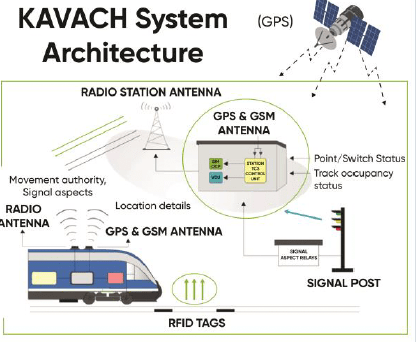
Measures Taken for Railway Safety
- KAVACH System: This indigenous Automatic Train Protection (ATP) system features cab signaling, which is particularly useful for high speeds and in foggy conditions.
- Technically referred to as the Train Collision Avoidance System (TCAS) or Automatic Train Protection System (ATP), KAVACH has been deployed on 1,465 route kilometers and 139 locomotives (including Electric Multiple Unit rakes) on the South Central Railway as of February 2024.
- Rashtriya Rail Sanraksha Kosh (RRSK): Established in 2017-18, RRSK is a ₹1 lakh crore fund over five years aimed at enhancing vital railway safety infrastructure.
- Infrastructure Enhancement: Initiatives include implementing Electrical/Electronic Interlocking Systems for centralized management of points and signals at stations, as well as interlocking for Level Crossing (LC) Gates.
- Adoption of New Technologies: Innovations like GPS-based Fog Safety Devices help locomotive pilots by providing alerts about nearby signals and crossings in foggy conditions, thereby enhancing safety in low-visibility scenarios.
- Removal of Unmanned Level Crossings: As of January 2019, all unmanned level crossings (UMLCs) on Broad Gauge (BG) routes have been eliminated.
- Safety Information Management System (SIMS): To create a more rapid and efficient process for accident reporting, analysis, and information sharing between Zonal Railways (ZRs) and the Railway Board (RB), a web-based application called SIMS was developed by the Safety Directorate of RB in 2016.
- Implementation of Fire Retardant Materials: Indian Railways has incorporated fire-retardant materials in interior furnishings such as wall paneling, flooring, and roof paneling to reduce the risk of fire-related incidents.
Global Best Practices
- Europe: The European Train Control System (ETCS) is a signaling and train control system being adopted throughout Europe to enhance the safety and efficiency of rail transport.
- United Kingdom: The Train Protection and Warning System is designed to improve safety by stopping trains from passing danger signals and managing speed in critical zones.
- Japan: The Automatic Train Control (ATC) system automatically regulates train speeds based on speed signals.
ICRIER RELEASES POLICY BRIEF ON POST-HARVEST LOSSES (PHL) IN INDIA
The policy brief emphasizes the threefold advantage of reducing post-harvest losses (PHL):
- Supporting farmers by increasing their income,
- Improving food security,
- Promoting sustainability through reduced resource exploitation in agri-food systems.
Key Highlights:
- Agricultural Production in India:
- Food Grain: Rose from 74.23 million metric tonnes (MMT) in 1966-67 to 330.5 MMT in 2022-23.
- Horticulture: Grew from 96.6 MMT in 1991-92 to 355.25 MMT in 2022-23.
- Storage Capacity in India: Increased from 108.8 MMT in 2010 to 219.4 MMT in 2021.
- Post-Harvest Losses: Approximately 30% of food produced globally goes uneaten (FAO, 2021).
- In India, PHL in cereals, pulses, and oilseeds exceeds global averages.
- Between 2020 and 2022, there was an annual loss of $18.5 billion, despite some decline in PHL from 2012 to 2022.
Primary Factors Contributing to PHL in India:
- On-Farm Operations: Limited farmer education and skills, adverse weather conditions, and faulty equipment.
- Marketing Channels: Losses during transport via open lorries, inadequate packaging, reliance on iron hooks, and poor storage practices.
- Policy Issues: The Jute Packing Material Act (1987) mandates the use of jute bags, which are prone to pests, insects, and contamination.
Way Forward:
- Increase mechanization in agriculture,
- Reform the Public Distribution System (PDS),
- Enhance direct cash transfer initiatives, etc.
Initiatives to Mitigate Post-Harvest Losses (PHL)
- Private Entrepreneurs:
- Guarantee (PEG) Scheme: Aims to enhance food storage capacity by encouraging private sector involvement.
- PM Kisan Sampada Yojana: Designed to decrease post-harvest losses in horticultural and non-horticultural products by establishing modern food processing infrastructure near production sites.
- Agriculture Infrastructure Fund: Provides medium- to long-term debt financing to support investment in viable post-harvest management projects.
- Infrastructure and Community Farming Assets:
- National Cooperative Grain Storage Project: Initiated in 2023 to increase storage capacities in the cooperative sector by 70 million tonnes.
OFFSHORE MINERALS IN INDIA
News Context
The Central Government has enacted the Offshore Areas (Existence of Mineral Resources) Rules, 2024, utilizing the powers granted by the Offshore Areas Mineral (Development and Regulation) Act of 2002.
About of Offshore Minerals in India
- Offshore Mining: This refers to the extraction of mineral deposits from the seabed at depths exceeding 200 meters.
- Extent: India’s Exclusive Economic Zone (EEZ), which spans over two million square kilometers, contains substantial recoverable offshore mineral resources.
- Mineral Deposits: The offshore reserves of India include gold, diamonds, copper, nickel, cobalt, manganese, and rare earth elements critical for development.
- Reserves: The Geological Survey of India has identified resources for several minerals in offshore regions, including:
- Lime mud located within the EEZ off the coasts of Gujarat and Maharashtra.
- Construction-grade sand found off the coast of Kerala.
- Heavy mineral placers on the inner and mid-shelf off the coasts of Odisha, Andhra Pradesh, Kerala, Tamil Nadu, and Maharashtra.
- Phosphorite present in both the Eastern and Western continental margins.
- Polymetallic Ferromanganese (Fe-Mn) nodules and crusts located in the Andaman Sea and Lakshadweep Sea.
Offshore Areas (Existence of Mineral Resources) Rules, 2024
- Applicability: These rules pertain to all minerals, excluding mineral oils, hydrocarbons, and those listed in Part B of the First Schedule to the Mines and Minerals (Development and Regulation) Act of 1957.
- The rules adopt a revised version of the United Nations Framework Classification (UNFC) and the Committee for Mineral Reserves International Reporting Standards (CRIRSCO) Template, covering:
- Exploration Stages: Exploration is categorized into four stages:
- Reconnaissance survey (G4)
- Preliminary exploration (G3)
- General exploration (G2)
- Detailed exploration (G1)
- Feasibility Studies: The stages of feasibility studies include Geological study (F3), Pre-feasibility study (F2), and Feasibility study (F1).
- Exploration Stages: Exploration is categorized into four stages:
- Exploration Standards: The rules enforce stringent exploration standards to guarantee precise assessment and sustainable development of offshore mineral resources.
- A minimum of General Exploration (G2) is necessary to establish indicated mineral resources for issuing mining leases.
- Completion of at least a Reconnaissance Survey (G4) is required to estimate the Reconnaissance Mineral Resource or mineral potential of a mineral block to obtain composite licenses.
- Geological Study: Following exploration operations, the licensee must prepare a geological study report to validate the probable mineral reserves.
- Specific Exploration Norms: The rules outline specific exploration guidelines for various deposits and minerals, including construction-grade silica sand, calcareous mud, phosphatic sediments, deep-sea minerals, rare earth element (REE) minerals, hydrothermal minerals, and nodules.
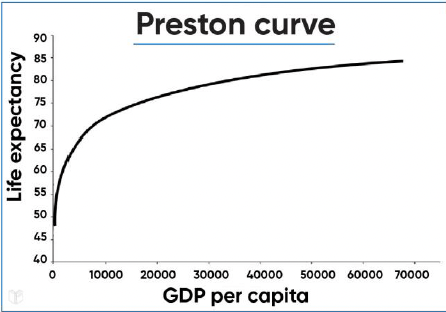
PRESTON CURVE
- American sociologist Samuel H. Preston first introduced this idea in 1975.
- It emphasizes that beyond a certain threshold, an increase in a country's per capita income has a limited impact on the life expectancy of its population.
- Initially, when a low-income country starts to develop, the rise in per capita income leads to improved life expectancy due to better nutrition, sanitation, and healthcare access.
- However, after reaching a specific level of income, the improvements in life expectancy begin to plateau.
PUMP AND DUMP SCHEME
- Recently, SEBI fined several individuals for allegedly running a "pump and dump" scheme.
- This scheme involved recommendations disseminated through Telegram channels, leading public shareholders to buy stocks at artificially inflated prices.
About the Pump and Dump Scheme:
- This manipulation tactic involves inflating a stock's price through deceptive information or recommendations.
- The aim is solely to sell the stock at these inflated prices.
- It is particularly common in micro-cap and small-cap sectors due to limited public information and lower trading volumes.
- Impact: It erodes trust in financial markets and causes significant losses for investors.
- Regulation: SEBI's guidelines completely prohibit such practices
REVISED PRIORITY SECTOR LENDING NORMS
News Context
The RBI has updated its priority sector lending (PSL) guidelines to encourage small loans in economically challenged districts with low average loan amounts.
Updated Priority Sector Lending Guidelines
- Incentive Framework: An incentive structure will be introduced for districts with lower credit flow, effective from FY25. Fresh priority sector loans in districts with low loan availability (under Rs 9,000 per person) will receive a weight of 125%.
- Disincentive Framework: In districts with higher loan availability (over Rs 42,000 per person), loans will carry a weight of 90%.
- Other Districts: Most districts, except those with extremely low credit availability or very high loan sizes, will maintain the existing weight of 100%.
- MSME Loans: All loans extended to MSMEs will be eligible for classification under PSL.
Need for Updated Priority Sector Lending Guidelines
- To tackle imbalances in regional loan distribution and credit availability
- To improve access to credit for micro, small, and medium enterprises (MSMEs)
- To encourage the growth of the manufacturing sector and production of goods
About Priority Sector Lending (PSL)
- The term "Priority Sector" refers to sectors deemed essential for the country's development by the Government and the RBI, which are prioritized over other sectors.
- Objectives:
- To ensure that disadvantaged groups and underdeveloped regions have access to credit.
- To allocate a portion of bank lending to specific sectors and sub-sectors that affect a large part of the population and are vital for the economy.
- PSL was established in 1972 to promote credit flow to these sectors, which, despite being creditworthy, struggle to secure funding from formal financial institutions.
- Key committees related to PSL include:
- The Gadgil Committee (1969), which proposed an Area Approach that led to the implementation of the 'Lead Bank Scheme.'
- The Ghosh Committee (1982), which revised the categories of priority sectors.
Priority Sector Categories
- Agriculture
- Micro, Small, and Medium Enterprises (MSMEs)
- Export Financing
- Education
- Housing
- Social Development
- Infrastructure
- Renewable Energy
- Miscellaneous
The sections include specific sub-targets for the Category of Weaker Sections. For instance, this includes Small and Marginal Farmers within the Agriculture Category.
Weaker Sections under the Priority Sector Lending (PSL) comprise:
- Small and Marginal Farmers who benefit from the Differential Rate of Interest (DRI) scheme (1972), as well as programs like NRLM, NULM, and the Self-Employment Scheme for Rehabilitation of Manual Scavengers (SRMS).
- Distressed farmers who are in debt to non-institutional lenders.
- Individuals with disabilities.
- Artisans involved in village and cottage industries.
- Individual women.
- Scheduled Castes (SCs) and Scheduled Tribes (STs).
- Minority communities as defined by the Government of India.
- Self-Help Groups (SHGs).
- Distressed individuals other than farmers.
Targets/Sub-targets for Priority Sector Lending by Different Types of Banks
Categories:
- Domestic Commercial Banks & Foreign Banks with 20 or More Branches
- Foreign Banks with Fewer Than 20 Branches
- Regional Rural Banks
- Small Finance Banks
- Total Priority Sector Lending: 40% of the Adjusted Net Bank Credit (ANBC) or the Credit Equivalent of Off Balance Sheet Exposures (CEOBE), whichever is higher. The same requirement as Domestic Commercial Banks. 75% of ANBC or CEOBE, whichever is higher. 75% of ANBC or CEOBE, whichever is higher.
- Agriculture: 18% of ANBC or CEOBE, whichever is higher, with a target of 10% specifically for Small and Marginal Farmers. Not applicable. The same requirement as Domestic Commercial Banks.The same requirement as Domestic Commercial Banks.
- Micro Enterprises: 7.5% of ANBC or CEOBE, whichever is higher. Not applicable. The same requirement as Domestic Commercial Banks. The same requirement as Domestic Commercial Banks.
- Advances to Weaker Sections: 12% of ANBC or CEOBE, whichever is higher. Not applicable. 15% of ANBC or CEOBE, whichever is higher. The same requirement as Domestic Commercial Banks.
Note: The guidelines for Priority Sector Lending also apply to Primary Urban Co-operative Banks.
Positive Effects of Priority Sector Lending (PSL) on the Indian Economy:
- Financial Inclusion: PSL regulations ensure that credit reaches underserved populations, such as small and marginal farmers (SMFs), women, and disadvantaged groups.
- Support for Agriculture: Agricultural credit saw a substantial increase from 2000 to 2020, growing at a compound annual growth rate (CAGR) of 19.81%, largely due to the mandatory 18% lending requirement imposed on commercial banks and supportive policies.
- Promotion of MSMEs: By enabling better access to credit for micro, small, and medium enterprises (MSMEs), PSL plays a crucial role in job creation and strengthening local economies.
- Income Enhancement: A case study conducted in Andhra Pradesh revealed that beneficiaries of PSL experienced an increase in their income.
RESERVE BANK OF INDIA (RBI) JOINS PROJECT NEXUS
- Nexus is an international initiative that aims to facilitate immediate cross-border retail payments by connecting domestic Instant Payment Systems (IPS).
- An IPS is an electronic payment system that allows for quick inter-bank fund transfers, providing payment confirmations to both the sender and recipient within a minute or less, such as the Unified Payments Interface (UPI).
About Project Nexus
- The concept was developed by the Innovation Hub of the Bank for International Settlements (BIS), which was established in 1930 and is headquartered in Basel, Switzerland, with ownership by 63 central banks, including the Reserve Bank of India (RBI).
- The project will link the IPS of four ASEAN nations (Malaysia, the Philippines, Singapore, and Thailand) with India, with plans to launch by 2026.
- Nexus aims to create a standardized approach for connecting domestic IPS, allowing operators to establish a single connection to Nexus instead of creating custom links for each new country.
- The initiative seeks to meet G20 objectives by providing cross-border payments that are more affordable, quicker, transparent, and accessible.
Benefits of Project Nexus:
- It streamlines cross-border payments, lowering complexity, costs, and transaction times.
- It provides a complementary, low-cost, and scalable infrastructure for all payment service providers.
- It addresses interoperability challenges by promoting standardization and harmonization among various systems.
Challenges in Cross-Border Payment Systems
- Insufficient interoperability
- High costs and slow processing times
- Necessity for extra steps, like currency conversion
- Challenges in scaling operations
RBI LAUNCHES VARIOUS INITIATIVES
The Reserve Bank of India (RBI) has introduced three initiatives to improve public access to the central bank and streamline the regulatory approval process:
- TERRY Initiatives
- PRAVAAH Portal: A secure, centralized web portal designed for seeking authorizations, licenses, or regulatory approvals.
- Mobile Application for RBI: A mobile app that allows retail investors to trade in government securities.
- Fintech Repository: A detailed database that offers insights into the Indian fintech sector, aiming to enhance regulatory understanding of the industry.
SECURED OVERNIGHT FINANCING RATE
The recent Variable Rate Reverse Repo (VRR) auction conducted by the Reserve Bank of India (RBI) received a positive response from banks.
About VRR:
- The RBI uses VRR when it aims to inject liquidity into the economy, but banks are reluctant to borrow at the Repo Rate due to already low interest rates in the market. In such instances, the RBI allows banks to borrow at a VRR, which is typically set lower than the Repo Rate (but not below the Reverse Repo Rate) for periods exceeding one day.
- The Repo Rate is the interest rate at which banks borrow funds from the RBI, as determined by the RBI.
- The borrowing period typically ranges from one day to a maximum of 14 days.
- This mechanism serves as a means to provide short-term liquidity to the banking sector.
- Conversely, the Variable Rate Reverse Repo (VRRR) is utilized to absorb excess liquidity from the banking system.
SEBI AMENDS INFRASTRUCTURE INVESTMENT TRUSTS (INVITS) REGULATIONS 2024
- The new regulations permit privately placed Infrastructure Investment Trusts (InvITs) to issue subordinate units exclusively to the sponsors upon acquiring an infrastructure project.
- This change is designed to reconcile the valuation differences between the sponsor (acting as the seller) and the InvIT (acting as the buyer) for an asset.
About InvITs:
- InvITs are investment vehicles akin to mutual funds, enabling investors to put money into infrastructure projects such as toll roads, power lines, and pipelines.
- Sponsors, which are infrastructure companies, establish InvITs through SEBI and are recognized as borrowers under the SARFAESI Act of 2002.
- The parties involved in an InvIT include its trustee, sponsor, investment manager, and project manager.
- InvITs generate income through tolls, rents, interest, or dividends from their investments, which are then distributed to investors as taxable earnings.
Significance of InvITs:
- Low Minimum Investment: Investors can contribute smaller amounts.
- Liquidity: Since they are listed on stock exchanges, investors can exit at any time.
- Transparency: Investors receive updates on where their funds are allocated.
- Low Risk: The trusts are regulated by SEBI.
Challenges of Investing in InvITs:
- Potential operational risk, refinancing risk, and return risk, among others.
STATE OF WORLD FISHERIES AND AQUACULTURE 2024
- The Food and Agriculture Organization (FAO) is responsible for preparing and releasing the report.
- The report specifically highlights the theme of “Blue Transformation in Action.”
Key Findings of the Report:
- In 2022, global fisheries and aquaculture production reached a record high of 223.2 million tonnes.
- India ranked second in aquatic animal production, contributing 8% of the total output.
- For the first time, aquaculture has overtaken capture fisheries as the leading source of aquatic animals.
- India led in inland fisheries production with a total of 1.9 million tonnes.
Role of Aquatic Foods in Climate Action:
- The 2023 United Nations Framework Convention on Climate Change (UNFCCC) Ocean Dialogue acknowledged the significant role of aquatic foods in offering vital solutions to climate challenges.
- The FAO incorporates traditional knowledge to help adapt to climate change by focusing on local species that are suitable for changing conditions.
Blue Transformation in Action:
- In 2021, the FAO unveiled its "Blue Transformation" vision, which aims to utilize aquatic food systems to enhance food security and improve nutrition, among other goals.
- Objectives include:
- Expanding sustainable aquaculture to meet global demands while ensuring equitable distribution of benefits.
- Implementing effective fisheries management to maintain healthy fish stocks and support fair livelihoods.
- Enhancing aquatic value chains to ensure social, economic, and environmental sustainability.
Fisheries and Aquaculture in the Context of Global Biodiversity Agreements:
- In 2022, the Convention on Biological Diversity (CBD) adopted the Kunming-Montreal Global Biodiversity Framework (GBF), aimed at assisting countries in creating national strategies for biodiversity protection and harmonious living with nature.
- Aquatic food systems are linked to several GBF targets, including the management of aquatic spaces and the reduction of species extinction risks.
- In 2023, UN member states reached an agreement on a legally binding treaty to conserve and sustainably utilize marine biological diversity in areas beyond national jurisdiction.
TECHNICAL TEXTILES
News Context
- The Empowered Programme Committee of the National Technical Textiles Mission has approved seven startup proposals as part of the GREAT scheme initiative.
- The Grant for Research and Entrepreneurship across Aspiring Innovators in Technical Textiles (GREAT) initiative is a component of the Research, Development, and Innovation framework under the National Technical Textiles Mission (NTTM).
About Technical Textiles
- Technical textiles are materials and products designed primarily for their functional and technical performance, rather than for aesthetic or decorative purposes.
- These textiles find diverse applications, including agriculture, road construction, railway tracks, sportswear, and healthcare, as well as specialized uses such as bulletproof and fireproof jackets, high-altitude combat gear, and space applications.
About the GREAT Initiative
- Nodal Ministry: Ministry of Textiles
- Objectives: Supports young innovators, scientists, technologists, and startups in the Technical Textiles sector to turn their concepts into commercial technologies/products, promoting self-reliance in India.
- Grant in Aid: Typically, up to Rs. 50 Lakhs for an 18-month period.
Factors Driving Growth
- Increased demand from emerging application sectors
- Development of standards and guidelines
- Accessibility of raw materials
- Impact of climate change and global warming
- Progress in materials science
Government Initiatives
- National Technical Textiles Mission (NTTM): Aiming to establish the nation as a worldwide leader in Technical Textiles.
- Implementation Period: From FY 2020-21 to 2023-24.
- Nodal Ministry: Ministry of Textiles.
- Schemes:
- Production Linked Incentive (PLI) scheme for the textile sector.
- PM Mega Integrated Textile Regions and Apparel Parks (MITRA) Scheme.
- Scheme for Integrated Textile Parks (SITP).
- Quality Control Regulations: The Ministry of Textiles has issued Quality Control Orders (QCOs) for 19 Geo-tech Textile items, 12 Protective Textile items, 20 Agro Textile items, and 6 Meditech Textile items.
- New HSN Codes: Introduction of new HSN Codes specifically for technical textile products.
- Standards in Technical Textiles: Over 500 Bureau of Indian Standards (BIS) standards have been established for technical textiles.
- Mandatory Usage of Technical Textiles: Specific technical textile products have been designated for compulsory use across various Central ministries and departments to maximize the advantages of technical textiles in diverse applications.
Components of NTTM and Budget Allocation
- Research, Innovation & Development: ₹1000 Crores
- Education, Training & Skill Development: ₹400 Crores
- Promotion & Market Development: ₹50 Crores
- Export Promotion: ₹10 Crores
UNCTAD’S REPORT ON GROWING PUBLIC DEBT
‘A World of Debt Report 2024: A Growing Burden on Global Prosperity’ released by UN Trade and Development (UNCTAD)
The report emphasizes a concerning increase in global public debt and suggests reforms to the global financial system to address the ongoing debt crisis.
- Public debt encompasses the total domestic and external debt of governments.
Key Findings of the Report:
- Debt Surge: In 2023, global public debt hit an unprecedented level of $97 trillion.
- Contributing Factors: The rise is driven by a series of crises and the sluggish, uneven recovery of the global economy.
- Regional Disparities: Public debt in developing nations, which make up 30% of the global total, is growing at twice the pace of developed countries.
- For instance, in 2023, India’s public debt reached $2.9 trillion, representing 82.7% of its GDP.
Consequences of High Public Debt:
- Increased Fiscal Pressure: Over half of the developing nations allocate at least 8% of their government revenue to pay interest on debts.
- Reduction in Developmental Expenditure: Approximately 3.3 billion people live in countries where interest payments exceed combined spending on education and health.
- Lack of Climate Action: In emerging and developing nations, interest payments overshadow investments in climate initiatives.
Strategies for Financing Sustainable Development:
- Establish an Inclusive International Financial Architecture that enhances the involvement of developing countries in decision-making.
- Increase liquidity during crises by expanding contingency funding through IMF tools.
- Boost affordable long-term financing by transforming and expanding the role of Multilateral Development Banks.
Efforts to address the debt crisis include:
- The Heavily Indebted Poor Countries (HIPC) Initiative, established by the IMF and World Bank.
- The Debt Management and Financial Analysis System (DMFAS) program initiated by UNCTAD.
- The Global Sovereign Debt Roundtable (GSDR), which was launched in February 2023 through collaboration between the IMF, the World Bank, and India's G20 presidency.
VARIABLE REPO RATE (VRR)
The recent Variable Rate Reverse Repo (VRR) auction conducted by the Reserve Bank of India (RBI) received a positive response from banks.
About VRR:
- The RBI uses VRR when it aims to inject liquidity into the economy, but banks are reluctant to borrow at the Repo Rate due to already low interest rates in the market. In such instances, the RBI allows banks to borrow at a VRR, which is typically set lower than the Repo Rate (but not below the Reverse Repo Rate) for periods exceeding one day.
- The Repo Rate is the interest rate at which banks borrow funds from the RBI, as determined by the RBI.
- The borrowing period typically ranges from one day to a maximum of 14 days.
- This mechanism serves as a means to provide short-term liquidity to the banking sector.
- Conversely, the Variable Rate Reverse Repo (VRRR) is utilized to absorb excess liquidity from the banking system.
WORLD EMPLOYMENT AND SOCIAL OUTLOOK: MAY 2024 UPDATE
The report published by the International Labour Organization highlights the following key points:
- Global unemployment is expected to decrease slightly in 2024.
- There are currently 183 million unemployed individuals who are available to work at short notice and actively seeking employment.
- Employment rates show that 45.6% of women (aged 15 and older) are employed, compared to 69.2% of men, resulting in a 23.6% disparity.
- This gap is primarily attributed to family obligations such as marriage and parenthood.
- Additionally, women, particularly in developing countries, earn less than men in the workforce.
- The number of informal workers has risen from 1.7 billion in 2005 to 2.0 billion in 2024.