
MAJOR GENE POOL CENTERS | Biogeography Optional for UPSC
MAJOR GENE POOL CENTERS | Biogeography Optional for UPSC

Introduction:
- Gene pool centers refer to geographical areas that exhibit high levels of genetic diversity and serve as critical repositories for the genetic material of various species.
- It aims to preserve and study the diverse gene pools of different species to enhance our understanding of genetics, evolution, and the ecological dynamics that shape our planet.
- Gene pool centres are geographical areas where important crop plants and domestic animals originated.
What is Gene?
- Genes are the fundamental units of inheritance, containing information for traits and passed from parents to offspring.
- They are arranged on chromosomes, which are long DNA molecules.
- Humans have approximately 20,000 genes on their chromosomes.
Gene pool:
- A gene pool is the collection of different genes within a population at a given time.
- It represents the genetic diversity within a population or species.
- The gene pool includes all genes and combinations of genes (alleles) in the population.
Importance of Gene Pool Centers in Geography
- Preserving biodiversity: Gene Pool Centers play a crucial role in conserving and protecting the genetic diversity of various species, ensuring the long-term survival of ecosystems.
- Understanding evolutionary processes: By studying gene pools, researchers gain insights into the mechanisms behind evolutionary changes, adaptation, and speciation.
- Investigating ecological interactions: Gene Pool Centers provide a platform to explore the intricate connections between genetic diversity, species interactions, and ecosystem functioning.
Perspectives on Gene Pool Centers
A. Carl Sauer
- Emphasized the relationship between human societies and the environment.
- Advocated for the preservation of genetic diversity as an essential component of cultural and biological landscapes.
- Highlighted the role of gene pools in maintaining the resilience and sustainability of human and natural systems.
B. Ellen Churchill Semple
- Focused on environmental determinism and human-environment interactions.
- Acknowledged the significance of gene pools in shaping the distribution and migration patterns of species across different landscapes.
- Explored the influence of genetic diversity on cultural practices and societies.
C. Conservation Ethic
- Conservation ethic emphasizes the moral responsibility to protect and sustainably manage natural resources.
- Aldo Leopold and his land ethic: Leopold's land ethic promotes the idea of an ethical relationship between humans and the land, emphasizing the importance of conserving biodiversity and ecosystems.
D. Evolutionary Biology
- Evolutionary biology provides insights into the processes that shape genetic diversity, speciation, and adaptation within gene pool centers.
- Charles Darwin and his theory of evolution: Darwin's theory of evolution revolutionized our understanding of how species evolve over time through natural selection and adaptation.
E. Ecological Economics
- Ecological economics recognizes the economic value of biodiversity and the services provided by ecosystems, including gene pool centers.
- Herman Daly and his concept of steady-state economics: Daly's steady-state economics advocates for maintaining ecological balance and valuing the long-term sustainability of ecosystems, including gene pool centers.
F. Alphonse de Candolle and Nicolay Ivanovich Vavilov:
- De Candolle posed the question of the geographic origin of cultivated plants, and Vavilov built upon his ideas using evolutionary concepts from Darwin.
- Vavilov developed hypotheses on the centers of origin of cultivated plants in the 1920s.
Examples of Gene Pool Centers and Thinkers' Perspectives
1. Amazon Rainforest
- The diverse climate and habitat types within the Amazon contribute to its status as a gene pool center.
- Aldo Leopold's land ethic emphasizes the importance of preserving the Amazon's biodiversity and ecosystem services.
2. Great Barrier Reef
- It has great role in the economic and ecological value and in sustainable management.
- Charles Darwin's theory of evolution helps us understand the formation and adaptation of species within the unique ecological niches of the Great Barrier Reef.
3. Galapagos Islands
- Charles Darwin's observations on the Galapagos Islands played a pivotal role in developing his theory of evolution by natural selection.
- Aldo Leopold's land ethic underscores the importance of preserving the Galapagos Islands' unique biodiversity and protecting their gene pool centers.
4. Svalbard Global Seed Vault (Norway)
- It serves as a secure storage for plant seeds from around the world.
- Preserves the genetic diversity of crops to safeguard against potential threats such as climate change, disease outbreaks, and habitat loss.
5. Frozen Ark Project
- A global initiative that aims to preserve the DNA and living cells of endangered species.
- Collects and stores genetic material from a wide range of animals to facilitate conservation efforts and future research.
6. Smithsonian Conservation Biology Institute (USA)
- Conducts research on genetic diversity, endangered species, and conservation biology.
- Integrates genomic analyses and field studies to better understand the genetic factors influencing species' survival and recovery.
Geographical Case Studies of Gene Pool Centers
1. Examples of gene pool centers as biodiversity hotspots: Biodiversity hotspots are regions with exceptional levels of plant and animal species richness that are also highly threatened by human activities. They play a vital role in preserving genetic diversity.
- The Amazon Rainforest in South America: It is known for its immense species diversity and serves as a reservoir of genetic material for numerous plant and animal species.
- The Coral Triangle in Southeast Asia: This region is home to the highest marine biodiversity on Earth and is crucial for maintaining coral reef ecosystems.
- The Cape Floristic Region in South Africa: It showcases extraordinary floral diversity and houses numerous endemic plant species.
2. Examples of gene pool centers based on ecological niches: Ecological niches refer to the specific roles and habitats occupied by different species within an ecosystem. They play a vital role in preserving genetic diversity.
- The Galapagos Islands: These islands are famous for their unique and diverse species, thanks to the distinct ecological niches that have allowed for adaptive radiation and speciation.
- The Great Barrier Reef in Australia: It supports a wide array of ecological niches, fostering the coexistence of various marine species and maintaining genetic diversity.
- The Serengeti National Park in Tanzania: This ecosystem showcases diverse habitats, including grasslands, woodlands, and rivers, which support an abundance of wildlife and genetic variation.
3. Influence of climate and habitat diversity on gene pools: Varied climates and habitats provide opportunities for species to adapt, evolve, and develop unique genetic traits.
- The Himalayas and its impact on biodiversity: The Himalayas create a range of habitats, resulting in a rich biodiversity with numerous gene pool centers.
- The Andes and its role in species adaptation and diversification: The Andes Mountains have facilitated the evolution of diverse plant and animal species due to their diverse climatic zones and habitats.
- Taiga biome and its unique flora and fauna: The Taiga biome's extreme cold and vast forested areas have shaped the genetic makeup of species adapted to these conditions.
Major Gene Pool Centres:
- Centre of origin and diversity: The centre of origin refers to the geographic area where a group of organisms, whether domesticated or wild, first developed their distinctive properties. It is often associated with centers of diversity.
- Challenges in determining origin and evolution: Gathering meaningful information about the origin and evolution of certain crops becomes increasingly difficult over time, as evidence diminishes and fades away.
Vavilov's Gene Pool Centres:
- Vavilov's assumptions: Vavilov proposed that most agricultural species can be traced back to specific regions known as their centers of origin. He believed these centers would be common for multiple crops and serve as universal centers of origin and genetic diversification.
- Primary and secondary groups of cultivated plants: Vavilov distinguished between primary crops, which were ancient cultivated plants known only in their cultivated state, and secondary crops derived from useful weeds found in primary crop fields.
- Region of maximum variation: Vavilov identified the region of maximum variation, often with endemic types and characteristics, as a potential center of origin. These centers were characterized by many variable traits and could encompass entire genera.
- Foci of type formation: Within centers of origin, Vavilov identified "foci of type formation" for the most important cultivated plants, representing the hearts of the centers in terms of genetic diversification and type formation.
- Changing numbers and borders: The numbers and borders of the centers of origin changed over time as empirical investigations progressed. Vavilov suggested varying numbers of centers from three to eight for crop plants.
- Vavilov's publication in 1926: Vavilov published "Studies on the Origin of Cultivated Plants" in 1926, presenting his theories on the origins of crops. He concluded that each crop has a primary center of diversity, which is also its center of origin.
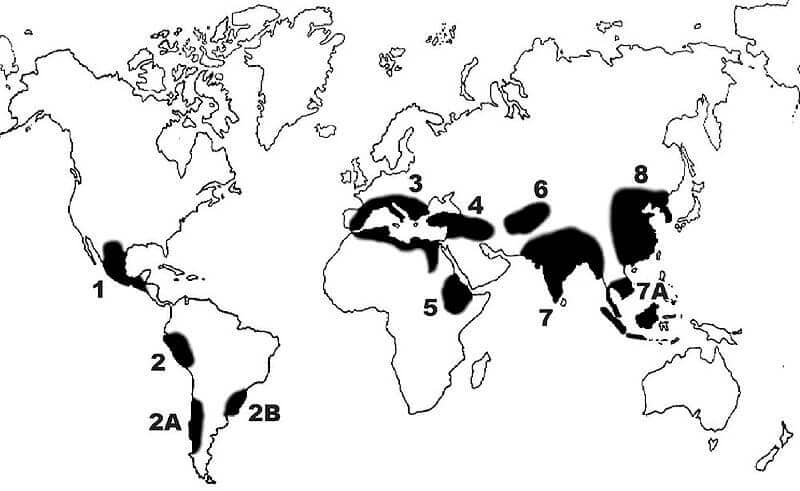
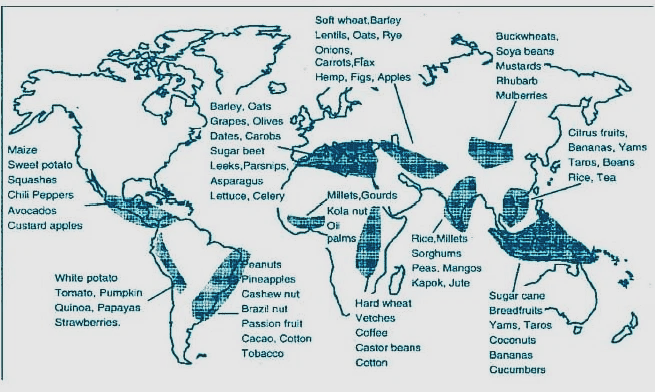
- Eight recognized centers: Vavilov proposed eight areas as centers of origin from which major crops were domesticated:
- Mexico-Guatemala, (2) Peru-Ecuador-Bolivia, (2A) Southern Chile, (2B) Paraguay-Southern Brazil, (3) Mediterranean, (4) Middle East, (5) Ethiopia, and (6) Central Asia.
- Secondary centers of diversity: Vavilov later expanded his theory to include "secondary centers of diversity" for some crops, adding (7) Indo-Burma, (7A) Siam-Malaya-Java, and (8) China-Korea as additional centers.
Importance of preserving Gene Pool:
1. Conservation of Genetic Diversity
- Preservation of unique genetic traits and variations.
- Maintenance of biodiversity for ecological stability.
- Potential for adaptation to changing environmental conditions.
2. Study of Evolutionary Processes
- Understanding the mechanisms driving genetic changes over time.
- Analysis of genetic drift, gene flow, and natural selection.
- Tracking evolutionary patterns and speciation events.
3. Identification of Endemic Species
- Recognizing species unique to specific geographic regions.
- Examining genetic markers to determine evolutionary history.
- Assessing the conservation status of endemic species.
4. Assessment of Human Genetic History
- Investigating human migration patterns and population genetics.
- Tracing ancestral lineages and genetic relationships.
- Studying the impacts of human activities on genetic diversity.
5. Ecosystem Functioning and Resilience
- Assessing the genetic basis for ecosystem services.
- Identifying keystone species and their genetic contributions.
- Understanding the effects of genetic diversity on ecosystem resilience.
6. Formulation of Conservation Strategies
- Utilizing gene pool data for conservation planning.
- Designing protected areas based on genetic diversity hotspots.
- Prioritizing the conservation of vulnerable or endangered species.
7. Climate Change Adaptation
- Analyzing genetic variability in response to climate change.
- Identifying resilient genotypes for assisted migration efforts.
- Developing strategies for conserving adaptive potential.
8. Collaboration with Other Disciplines
- Interdisciplinary research with genetics, ecology, and anthropology.
- Integrating geospatial data with genomic information.
- Informing policy and management decisions through collaborative efforts.
Geographical Challenges in Gene Pool Centers
- Isolation: Geographical barriers such as mountains, rivers, or deserts isolate gene pool centers. There is limited gene flow between populations in different gene pool centers.
- Fragmentation: Gene pool centers may be fragmented due to human activities like deforestation or urbanization. It can lead to loss of genetic diversity and increased inbreeding.
- Climate Change: Shifts in temperature, rainfall patterns, and extreme weather events can impact gene pool centers. Altered habitats may disrupt species' distribution and genetic adaptation.
- Vulnerability to Natural Disasters: Gene pool centers located in geographically vulnerable areas face the risk of natural disasters like earthquakes, floods, or hurricanes. Disasters can destroy habitats, displace species, and disrupt gene flow.
- Limited Accessibility: Some gene pool centers are situated in remote or inaccessible locations. It can hamper scientific research, monitoring, and conservation efforts.
- Habitat Loss and Degradation: Conversion of natural habitats into agricultural lands, urban areas, or industrial zones threatens gene pool centers. Habitat loss leads to the reduction of available space and resources for species, affecting their genetic diversity.
- Invasion of Exotic Species: Gene pool centers may be invaded by non-native species, either intentionally or unintentionally introduced. Invasive species can outcompete native species, leading to genetic homogenization and loss of unique genetic traits.
Implications and Conservation Strategies
1. Genetic Erosion
- Geographical challenges in gene pool centers can result in genetic erosion, diminishing species' adaptive potential.
- Conservation strategies like habitat restoration, captive breeding, and translocation programs can mitigate genetic erosion.
2. Protected Areas and Corridors
- Establishing protected areas and wildlife corridors can help maintain connectivity between gene pool centers.
- Protected areas provide safe habitats and enable natural gene flow and species migration.
3. Climate-Adaptive Conservation
- Gene pool centers should focus on identifying and conserving populations with high adaptive potential in the face of climate change.
- Assisted migration and assisted evolution techniques may be employed to enhance species' resilience.
4. Collaboration and Data Sharing
- International cooperation and data sharing among gene pool centers are crucial for effective conservation.
- Sharing knowledge, resources, and best practices can enhance conservation efforts and ensure long-term viability of gene pool centers.
Conclusion:
- Gene Pool Centers offer a valuable contribution to geography and our understanding of genetic diversity, evolution, and ecological dynamics. By preserving and studying gene pools, we gain insights into the complex interplay between genetics, landscapes, and human-environment interactions.