
ENVIRONMENT DEGRADATION | ENVIRONMENTAL GEOGRAPHY Optional for UPSC
ENVIRONMENT DEGRADATION | ENVIRONMENTAL GEOGRAPHY Optional for UPSC

Introduction
- Environmental degradation is the deterioration of the environment through depletion of resources such as quality of air, water and soil; the destruction of ecosystems; habitat destruction; the extinction of wildlife; and pollution.
- It is defined as any change or disturbance to the environment perceived to be deleterious or undesirable.
- Environmental degradation is one of the ten threats officially cautioned by the high-level Panel on Threats, Challenges and Change of the United Nations.
- Efforts to counteract this problem include environmental protection and environmental resources management.
Thinker’s Views
1. Rachel Carson
- Carson was an influential environmental thinker and author of the book "Silent Spring" (1962).
- She highlighted that pesticide use leads to environment degradation.
2. Aldo Leopold
- Leopold was an American ecologist and author of "A Sand County Almanac" (1949).
- He emphasized the importance of a land ethic, promoting responsible and sustainable interactions between humans and the natural environment in controlling environmental degradation.
3. Garrett Hardin
- Hardin, an American ecologist, wrote the influential essay "The Tragedy of the Commons" (1968).
- He argued that the unrestricted exploitation of shared resources would lead to their depletion and degradation.
- Hardin highlighted the need for collective action and the establishment of regulations to prevent overexploitation of natural resources and subsequent environmental degradation.
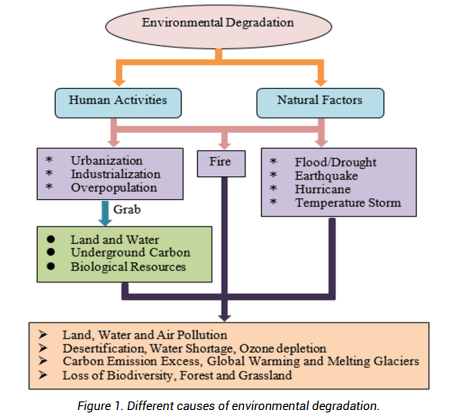
Causes of Environmental Degradation
1. Deforestation:
- Clearing of forests for agriculture, logging, and urbanization.
- Example: The Amazon rainforest is being cleared for cattle ranching, leading to loss of biodiversity and carbon sequestration.
2. Pollution:
- Release of harmful substances into the environment.
- Examples: Industrial emissions, vehicle exhaust, and improper waste disposal leading to air, water, and soil pollution.
3. Overpopulation:
- Increase in the number of people, causing strain on natural resources.
- Example: Rapid urbanization and increased demand for food, water, and energy resources, leading to resource depletion.
4. Climate change:
- Alteration of global weather patterns due to human activities, primarily greenhouse gas emissions.
- Example: Burning fossil fuels releases carbon dioxide, leading to rising temperatures, melting ice caps, and changing rainfall patterns.
5. Industrialization:
- Expansion of industrial activities without proper environmental regulations.
- Example: Uncontrolled release of toxic chemicals and waste products from factories, polluting nearby ecosystems.
6. Land degradation:
- Deterioration of the quality and productivity of land.
- Examples: Soil erosion due to unsustainable agricultural practices, such as overuse of chemical fertilizers and monoculture farming.
7. Loss of biodiversity:
- Decline in the variety of plant and animal species in an ecosystem.
- Example: Destruction of natural habitats, like coral reefs, leading to the extinction of marine species.
8. Resource exploitation:
- Unsustainable extraction of natural resources.
- Example: Overfishing depleting fish stocks, affecting the balance of marine ecosystems.
9. Urban sprawl:
- Unplanned and rapid expansion of cities into surrounding rural areas.
- Example: Conversion of agricultural land into housing developments, leading to loss of farmland and fragmentation of ecosystems.
10. Poor waste management:
- Improper handling and disposal of waste materials.
- Example: Dumping of plastic waste in oceans, causing harm to marine life and ecosystems.
11. Environmental Disruption:
- Environmental disturbances create opportunities for invasive species to flourish and spread, resulting in the displacement of local vegetation.
- The dominance of a single species fails to provide sufficient food for wildlife, leading to the overall decline of the ecosystem.
12. Landfills:
- Landfills serve as dumping grounds for substantial amounts of waste from households, industries, hospitals, and factories, resulting in health issues, pollution, and the degradation of urban environments.
- Incineration of waste produces foul odors and poses health risks.
13. Economic Development:
- The level and pattern of economic development shape the nature of environmental problems.
- Market distortions caused by price controls and subsidies can hinder the achievement of environmental goals.
14. Intensive Agriculture:
- The spread of the green revolution has led to the overexploitation of land and water resources, along with increased usage of fertilizers and pesticides.
- This has resulted in problems such as chemical leaching, salinization, alkalization, and waterlogging.
15. Institutional Factors:
- Inadequate enforcement capabilities of environmental institutions and a lack of effective coordination among various ministries/institutions render protection programs ineffective.
- The shortage of trained personnel often leads to project delays.
16. Habitat Fragmentation:
- Development projects fragment continuous land areas, causing significant habitat loss and negatively impacting animals that require extensive space for food and shelter.
- The absence of key animal species disrupts the food web, leading to environmental degradation.
17. Natural Disasters:
- Avalanches, earthquakes, tidal waves, storms, and wildfires can devastate nearby animal and plant populations, making those areas uninhabitable.
- Destruction can result from immediate physical damage or the gradual degradation caused by the introduction of invasive species.
18. Poverty:
- There exists a cyclical relationship between poverty and the environment.
- Inequality exacerbates unsustainability since the poor, who heavily rely on natural resources, deplete them at a faster rate without access to alternative resources.
- Furthermore, a degraded environment can accelerate the poverty cycle as the impoverished depend directly on natural resources.
Types of Environmental Degradation
1. Deforestation:
- Deforestation refers to the clearing of forests or trees in large areas.
- It leads to the loss of habitat for various species, soil erosion, and increased carbon dioxide levels.
- Example: The Amazon rainforest in South America is being rapidly cleared for agriculture, resulting in the loss of biodiversity and contributing to climate change.
2. Desertification:
- Desertification is the process by which fertile land turns into desert due to various factors such as climate change, overgrazing, and unsustainable agricultural practices.
- It results in the loss of productive land, reduced biodiversity, and increased vulnerability to droughts and famine.
- Example: The Sahel region in Africa has experienced severe desertification, leading to the displacement of communities and loss of agricultural productivity.
3. Water Pollution:
- Water pollution occurs when harmful substances such as chemicals, sewage, or industrial waste contaminate water bodies.
- It adversely affects aquatic life, disrupts ecosystems, and poses health risks to humans.
- Example: The pollution of the Ganges River in India due to industrial waste and untreated sewage has caused significant ecological damage and poses a threat to human health.
4. Air Pollution:
- Air pollution refers to the presence of harmful substances in the air, primarily due to industrial emissions, vehicle exhaust, and burning of fossil fuels.
- It leads to respiratory problems, smog formation, and contributes to climate change.
- Example: The high levels of air pollution in cities like Beijing, China, caused by industrial activities and vehicular emissions, have led to serious health issues and reduced air quality.
5. Soil Erosion:
- Soil erosion occurs when the top layer of soil is removed or degraded due to factors such as wind, water, deforestation, or unsustainable farming practices.
- It reduces soil fertility, hampers agricultural productivity, and leads to the loss of essential nutrients and sedimentation in water bodies.
- Example: The Dust Bowl in the United States during the 1930s resulted in severe soil erosion, causing agricultural failures and economic hardships.
6. Climate Change:
- Climate change refers to long-term shifts in weather patterns and temperature, primarily caused by human activities, including the burning of fossil fuels and deforestation.
- It leads to rising global temperatures, sea-level rise, extreme weather events, and disruption of ecosystems.
- Example: The melting of polar ice caps and the subsequent rise in sea levels threaten low-lying areas such as island nations and coastal cities.
7. Biodiversity Loss:
- Biodiversity loss refers to the decline in the variety and abundance of species in a specific habitat or globally.
- It is caused by habitat destruction, pollution, overexploitation, and climate change.
- Example: The extinction of species such as the dodo bird and the passenger pigeon highlights the irreversible loss of biodiversity due to human activities.
8. Habitat Loss:
- Habitat loss occurs when natural habitats are destroyed or altered, resulting in the displacement or extinction of plant and animal species.
- It can be caused by deforestation, urbanization, and conversion of land for agriculture or infrastructure development.
- Example: Destruction of coral reefs due to pollution and coastal development.
9. Ozone Depletion:
- Ozone depletion refers to the thinning of the ozone layer in the Earth's stratosphere, primarily due to the release of ozone-depleting substances.
- It can lead to increased levels of ultraviolet (UV) radiation reaching the Earth's surface, harming human health and ecosystems.
- Example: Use of chlorofluorocarbons (CFCs) in aerosol sprays and refrigerants contributing to ozone layer depletion.
Effects of Environmental Degradation
1. Loss of Biodiversity:
- Destruction of habitats leads to the loss of plant and animal species.
- Deforestation, pollution, and climate change contribute to the decline in biodiversity.
- Examples: The Amazon rainforest, known for its rich biodiversity, is being cleared for agriculture, resulting in the loss of numerous species, including endangered ones like the Amazonian manatee and jaguar.
2. Climate Change:
- Increased greenhouse gas emissions cause global warming and climate change.
- Deforestation and burning of fossil fuels contribute to the release of carbon dioxide.
- Examples: Rising temperatures lead to melting glaciers, sea-level rise, and extreme weather events such as hurricanes and droughts, impacting vulnerable communities worldwide.
3. Water Scarcity:
- Pollution and overuse of freshwater sources result in water scarcity.
- Industrial and agricultural activities often contaminate water bodies with harmful chemicals.
- Examples: The Aral Sea has shrunk significantly due to excessive water diversion for irrigation, causing severe water scarcity in the region.
4. Soil Degradation:
- Unsustainable farming practices, deforestation, and erosion lead to soil degradation.
- Soil erosion reduces agricultural productivity and contributes to desertification.
- Examples: The Dust Bowl in the United States during the 1930s was a result of soil erosion caused by improper land management practices and drought, leading to massive crop failures.
5. Health Impacts:
- Environmental degradation can have adverse effects on human health.
- Air pollution contributes to respiratory diseases such as asthma and lung cancer.
- Examples: The severe air pollution in cities like Delhi has led to a rise in respiratory illnesses and premature deaths.
6. Economic Consequences:
- Environmental degradation can negatively impact economies.
- Loss of natural resources, decline in agricultural productivity, and increased healthcare costs can burden economies.
- Examples: Overfishing and destructive fishing practices can deplete fish stocks, affecting the livelihoods of communities dependent on fishing.
7. Disruption of Ecosystem Services:
- Environmental degradation disrupts crucial ecosystem services.
- Loss of forests reduces carbon sequestration and exacerbates climate change.
- Examples: Deforestation in the Amazon rainforest diminishes its role as a carbon sink, leading to higher carbon dioxide levels in the atmosphere.
Solutions to Environmental Degradation
1. Sustainable Resource Management:
- Implement sustainable practices for managing natural resources.
- Use renewable energy sources and promote sustainable agriculture.
2. Pollution Control and Reduction:
- Implement stricter regulations on industrial emissions and waste management.
- Encourage cleaner technologies and raise awareness about pollution reduction.
3. Conservation and Biodiversity Protection:
- Establish protected areas and wildlife reserves.
- Prevent habitat loss and regulate fishing practices.
4. Climate Change Mitigation:
- Reduce greenhouse gas emissions through renewable energy and adaptation measures.
- Promote international cooperation and commitments to limit global warming.
5. Environmental Education and Awareness:
- Promote environmental education programs and sustainable lifestyles.
- Foster a sense of environmental stewardship and empower individuals.
6. Policy and Governance:
- Develop and enforce comprehensive environmental laws and regulations.
- Strengthen environmental governance frameworks and encourage public participation.
Case Studies of Environmental Degradation in India:
1. Deforestation and Loss of Biodiversity:
- Deforestation in India has led to a significant loss of forest cover and biodiversity.
- Example: The Western Ghats, a biodiversity hotspot, has experienced extensive deforestation for agricultural expansion and infrastructure development. This has resulted in the loss of numerous plant and animal species, including the endangered Lion-tailed macaque.
2. Air Pollution and Urbanization:
- Rapid urbanization and industrial growth have contributed to severe air pollution in many Indian cities.
- Example: Delhi frequently faces hazardous levels of air pollution, primarily caused by vehicular emissions, industrial activities, and crop burning in neighboring states. This has led to serious health issues and environmental degradation.
3. Water Pollution and Industrial Discharges:
- The discharge of untreated industrial waste and domestic sewage into water bodies has resulted in water pollution across India.
- The Ganga River suffers from high levels of pollution due to industrial waste, untreated sewage, and religious practices like immersion of idols. This has affected the river's ecosystem, causing harm to aquatic life and posing health risks to people dependent on the river.
4. Soil Degradation and Agricultural Practices:
- Unsustainable agricultural practices, including excessive use of fertilizers and pesticides, have led to soil degradation in various regions of India.
- Example: The Punjab region, known as the "Granary of India," has witnessed soil degradation due to intensive rice-wheat cropping patterns and the overuse of chemical fertilizers and pesticides. This has resulted in declining soil fertility and groundwater contamination.
5. Coastal Erosion and Climate Change:
- Rising sea levels and climate change have accelerated coastal erosion, particularly in vulnerable areas of India.
- Example: The Sundarbans, a mangrove forest shared by India and Bangladesh, is experiencing significant coastal erosion due to increased salinity intrusion and reduced sediment deposition. This poses threats to the unique ecosystem, including endangered species like the Bengal tiger.
6. Mining and Land Degradation:
- Unregulated mining activities have caused land degradation and environmental damage in several parts of India.
- Example: Extensive mining operations in Jharkhand have resulted in deforestation, soil erosion, water pollution, and displacement of tribal communities, leading to severe environmental degradation.